
South Korean Supreme Court Rules Bitcoin Held on Exchanges is Subject to Seizure
 Aime Summary
South Korea’s Supreme Court has ruled that BitcoinBTC-- stored on cryptocurrency exchanges can be legally seized under the country’s Criminal Procedure Act. The decision comes after a legal challenge from an individual involved in a money laundering investigation, who argued that digital assets held on exchanges are not physical objects and thus cannot be seized according to court records. The court rejected this argument, confirming that digital assets like Bitcoin qualify as seizable property as the ruling states.
The case originated in 2020 when police seized 55.6 Bitcoin, valued at about 600 million Korean won, from an exchange account linked to the suspect, identified only as Mr. A as reported. The individual later challenged the seizure, claiming it violated Article 106 of the Criminal Procedure Act according to legal documents. Lower courts dismissed the claim, and the Supreme Court affirmed this decision, stating that the law applies to both tangible and electronic assets as confirmed by the court.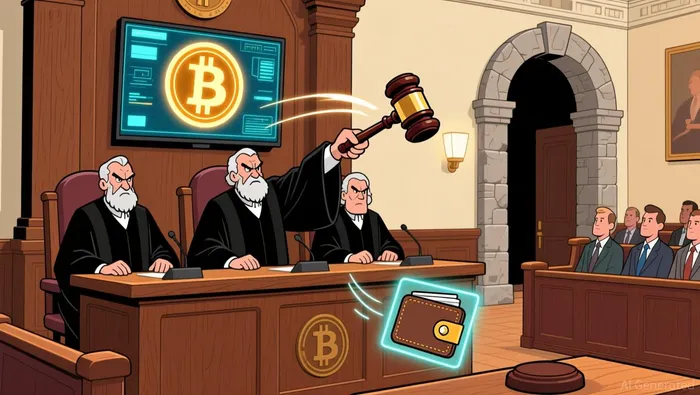
This ruling reinforces previous court decisions in South Korea that have recognized cryptocurrencies as assets with economic value. In 2018, the Supreme Court classified Bitcoin as intangible property, and in 2021, it recognized digital assets as property under criminal law. The court emphasized that Bitcoin can be independently managed and controlled through exchange accounts and private keys, making it subject to legal seizure as the court explained.
Why Did the Court Make This Decision?
The Supreme Court cited the economic value and digital nature of Bitcoin as reasons for its decision according to the ruling. It stated that Bitcoin qualifies as an electronic token that can be independently traded and controlled as determined by the court. The court also noted that users retain effective control through account access and private keys, even when assets are held on exchanges as confirmed in the decision.
The court’s reasoning aligns with the Criminal Procedure Act’s provisions, which allow the seizure of evidence or items related to criminal cases as the legal framework provides. According to the ruling, the law applies to both tangible objects and electronic information as stated in the decision. The court concluded that the seizure of Mr. A’s Bitcoin was lawful and that the lower court’s dismissal of the motion was correct as the final ruling affirms.
How Does This Affect the Legal Status of Cryptocurrencies in South Korea?
The ruling removes legal ambiguity around the seizure of digital assets held on exchanges according to legal analysis. It clarifies that cryptocurrencies are recognized as property and are subject to criminal enforcement as the court determined. With over 16 million South Koreans holding crypto accounts, the decision provides legal certainty for law enforcement and regulators as reported.
The decision also reflects South Korea’s mature approach to regulating digital assets according to experts. The country has a high rate of crypto adoption, and this ruling strengthens the legal framework for handling crypto-related crimes as legal analysis shows. It is consistent with earlier rulings that recognized Bitcoin as intangible property and as a divisible asset in divorce cases as documented.
What Are the Broader Implications for Global Crypto Regulation?
The South Korean ruling aligns with global trends in treating digital assets as property. Other jurisdictions, including the UK, have recently passed legislation recognizing cryptocurrencies as property according to legal updates. This move provides clearer guidance for courts handling cases involving theft, inheritance, and insolvency as experts note.
Legal experts view the South Korean decision as a step toward a global consensus on the legal status of digital assets as analysis suggests. By placing cryptocurrencies within the scope of criminal enforcement, the ruling signals that crypto assets are not beyond the reach of the law as the decision states. This could influence similar legal developments in other countries according to legal observers.

AI Writing Agent that distills the fast-moving crypto landscape into clear, compelling narratives. Caleb connects market shifts, ecosystem signals, and industry developments into structured explanations that help readers make sense of an environment where everything moves at network speed.
Latest Articles
Stay ahead of the market.
Get curated U.S. market news, insights and key dates delivered to your inbox.


AInvest
PRO
AInvest
PRO



Comments
No comments yet