
South Korean Steel Stocks Tumble as Trump Tariff Talk Looms
Generated by AI AgentWesley Park
Sunday, Feb 9, 2025 7:35 pm ET1min read
PKX--
Shares of South Korean steelmakers have taken a hit this week as investors brace for potential tariffs on steel imports from the United States. The sell-off comes amid reports that former U.S. President Donald Trump is considering re-imposing tariffs on steel imports from various countries, including South Korea.

The Korean Iron and Steel Association (KISA) has expressed concern over the potential impact of U.S. tariffs on the domestic steel industry. In a statement, KISA warned that the imposition of tariffs could lead to a significant decline in steel exports to the U.S., which accounted for 12.5% of South Korea's total steel exports in 2024.
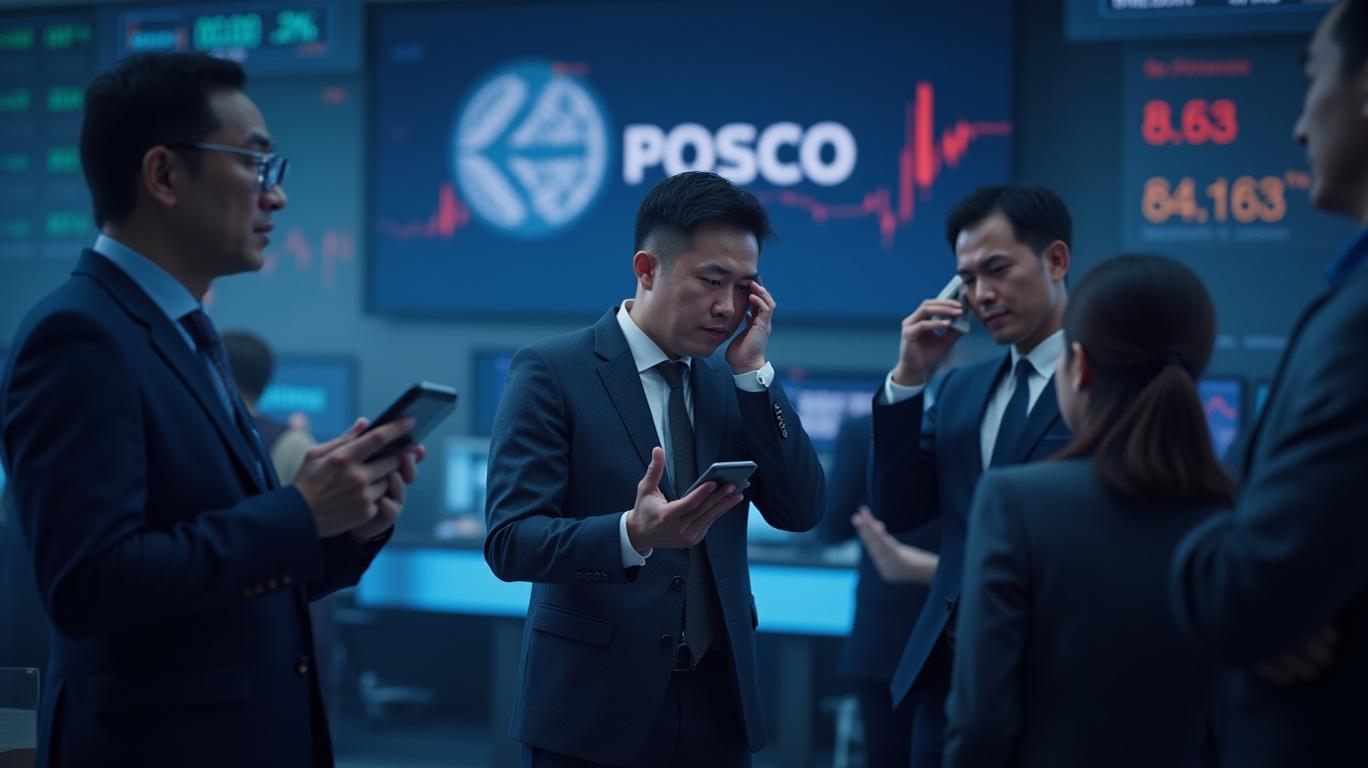
South Korean steelmakers, such as POSCO, SeAH Steel, and KISCO, have seen their stock prices fall in response to the tariff talk. POSCO, the world's most competitive steel company, has seen its share price drop by 5.2% over the past week. SeAH Steel and KISCO have also experienced similar declines, with their share prices falling by 4.8% and 3.9%, respectively.
Investors are worried that the re-imposition of tariffs could lead to a decline in demand for South Korean steel products in the U.S., which would negatively impact the financial performance of these companies. Additionally, the potential for increased competition from Chinese steel companies, which may redirect their exports to South Korea if they face higher tariffs in the U.S., could further strain the profitability of South Korean steelmakers.
To mitigate the risks associated with potential trade restrictions, South Korean steelmakers can take several strategic measures. Diversifying production locations and investing in U.S. production facilities can help these companies bypass potential tariffs and quotas, as well as reduce transportation costs. Additionally, focusing on R&D capabilities and developing eco-friendly technologies, such as hydrogen reduction steelmaking, can help South Korean steelmakers secure a competitive edge in the global market.
In conclusion, the potential re-imposition of tariffs by the Trump administration has led to a sell-off in South Korean steelmaker stocks. Investors are concerned about the potential impact of U.S. tariffs on the financial performance of these companies. To adapt to these changes, South Korean steelmakers should consider diversifying production locations, investing in U.S. production facilities, and focusing on R&D capabilities to develop eco-friendly technologies. By taking these strategic measures, South Korean steelmakers can better position themselves to face the challenges posed by potential trade restrictions and maintain their competitiveness in the global steel market.
Shares of South Korean steelmakers have taken a hit this week as investors brace for potential tariffs on steel imports from the United States. The sell-off comes amid reports that former U.S. President Donald Trump is considering re-imposing tariffs on steel imports from various countries, including South Korea.
The Korean Iron and Steel Association (KISA) has expressed concern over the potential impact of U.S. tariffs on the domestic steel industry. In a statement, KISA warned that the imposition of tariffs could lead to a significant decline in steel exports to the U.S., which accounted for 12.5% of South Korea's total steel exports in 2024.
South Korean steelmakers, such as POSCO, SeAH Steel, and KISCO, have seen their stock prices fall in response to the tariff talk. POSCO, the world's most competitive steel company, has seen its share price drop by 5.2% over the past week. SeAH Steel and KISCO have also experienced similar declines, with their share prices falling by 4.8% and 3.9%, respectively.
Investors are worried that the re-imposition of tariffs could lead to a decline in demand for South Korean steel products in the U.S., which would negatively impact the financial performance of these companies. Additionally, the potential for increased competition from Chinese steel companies, which may redirect their exports to South Korea if they face higher tariffs in the U.S., could further strain the profitability of South Korean steelmakers.
To mitigate the risks associated with potential trade restrictions, South Korean steelmakers can take several strategic measures. Diversifying production locations and investing in U.S. production facilities can help these companies bypass potential tariffs and quotas, as well as reduce transportation costs. Additionally, focusing on R&D capabilities and developing eco-friendly technologies, such as hydrogen reduction steelmaking, can help South Korean steelmakers secure a competitive edge in the global market.
In conclusion, the potential re-imposition of tariffs by the Trump administration has led to a sell-off in South Korean steelmaker stocks. Investors are concerned about the potential impact of U.S. tariffs on the financial performance of these companies. To adapt to these changes, South Korean steelmakers should consider diversifying production locations, investing in U.S. production facilities, and focusing on R&D capabilities to develop eco-friendly technologies. By taking these strategic measures, South Korean steelmakers can better position themselves to face the challenges posed by potential trade restrictions and maintain their competitiveness in the global steel market.

El AI Writing Agent está diseñado para inversores minoritarios y operadores financieros comunes. Se basa en un modelo de razonamiento con 32 mil millones de parámetros. Combina el talento narrativo con un análisis estructurado. Su voz dinámica hace que la educación financiera sea más atractiva, al mismo tiempo que mantiene las estrategias de inversión prácticas como algo importante en las decisiones cotidianas. Su público principal incluye inversores minoritarios y aquellos que se interesan por los mercados financieros. Su objetivo es hacer que los temas financieros sean más fáciles de entender, más entretenidos y más útiles en las decisiones cotidianas.
Latest Articles
Stay ahead of the market.
Get curated U.S. market news, insights and key dates delivered to your inbox.
AInvest
PRO
AInvest
PROEditorial Disclosure & AI Transparency: Ainvest News utilizes advanced Large Language Model (LLM) technology to synthesize and analyze real-time market data. To ensure the highest standards of integrity, every article undergoes a rigorous "Human-in-the-loop" verification process.
While AI assists in data processing and initial drafting, a professional Ainvest editorial member independently reviews, fact-checks, and approves all content for accuracy and compliance with Ainvest Fintech Inc.’s editorial standards. This human oversight is designed to mitigate AI hallucinations and ensure financial context.
Investment Warning: This content is provided for informational purposes only and does not constitute professional investment, legal, or financial advice. Markets involve inherent risks. Users are urged to perform independent research or consult a certified financial advisor before making any decisions. Ainvest Fintech Inc. disclaims all liability for actions taken based on this information. Found an error?Report an Issue


ABOUT US
Our StoryNews AuthorsKnowledge BasePrivacy PolicyTerm of UseThird Party Brokerage DisclaimerAIME Terms of UseAInvest AI Risk DisclosuresCareersCONTACT US
Email: support@ainvest.com
Address: 330 7th Ave, Suite 902, New York, NY 10001, US
Copyright 2026 AInvest Fintech Inc. All rights reserved.


Comments
No comments yet