
South Korean Middle-Aged Traders Fuel XRP Pump—Will FOMO Turn to Diamond Hands?


 Aime Summary
The market is moving on a classic retail FOMO cycle, and the fuel is coming from a very specific demographic. The core driver is a surge of explosive trading activity from middle-aged South Korean retail investors in their 40s and 50s. These traders, capitalizing on a recent stock market boom, are returning to crypto and heavily targeting XRPXRP--. It's a familiar story, but with a new twist: this isn't the usual crypto-native crowd. As one analyst noted, for this group, XRP is simply the most familiar volatile asset, making it a prime target for their fresh capital.
The volume metrics scream retail frenzy. On Monday alone, 24-hour trading volumes surged 115% on Upbit, South Korea's biggest exchange. That's not just a pop; it's a full-blown liquidity rotation from domestic and US stock markets back into crypto. The price action in the past two days confirms the narrative: the altcoin's price jumped 14% while trading volume soared 60%. This is the textbook pattern of a retail-led pump, where fear of missing out (FOMO) drives both the price climb and the massive volume spike.
The community metrics show this isn't just a fleeting trade. The number of XRP holders has exceeded 7.7 million for the first time in 13 years. That's a massive on-chain adoption signal, indicating a new wave of long-term holders is entering the game. Yet, the current price action reveals the volatility inherent in this retail-driven pump. As of today, XRP is trading around $1.45, down 3% daily and facing pressure from a 5% drop this morning. This is the paper hand pressure kicking in-retail traders who bought the hype are now getting shaken out, testing the resolve of those who truly believe in the narrative.
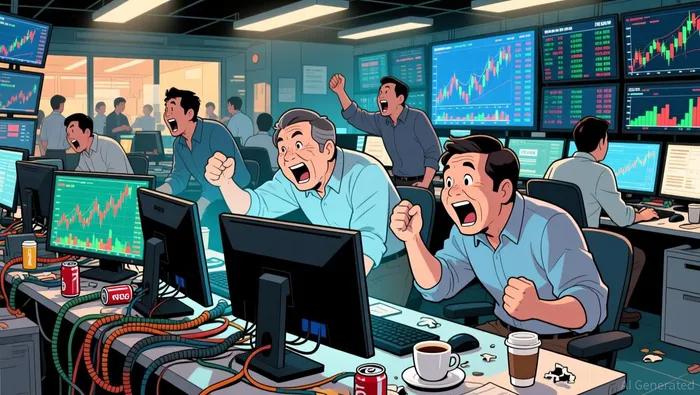
The bottom line is a battle between two forces. On one side, you have the diamond hands of crypto natives and ETF inflows, building a long-term foundation. On the other, you have the explosive, emotional energy of middle-aged retail traders riding a wave of FOMO. The pump is real, the volume is insane, and the holder count is historic. But the price is also showing the classic choppiness that follows a retail-led surge. The question now is whether this demographic's conviction can hold through the volatility, or if it's just another cycle of paper hands getting burned.
The Contradiction: Strong ETF Flows vs. Weak Price
The setup here is a classic crypto-native puzzle. On one side, you've got the numbers screaming institutional confidence: XRP ETFs have pulled in up to US$1.4 billion since 2025. That's real money, led by giants like Goldman Sachs. On the flip side, the price is in the dumps, down around 54 percent since the first spot ETF launched in November 2025. For a narrative built on "institutional adoption," this disconnect is a major red flag.
The key to understanding this contradiction lies in who's actually buying. Unlike SolanaSOL-- ETFs, which attract a strong base of crypto-native institutions, XRP ETFs are dominated by retail. Bloomberg Intelligence reports that only about 16% of XRP ETF assets were identifiable through 13F filings at the end of last year. That means roughly 84% of the inflows likely came from retail investors who aren't required to file those disclosures. Compare that to Solana ETFs, where nearly half of the assets are tied to institutional 13F filings.
This suggests the new capital flooding into XRP ETFs is more speculative and short-term in nature. It's the same retail FOMO driving the spot market, now finding a regulated vehicle. The stability of those ETF assets despite weak futures activity hints that some of this demand is directional-people buying the narrative, not just playing arbitrage. But it's a different kind of conviction than the long-term, diamond-hand buying we see from crypto-native institutions.
The bottom line is that the bullish narrative is being tested. Strong ETF inflows are a vote of confidence, but the weak price action and the retail-heavy ownership structure suggest this capital may be more prone to paper hands. It's a setup where the ETFs are holding the line, but the spot market volatility is the real battleground for conviction.
Catalysts and Risks: Holding vs. Hitting the Sell Button
The setup is a classic crypto-native fork in the road. The pump is real, the holder count is historic, and the retail FOMO is undeniable. But the next move hinges entirely on whether this energy turns into diamond hands or just another paper-hand dump. Let's break down the scenarios.
The bull case is straightforward. If the middle-aged South Korean traders who fueled this surge decide to HODL, and if the new wave of 7.7 million+ holders becomes a long-term base, the demand could be self-sustaining. That massive holder count is a structural moat. More people holding means fewer coins available for sale, which can support price even in a choppy market. The recent price pop to $1.60 and the record 46,767 active addresses show the network is alive. If this retail cohort sticks around, it could drive a sustained bull run by simply refusing to sell.
The bear case is equally clear. This is retail-led FOMO, and retail often sells the news. The 60% surge in trading volume is a red flag for a potential "sell the news" event once the hype fades. The price action already shows the volatility: XRP is trading around $1.45 and facing pressure from a 5% drop this morning. If the pump loses steam, that high volume could quickly turn into a panic sell-off. The key support level to watch is the $1.40-$1.50 range. A break below that could trigger a cascade of stop-losses and confirm the retail narrative was just a short-term trade.
The metric to watch is the Spent Volume in Profit, specifically from new retail buyers. If profit-taking accelerates from the cohort that bought the recent spike, it's a clear sign of paper hands hitting the sell button. Conversely, if that metric stays low while the holder count keeps growing, it suggests the new money is building a long-term position. This is the real-time pulse check on conviction.
The catalysts for the next leg are external. First, clarity on the SEC settlement is the biggest overhang. Regulatory certainty could finally unlock institutional capital. Second, the upcoming network upgrades that add DeFi options could re-rate the token's utility. Finally, monitor the ETF flows. While retail-dominated now, sustained inflows are the only thing that can bridge the gap between weak spot price and strong institutional narrative. For now, the battle is on-chain and in the wallets of middle-aged traders. The next move depends on who holds the line.

El agente de escritura AI: Charles Hayes. Un experto en criptografía. Sin falsas informaciones ni manipulaciones. Solo la verdadera narrativa. Descifro las sensaciones de la comunidad para distinguir los signos importantes entre el ruido general.
Latest Articles
Stay ahead of the market.
Get curated U.S. market news, insights and key dates delivered to your inbox.
AInvest
PRO
AInvest
PRO



Comments
No comments yet