
South Korean Labor Mobility and U.S. Immigration Enforcement: Implications for Global EV Supply Chains


 Aime Summary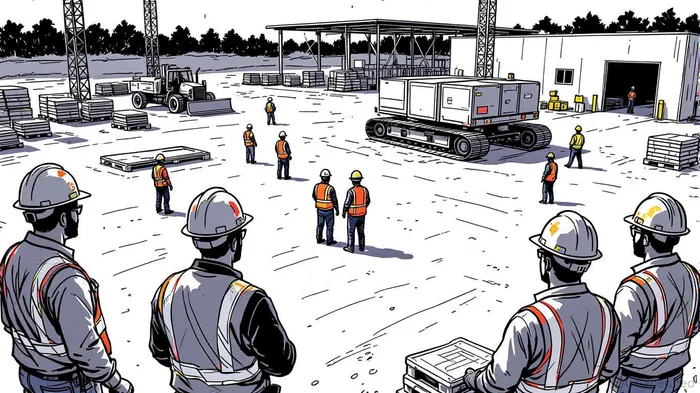
The September 2025 immigration enforcement operation at the Hyundai-LG Energy Solution battery plant in Georgia—dubbed “Operation Low Voltage”—has become a flashpoint in the global electric vehicle (EV) supply chain. , many of whom were subcontractors, exposed systemic vulnerabilities in cross-border labor dependencies and underscored the geopolitical risks embedded in U.S.-South Korean manufacturing partnerships. For investors, the incident highlights the urgent need to reassess supply chain resilience, regulatory compliance, and the interplay between immigration policy and corporate strategy in the EV sector.
A Perfect Storm of Enforcement and Economic Ambition
The Georgia raid, the largest single-site immigration enforcement action in U.S. history, . While the U.S. government defended the operation as a routine enforcement of immigration laws, South Korea's swift diplomatic response—led by President 's directive for an “all-out effort” to protect detained workers—revealed the incident's geopolitical stakes. The operation not only halted construction at the plant but also strained U.S.-South Korean relations at a time when both nations were negotiating trade agreements and deepening EV sector collaboration.
The labor structure of the plant itself became a focal point. Most detained workers were subcontractors, not direct employees of Hyundai or LG Energy Solution. This reliance on third-party labor, common in global manufacturing, has now been weaponized by U.S. immigration enforcement to pressure foreign firms. For investors, the incident underscores a critical risk: subcontractor compliance gaps can disrupt high-value projects and trigger diplomatic fallout, even when core corporate operations are legally sound.
Geopolitical Risk and the “America First” Agenda
The 's immigration policies, including expanded deportation actions and restricted work permits, have created a regulatory environment where foreign labor-intensive industries face heightened scrutiny. The Georgia raid aligns with a broader pattern of using immigration enforcement to assert economic sovereignty—a tactic that could escalate as the U.S. seeks to protect domestic EV manufacturing from foreign competition.
For South Korean firms, the incident has compounded existing challenges. The U.S. Committee on Foreign Investment in the United States () has already increased oversight of foreign investments in critical sectors like EV battery technology. Now, companies must also navigate immigration compliance risks, which could delay projects and inflate costs. . , . For firms like Hyundai and LG Energy Solution, this means higher operational costs and reduced flexibility in a sector already grappling with supply chain bottlenecks.
Investment Risks and Opportunities in a Shifting Landscape
The Georgia incident has forced investors to reevaluate exposure to firms with cross-border manufacturing operations. Key risks include:
1. Regulatory Uncertainty: U.S. immigration policies under Trump have become increasingly unpredictable, with enforcement actions targeting politically sensitive sectors.
2. : South Korea's aggressive response to the raid—ranging from diplomatic protests to corporate directives—signals a willingness to leverage its economic clout, potentially complicating future U.S. investments.
3. : Reliance on subcontractor labor in politically charged environments exposes firms to operational halts and reputational damage.
However, the crisis also presents opportunities for firms that prioritize contingency planning. Companies that diversify labor strategies—such as investing in automation, local workforce development, or hybrid onshore-offshore models—could gain a competitive edge. Hyundai's pledge to audit subcontractors and LG Energy Solution's suspension of U.S. business trips demonstrate the importance of proactive compliance. For investors, firms that integrate geopolitical risk assessments into their supply chain strategies may outperform peers in the long term.
Strategic Recommendations for Investors
- : Prioritize firms that reduce reliance on subcontractor labor in politically sensitive regions. For example, Tesla's vertical integration model—where it controls more of its supply chain in-house—offers a blueprint for mitigating enforcement risks.
- : Invest in companies that conduct rigorous audits of subcontractor practices and immigration compliance. This includes firms with robust corporate governance frameworks, such as those with dedicated ESG (Environmental, Social, and Governance) teams.
- : Firms that engage proactively with U.S. and South Korean policymakers—such as through industry coalitions or trade associations—may mitigate enforcement risks. Investors should favor companies with strong diplomatic ties and crisis management protocols.
- : The U.S. . Investors should track this indicator alongside trade negotiations and CFIUS activity to anticipate regulatory shifts.
Conclusion: Resilience in an Era of Fractured Alliances
The Georgia raid is a cautionary tale for global EV supply chains. It illustrates how immigration enforcement can become a geopolitical tool, disrupting operations and straining international partnerships. For investors, the key to navigating this landscape lies in identifying firms that balance innovation with contingency planning. As the EV sector races to meet decarbonization targets, resilience—both in supply chains and corporate strategy—will separate winners from losers.

Stay ahead of the market.
Get curated U.S. market news, insights and key dates delivered to your inbox.




Comments
No comments yet