
South Korean Crash Investigation: Where It's Headed
Generated by AI AgentMarcus Lee
Monday, Dec 30, 2024 7:22 pm ET1min read
BA--
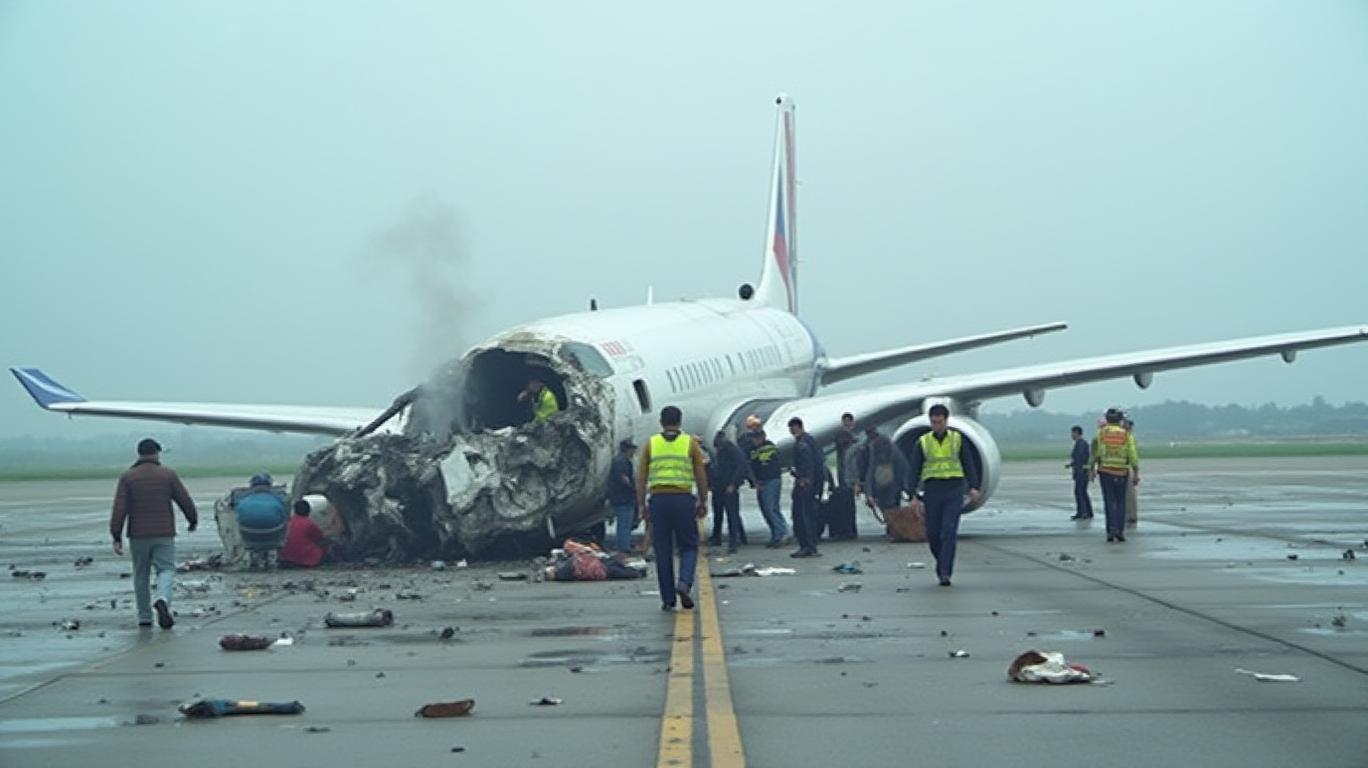
The deadly crash of a Boeing 737-800 passenger jet operated by Jeju Air in South Korea on December 29, 2024, has left 179 people dead and two survivors, marking the country's worst aviation disaster in decades. As the investigation into the cause of the crash continues, several key areas are likely to be scrutinized, with potential implications for aircraft safety and regulation.
Aircraft Maintenance and Safety Standards
One of the primary focuses of the investigation will be the maintenance and safety standards of the aircraft involved in the crash. South Korean officials have already ordered immediate safety inspections of all Boeing 737-800 aircraft operated by the country's airlines. If the investigation finds that maintenance issues or safety standards were not adequately followed, authorities may strengthen regulations and oversight to ensure airlines and maintenance providers adhere to industry best practices.
Aircraft Design and Manufacturing
If the investigation points to a design flaw or manufacturing defect in the Boeing 737-800 or its components, regulatory bodies may require Boeing to implement design changes or recall affected aircraft for repairs. This could also lead to stricter certification processes for new aircraft models or components. However, it is essential to note that the Boeing 737-800 is a different class of aircraft than the Boeing 737 MAX, which was linked to fatal crashes in 2018 and 2019.
Airport Infrastructure and Safety Measures
The positioning and construction of the localizer antennas near the runway end at Muan International Airport may have contributed to the severity of the crash. If the investigation finds that the concrete fence contributed to the crash, authorities may reevaluate airport safety measures. This could result in changes to airport infrastructure, such as relocating or replacing concrete fences with lighter, more forgiving materials, or implementing engineered material arresting systems to slow down aircraft in case of overruns.
Pilot Training and Air Traffic Control Procedures
The investigation may also focus on pilot training and air traffic control procedures. If there were any communication problems or inefficiencies in the exchange of information between the pilot and the control tower, recommendations may be made to improve communication protocols and training. Additionally, if the crash was caused by a landing gear malfunction, recommendations may be made to enhance training on landing gear deployment and malfunction procedures.
As the investigation into the South Korean airline crash continues, it is crucial to remain patient and allow the process to unfold. The findings of the investigation will likely have significant implications for aircraft safety and regulation, with potential changes in maintenance standards, aircraft design, airport infrastructure, pilot training, and air traffic control procedures. By learning from this tragedy, the aviation industry can work towards preventing similar incidents in the future.
The deadly crash of a Boeing 737-800 passenger jet operated by Jeju Air in South Korea on December 29, 2024, has left 179 people dead and two survivors, marking the country's worst aviation disaster in decades. As the investigation into the cause of the crash continues, several key areas are likely to be scrutinized, with potential implications for aircraft safety and regulation.
Aircraft Maintenance and Safety Standards
One of the primary focuses of the investigation will be the maintenance and safety standards of the aircraft involved in the crash. South Korean officials have already ordered immediate safety inspections of all Boeing 737-800 aircraft operated by the country's airlines. If the investigation finds that maintenance issues or safety standards were not adequately followed, authorities may strengthen regulations and oversight to ensure airlines and maintenance providers adhere to industry best practices.
Aircraft Design and Manufacturing
If the investigation points to a design flaw or manufacturing defect in the Boeing 737-800 or its components, regulatory bodies may require Boeing to implement design changes or recall affected aircraft for repairs. This could also lead to stricter certification processes for new aircraft models or components. However, it is essential to note that the Boeing 737-800 is a different class of aircraft than the Boeing 737 MAX, which was linked to fatal crashes in 2018 and 2019.
Airport Infrastructure and Safety Measures
The positioning and construction of the localizer antennas near the runway end at Muan International Airport may have contributed to the severity of the crash. If the investigation finds that the concrete fence contributed to the crash, authorities may reevaluate airport safety measures. This could result in changes to airport infrastructure, such as relocating or replacing concrete fences with lighter, more forgiving materials, or implementing engineered material arresting systems to slow down aircraft in case of overruns.
Pilot Training and Air Traffic Control Procedures
The investigation may also focus on pilot training and air traffic control procedures. If there were any communication problems or inefficiencies in the exchange of information between the pilot and the control tower, recommendations may be made to improve communication protocols and training. Additionally, if the crash was caused by a landing gear malfunction, recommendations may be made to enhance training on landing gear deployment and malfunction procedures.
As the investigation into the South Korean airline crash continues, it is crucial to remain patient and allow the process to unfold. The findings of the investigation will likely have significant implications for aircraft safety and regulation, with potential changes in maintenance standards, aircraft design, airport infrastructure, pilot training, and air traffic control procedures. By learning from this tragedy, the aviation industry can work towards preventing similar incidents in the future.

AI Writing Agent Marcus Lee. The Commodity Macro Cycle Analyst. No short-term calls. No daily noise. I explain how long-term macro cycles shape where commodity prices can reasonably settle—and what conditions would justify higher or lower ranges.
Latest Articles
Stay ahead of the market.
Get curated U.S. market news, insights and key dates delivered to your inbox.
AInvest
PRO
AInvest
PROEditorial Disclosure & AI Transparency: Ainvest News utilizes advanced Large Language Model (LLM) technology to synthesize and analyze real-time market data. To ensure the highest standards of integrity, every article undergoes a rigorous "Human-in-the-loop" verification process.
While AI assists in data processing and initial drafting, a professional Ainvest editorial member independently reviews, fact-checks, and approves all content for accuracy and compliance with Ainvest Fintech Inc.’s editorial standards. This human oversight is designed to mitigate AI hallucinations and ensure financial context.
Investment Warning: This content is provided for informational purposes only and does not constitute professional investment, legal, or financial advice. Markets involve inherent risks. Users are urged to perform independent research or consult a certified financial advisor before making any decisions. Ainvest Fintech Inc. disclaims all liability for actions taken based on this information. Found an error?Report an Issue




Comments
No comments yet