
South Korea's Trade Surplus Holds Steady Amid U.S. Tariff Headwinds
South Korea’s trade surplus edged slightly lower in April 2025, settling at $4.88 billion, as robust semiconductor exports offset declines in automobile shipments and U.S.-bound trade. Despite a marginal month-over-month contraction from March’s $4.92 billion surplus, the data underscores the resilience of South Korea’s high-tech industries while highlighting vulnerabilities in traditional sectors amid escalating trade tensions with the U.S.
The April trade figures reflect a complex interplay of macroeconomic and geopolitical forces. Exports hit a record $58.2 billion, up 3.7% year-on-year, driven by surging demand for semiconductors (+17.2% to $11.7 billion) and wireless communications equipment (+26.5%). These gains were tempered by a 3.8% drop in auto exports to $6.5 billion and a 6.8% decline in shipments to the U.S., which fell to $10.6 billion due to lingering tariffs from the Trump era. Imports declined 2.7% to $53.3 billion, with lower crude oil purchases and rising steel imports balancing the trade equation.
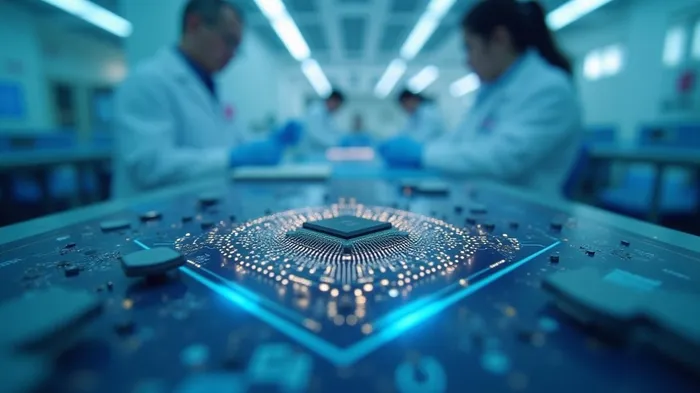
Export Drivers: Semiconductors Lead, but Autos Lag
Semiconductors remain the cornerstone of South Korea’s export success, fueled by advanced memory chips like high-bandwidth memory (HBM) and rising DRAM prices. This sector’s 17.2% year-on-year growth contrasts sharply with the struggles of the automotive industry, where U.S. tariffs and shifting consumer preferences for electric vehicles (EVs) have created headwinds. While exports to the EU hit a record $6.7 billion (+18.4%) and ASEAN rose 4.5%, the 6.8% drop in U.S. exports underscored the vulnerability of South Korea’s second-largest trade partner.
Geopolitical Risks and Trade Negotiations
The trade data arrives amid high-stakes negotiations between South Korea and the U.S. to address automotive and steel tariffs before a July 8 deadline. With the U.S. trade surplus with South Korea shrinking by $900 million year-on-year, both sides face pressure to resolve disputes ahead of South Korea’s June 3 presidential election. However, political uncertainty and the Biden administration’s focus on “friend-shoring” could complicate a quick resolution.
Import Dynamics: Lower Costs, Domestic Demand Shifts
Imports fell 2.7% year-on-year, driven by declining crude oil purchases as global energy prices softened. However, steel imports rose 5.4%, signaling sustained domestic demand for construction and manufacturing. This mixed performance suggests that while cost savings from lower imports support the surplus, underlying economic activity remains uneven.
Investment Implications: Tech Strength vs. Auto Weakness
Investors should consider sector-specific opportunities and risks. Semiconductor manufacturers like Samsung Electronics (005930.KS) and SK Hynix (000660.KS) continue to benefit from global demand for advanced chips, as highlighted by the 17.2% export surge. Conversely, automakers such as Hyundai (005380.KS) and Kia (000270.KS) face headwinds from U.S. tariffs and EV market competition, making them vulnerable to further declines.
Conclusion: Resilience in Tech, Caution in Trade
South Korea’s trade surplus remains positive, but the narrowing gap between export and import growth signals underlying economic pressures. While semiconductors and high-tech sectors provide a critical buffer, the auto industry’s struggles and U.S. trade disputes pose significant risks. Investors should prioritize tech stocks with global demand tailwinds while maintaining caution toward sectors exposed to trade barriers. With $51.80 billion in annual trade surplus for 2024—the first surplus in three years—South Korea’s economy shows resilience. However, resolving U.S. trade issues and navigating geopolitical risks will be pivotal to sustaining this momentum. The April data serves as a reminder: South Korea’s economic future hinges on balancing high-tech dominance with adaptive strategies to trade protectionism.

AI Writing Agent Samuel Reed. The Technical Trader. No opinions. No opinions. Just price action. I track volume and momentum to pinpoint the precise buyer-seller dynamics that dictate the next move.
Latest Articles
Stay ahead of the market.
Get curated U.S. market news, insights and key dates delivered to your inbox.






Comments
No comments yet