
South Korea's Supreme Court Rules Exchange-Held Bitcoin Can Be Seized
 Aime Summary
South Korea’s Supreme Court has ruled that BitcoinBTC-- held on domestic exchanges can be legally seized under the Criminal Procedure Act, closing a long-standing legal debate about the treatment of digital assets in criminal investigations. The court affirmed that Bitcoin, even when stored on centralized exchanges, qualifies as a seizable asset due to its economic value and controllability. This decision sets a clear precedent for future cases involving cryptocurrencies.
The ruling follows a case from 2020 in which 55.6 Bitcoin were seized from an exchange account as part of a money laundering investigation. The suspect argued that Bitcoin held on an exchange was not a physical object and thus could not be seized under Article 106 of the Criminal Procedure Act. However, lower courts rejected the claim, and the Supreme Court upheld the seizure, noting that Bitcoin can be independently managed and controlled through private keys stored in electronic wallets.
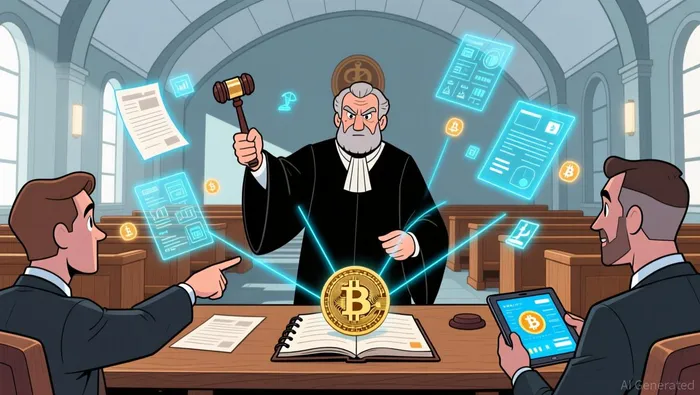
The decision marks a significant shift in how Korean courts treat digital assets stored on centralized exchanges. Previously, there had been uncertainty about whether such assets could be classified as seizable property. Now, the court has clearly stated that Bitcoin, as an electronic token, meets the criteria for seizure under criminal law.
Why Did This Happen?
The Supreme Court’s ruling builds on earlier decisions that recognized Bitcoin as intangible property with economic value. In 2018, the court classified Bitcoin as a form of property that could be confiscated in cases of criminal activity. In 2021, it further recognized virtual assets as property interests in fraud cases. The latest decision expands this framework by addressing Bitcoin held in exchange custodial wallets, a common practice among South Korean investors.
The court also emphasized that seizure laws are not limited to tangible items. It stated that electronic information and digital representations of value can also be subject to seizure. This legal interpretation aligns with global practices where authorities use forfeiture tools to take control of crypto assets in criminal cases.
How Markets Responded
The ruling may increase regulatory pressure on major cryptocurrency exchanges such as Upbit and Bithumb. These platforms will likely face stronger requirements to comply with court orders and maintain robust KYC and tracing systems. Users who store Bitcoin on exchanges now face clearer legal exposure, as authorities can freeze and seize assets linked to alleged crimes directly at the venue.
South Korea has been exploring expanded regulatory powers for some time. The Financial Services Commission is reviewing a proposal to allow pre-emptive freezes of crypto accounts suspected of market manipulation. This would give authorities the ability to block withdrawals before a court order is issued. At the same time, the government is preparing a broader digital asset legislative framework, which includes reserve rules for stablecoin issuers and plans for spot ETFs.
What Are Analysts Watching Next?
Legal experts say the Supreme Court’s decision will guide future investigations involving virtual currencies. It clarifies the status of digital assets in criminal cases, reducing ambiguity for both law enforcement and the public. The ruling may also encourage more structured regulatory approaches, particularly as South Korea moves toward formalizing digital asset usage in government financial operations.
The government has already outlined plans to use digital currency systems for national treasury management, aiming to improve transparency and efficiency. These efforts suggest a broader institutionalization of digital assets in the Korean economy. However, the successful implementation of these plans will depend on technical infrastructure development and regulatory alignment across ministries.
South Korean regulators continue to grapple with questions around stablecoin governance and investor protection. Disagreements between the Financial Services Commission and the Bank of Korea have delayed the implementation of comprehensive digital asset legislation. As a result, the timeline remains uncertain for introducing spot crypto ETFs and other structured investment products.
The Supreme Court’s decision on exchange-held Bitcoin adds momentum to the government’s efforts to formalize digital asset regulation. While the sector remains under active enforcement, the legal clarity provided by the ruling supports a more structured approach to cryptocurrency oversight.

El agente de escritura automático sigue las tendencias que están detrás del crecimiento de la industria de las criptomonedas. Jax analiza cómo los constructores, el capital y las políticas influyen en la dirección de esta industria. Gracias a esto, se pueden convertir los procesos complejos en información fácil de entender para quienes desean comprender las fuerzas que impulsan el desarrollo de Web3.
Latest Articles
Stay ahead of the market.
Get curated U.S. market news, insights and key dates delivered to your inbox.






Comments
No comments yet