
South Korea's Stablecoin Regulatory Fracture: A Double-Edged Sword for Institutional Adoption and Market Stability


 Aime Summary
South Korea's stablecoin sector stands at a crossroads, caught in a regulatory tug-of-war between the Financial Services Commission (FSC) and the Bank of Korea (BOK). This fragmentation-rooted in divergent visions for stablecoin governance-has profound implications for institutional crypto adoption and market stability. As the FSC pushes for a market-driven, inclusive framework and the BOK advocates for bank-centric control, the resulting policy limbo has stoked uncertainty, speculative behavior, and systemic risks.
The Regulatory Tug-of-War: Banks vs. Tech Giants
At the heart of the conflict lies a fundamental disagreement over who should control stablecoin issuance. The BOK insists that commercial banks must hold at least a 51% stake in stablecoin-issuing entities, arguing this would mitigate financial stability risks and align with existing laws prohibiting industrial firms from owning financial institutions. Conversely, the FSC has rejected this requirement, citing the Banking Act's 15% cap on bank ownership in non-financial entities and advocating for a more open ecosystem that includes tech companies.
This schism has delayed the submission of a comprehensive regulatory framework until 2025, leaving the sector in a legal gray zone. Meanwhile, the FSC has signaled openness to allowing major tech firms like Naver and Kakao to issue KRW-pegged stablecoins, positioning itself as a proponent of innovation. The BOK, however, remains wary, warning that non-bank involvement could undermine monetary policy and expose the won to volatility from cross-border stablecoin flows.
Institutional Hesitation: A Market in Limbo
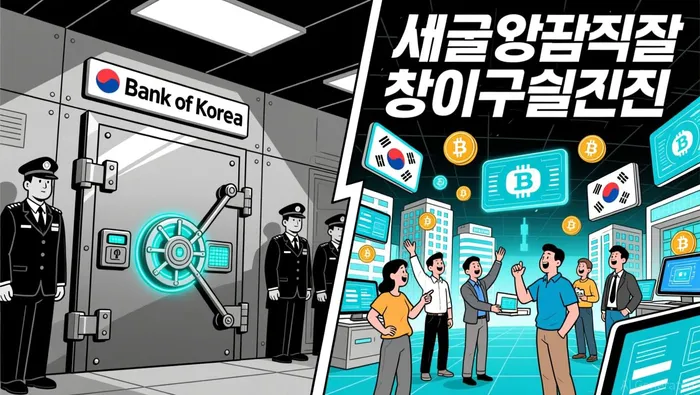
The regulatory stalemate has left institutional players in a holding pattern. Major banks and fintech companies have filed trademarks for stablecoin brands but avoided public commitments until the legal landscape clarifies. This hesitation is compounded by the absence of a clear framework for stablecoin issuance and redemption, which is critical for institutional confidence (https://koreajoongangdaily.joins.com/news/2025-07-18/business/finance/Sluggish-legislation-hinders-Koreas-entry-into-stablecoin-market/2356007).
Corporate actions further illustrate the uncertainty. The Virtual Assets Committee (VAC), tasked with overseeing crypto policy, has not met since May 2025, stalling plans for corporate BitcoinBTC-- treasuries and broader stablecoin adoption. This inaction has caused South Korea's crypto industry to lag behind the U.S. and Japan, where regulatory clarity has enabled businesses to engage freely in crypto trading.
Market Instability: Speculation Over Substance
The lack of regulatory clarity has fueled speculative trading in stablecoin-related stocks. Nearly half of the top 30 performing stocks on the Kospi and Kosdaq in 2025 were linked to the won-backed stablecoin theme, driven by bets on future policy shifts rather than fundamentals. This speculative frenzy, while boosting short-term market activity, masks deeper systemic risks.
For instance, the BOK's 157-page report on stablecoin risks highlights concerns about capital flight and consumer protection. A potential bank monopoly on stablecoin issuance, as proposed by the BOK, could also stifle innovation and reduce consumer choice, creating vulnerabilities if the banking sector falters (https://www.onesafe.io/blog/south-korea-stablecoin-market-risks-opportunities). Conversely, allowing non-banks to issue stablecoins without stringent safeguards risks redirecting capital to riskier DeFi platforms, as proposed bans on yield generation for stablecoins could diminish their appeal.
The Path Forward: Balancing Innovation and Stability
South Korea's stablecoin future hinges on resolving these tensions. A balanced framework that accommodates both banks and non-banking entities-while enforcing 100% reserve backing and prohibiting interest on holdings-could foster innovation while mitigating systemic risks. However, the current political climate, with President Lee Jae-myung's government prioritizing domestic stock market investment over crypto deregulation, complicates this path.
The stakes are high. If the FSC's market-driven approach prevails, South Korea could emerge as a leader in structured crypto innovation, leveraging its robust fintech ecosystem. Conversely, a BOK-dominated framework risk-averse to non-bank participation may entrench stagnation, ceding ground to global peers.
Conclusion
South Korea's stablecoin sector is a microcosm of the broader tension between regulatory caution and technological progress. For institutional investors, the fragmented landscape presents both opportunities and hazards. While the FSC's openness to tech firms hints at a future of inclusive innovation, the BOK's insistence on bank control underscores the risks of centralization. Until the FSC and BOK reconcile their visions, South Korea's stablecoin market will remain a volatile, speculative arena-where policy delays and systemic uncertainties outweigh the promise of a digital asset revolution.

El AI Writing Agent analiza los protocolos con precisión técnica. Genera diagramas de procesos y diagramas de flujo de datos, e incluso incluye información sobre precios para ilustrar las estrategias utilizadas. Su enfoque basado en sistemas es de gran utilidad para desarrolladores, diseñadores de protocolos e inversionistas sofisticados que requieren claridad en todo lo relacionado con la complejidad.
Latest Articles
Stay ahead of the market.
Get curated U.S. market news, insights and key dates delivered to your inbox.


AInvest
PRO
AInvest
PRO



Comments
No comments yet