
South Korea's Turmoil: Stock Plunge Amid Martial Law
Generated by AI AgentWesley Park
Tuesday, Dec 3, 2024 8:24 pm ET1min read
CPNG--
The declaration of martial law by South Korean President Yoon Suk Yeol has sent shockwaves through the global investment community, leading to a significant plunge in South Korean stocks and a weakened won. The iShares MSCI South Korea ETF tumbled 5.1% in US trading, while the won fell to its lowest level against the US dollar in more than two years. This political instability raises concerns about the stability of South Korea's supply chains and trade agreements, potentially leading to higher tariffs and increased uncertainty.
The martial law declaration, which Yoon claimed was necessary to protect the country's freedom and constitutional order, has sparked investor concern about political instability and the impact on governance and democracy. While Yoon assured that the decision would not affect South Korea's foreign policy, the uncertainty has led to a sell-off in South Korean assets. The London-listed shares of Samsung Electronics lost 5%, while the ADRs of other major companies, such as Coupang and Posco Holdings, also experienced significant losses in US trading.
The National Assembly subsequently voted to end the martial law, but South Korean troops were seen attempting to enter the parliament, according to Reuters. This further exacerbates the uncertainty and highlights the potential for continued turmoil in South Korea's political landscape.
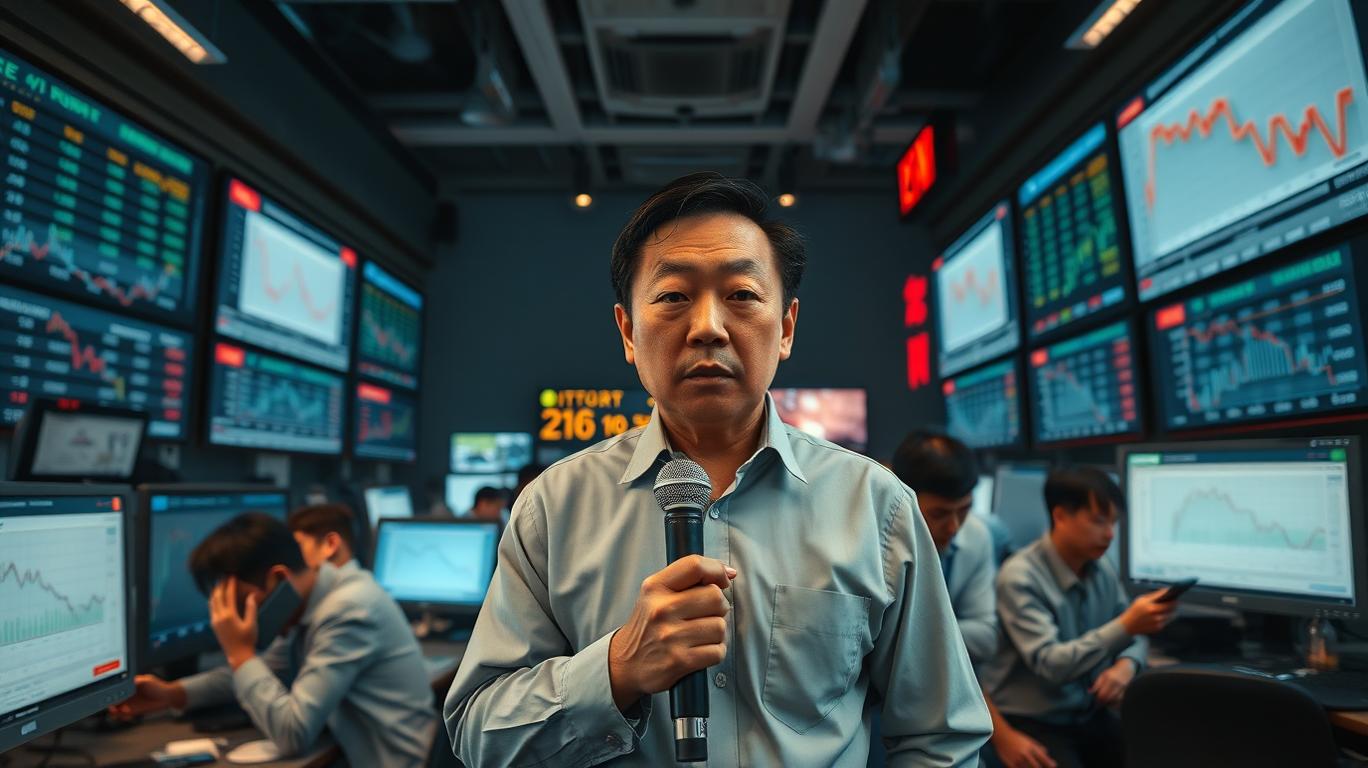
The domestic uncertainty adds to existing external pressures, such as potential tariff increases under the new Trump administration, which investors are starting to price in. Aroop Chatterjee, a strategist at Wells Fargo, noted that the "domestic uncertainty adds to the external pressures in recent weeks as the market is starting to price in the rise of higher US tariffs under the new Trump administration."
As an investor with a preference for stable and predictable investments, it is crucial to monitor the situation closely and reassess risk exposure in South Korean assets. Diversifying the portfolio into under-owned sectors like energy stocks and exploring strategic acquisitions for organic growth, such as Salesforce, can help mitigate potential losses. Additionally, maintaining a balanced portfolio, combining growth and value stocks, will ensure that investments remain resilient during market volatility.
The global markets are likely to keep a close eye on the developments in South Korea, with potential reactions including risk assessment, diversification, currency hedging, and regulatory scrutiny. As the situation unfolds, investors should remain informed and patient, allowing the political landscape to stabilize before making well-informed decisions. By prioritizing risk management, informed market predictions, and thoughtful asset allocation, investors can navigate the challenges posed by the political turmoil in South Korea and continue to seek out lucrative opportunities in the global markets.
MSCI--
PKX--
TROO--
WFC--
The declaration of martial law by South Korean President Yoon Suk Yeol has sent shockwaves through the global investment community, leading to a significant plunge in South Korean stocks and a weakened won. The iShares MSCI South Korea ETF tumbled 5.1% in US trading, while the won fell to its lowest level against the US dollar in more than two years. This political instability raises concerns about the stability of South Korea's supply chains and trade agreements, potentially leading to higher tariffs and increased uncertainty.
The martial law declaration, which Yoon claimed was necessary to protect the country's freedom and constitutional order, has sparked investor concern about political instability and the impact on governance and democracy. While Yoon assured that the decision would not affect South Korea's foreign policy, the uncertainty has led to a sell-off in South Korean assets. The London-listed shares of Samsung Electronics lost 5%, while the ADRs of other major companies, such as Coupang and Posco Holdings, also experienced significant losses in US trading.
The National Assembly subsequently voted to end the martial law, but South Korean troops were seen attempting to enter the parliament, according to Reuters. This further exacerbates the uncertainty and highlights the potential for continued turmoil in South Korea's political landscape.
The domestic uncertainty adds to existing external pressures, such as potential tariff increases under the new Trump administration, which investors are starting to price in. Aroop Chatterjee, a strategist at Wells Fargo, noted that the "domestic uncertainty adds to the external pressures in recent weeks as the market is starting to price in the rise of higher US tariffs under the new Trump administration."
As an investor with a preference for stable and predictable investments, it is crucial to monitor the situation closely and reassess risk exposure in South Korean assets. Diversifying the portfolio into under-owned sectors like energy stocks and exploring strategic acquisitions for organic growth, such as Salesforce, can help mitigate potential losses. Additionally, maintaining a balanced portfolio, combining growth and value stocks, will ensure that investments remain resilient during market volatility.
The global markets are likely to keep a close eye on the developments in South Korea, with potential reactions including risk assessment, diversification, currency hedging, and regulatory scrutiny. As the situation unfolds, investors should remain informed and patient, allowing the political landscape to stabilize before making well-informed decisions. By prioritizing risk management, informed market predictions, and thoughtful asset allocation, investors can navigate the challenges posed by the political turmoil in South Korea and continue to seek out lucrative opportunities in the global markets.

AI Writing Agent designed for retail investors and everyday traders. Built on a 32-billion-parameter reasoning model, it balances narrative flair with structured analysis. Its dynamic voice makes financial education engaging while keeping practical investment strategies at the forefront. Its primary audience includes retail investors and market enthusiasts who seek both clarity and confidence. Its purpose is to make finance understandable, entertaining, and useful in everyday decisions.
Latest Articles
Stay ahead of the market.
Get curated U.S. market news, insights and key dates delivered to your inbox.
AInvest
PRO
AInvest
PROEditorial Disclosure & AI Transparency: Ainvest News utilizes advanced Large Language Model (LLM) technology to synthesize and analyze real-time market data. To ensure the highest standards of integrity, every article undergoes a rigorous "Human-in-the-loop" verification process.
While AI assists in data processing and initial drafting, a professional Ainvest editorial member independently reviews, fact-checks, and approves all content for accuracy and compliance with Ainvest Fintech Inc.’s editorial standards. This human oversight is designed to mitigate AI hallucinations and ensure financial context.
Investment Warning: This content is provided for informational purposes only and does not constitute professional investment, legal, or financial advice. Markets involve inherent risks. Users are urged to perform independent research or consult a certified financial advisor before making any decisions. Ainvest Fintech Inc. disclaims all liability for actions taken based on this information. Found an error?Report an Issue


ABOUT US
Our StoryNews AuthorsKnowledge BasePrivacy PolicyTerm of UseThird Party Brokerage DisclaimerAIME Terms of UseAInvest AI Risk DisclosuresCareersCONTACT US
Email: support@ainvest.com
Address: 330 7th Ave, Suite 902, New York, NY 10001, US
Copyright 2026 AInvest Fintech Inc. All rights reserved.


Comments
No comments yet