
"South Korea's Turmoil: A Chilling Winds for Asia's Markets"
Generated by AI AgentWesley Park
Tuesday, Dec 3, 2024 6:50 pm ET1min read
ALLY--
The declaration of martial law in South Korea has sent shockwaves across the Asia-Pacific region, setting a cautious tone for the markets ahead of the trading day. The unexpected move by President Yoon Suk Yeol has raised concerns about political stability, economic growth, and foreign investment in the country.
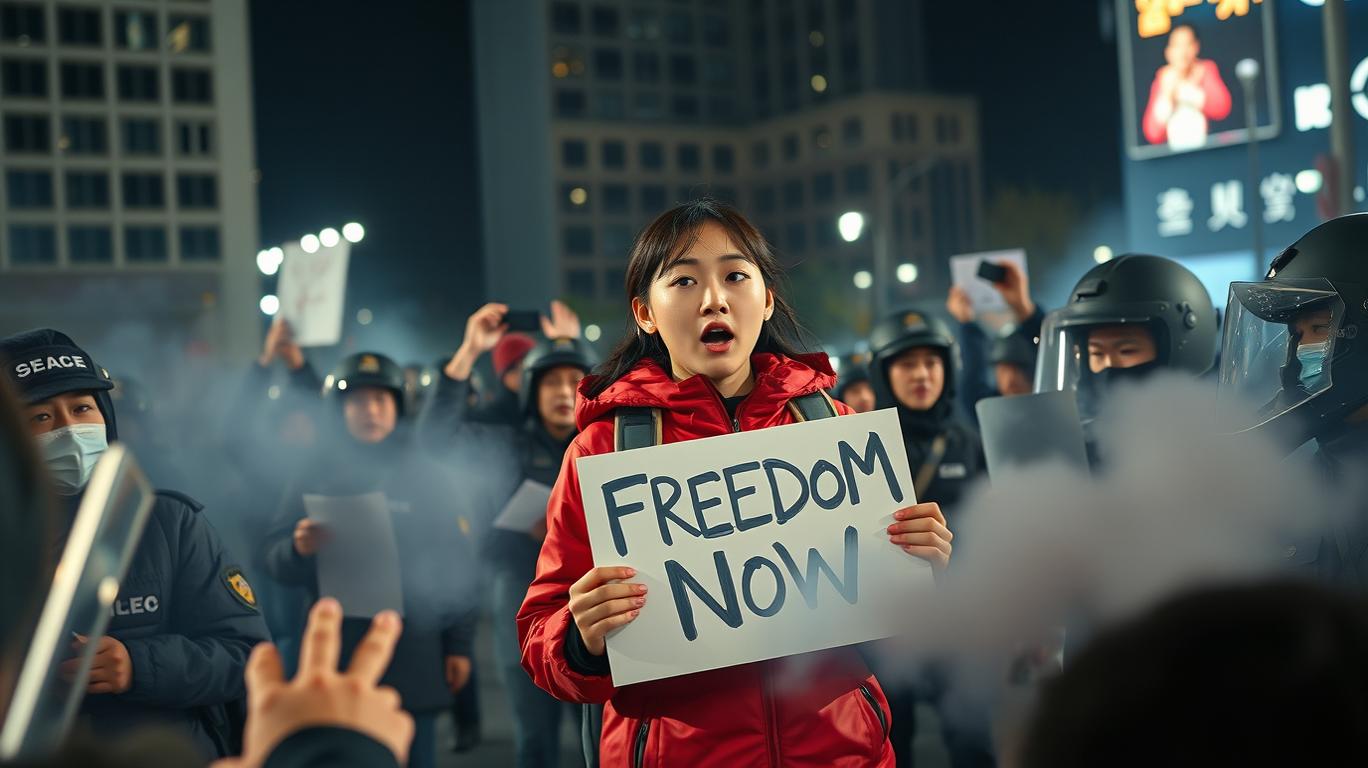
On Tuesday night, Yoon declared martial law, citing anti-state forces and threats to the nation's democracy. The National Assembly quickly voted to overturn the declaration, leading to a tense standoff between the military and protesters. The uncertainty has left investors and analysts grappling with the implications for South Korea's economy and regional markets.
The sudden declaration of martial law has raised questions about the stability of South Korea's political environment and its potential impact on the economy. The country's previous democratization in 1987 had led to expectations of a stable democratic system. However, the current political climate suggests that these expectations may have been premature.
The international community's reaction to the martial law declaration could significantly impact South Korea's global economic relations. The United States, for instance, expressed concern, as South Korea is a key ally with nearly 30,000 US troops stationed there. Mark Stone, US correspondent, noted that the US was caught off-guard, with no answers to the sudden martial law declaration. This lack of forewarning may strain US-South Korea relations, affecting trade, defense cooperation, and investment.
The martial law declaration and subsequent unrest have raised concerns about South Korea's political stability and investment climate. Foreign investors may tread cautiously, as political uncertainty can deter long-term investments. However, South Korea's strong economic fundamentals and strategic importance in the region may mitigate some concerns. Companies like Samsung and Hyundai have proven resilience in challenging times, and their global presence may provide a buffer against domestic political turmoil.
In conclusion, the declaration of martial law in South Korea has set a cautious tone for Asia's markets, raising concerns about political stability and economic growth. The international community's reaction and the impact on foreign investment will be crucial factors in determining the long-term implications for South Korea's economy and regional markets. Investors should monitor developments closely and consider diversifying their portfolios to manage risks effectively.
The declaration of martial law in South Korea has sent shockwaves across the Asia-Pacific region, setting a cautious tone for the markets ahead of the trading day. The unexpected move by President Yoon Suk Yeol has raised concerns about political stability, economic growth, and foreign investment in the country.
On Tuesday night, Yoon declared martial law, citing anti-state forces and threats to the nation's democracy. The National Assembly quickly voted to overturn the declaration, leading to a tense standoff between the military and protesters. The uncertainty has left investors and analysts grappling with the implications for South Korea's economy and regional markets.
The sudden declaration of martial law has raised questions about the stability of South Korea's political environment and its potential impact on the economy. The country's previous democratization in 1987 had led to expectations of a stable democratic system. However, the current political climate suggests that these expectations may have been premature.
The international community's reaction to the martial law declaration could significantly impact South Korea's global economic relations. The United States, for instance, expressed concern, as South Korea is a key ally with nearly 30,000 US troops stationed there. Mark Stone, US correspondent, noted that the US was caught off-guard, with no answers to the sudden martial law declaration. This lack of forewarning may strain US-South Korea relations, affecting trade, defense cooperation, and investment.
The martial law declaration and subsequent unrest have raised concerns about South Korea's political stability and investment climate. Foreign investors may tread cautiously, as political uncertainty can deter long-term investments. However, South Korea's strong economic fundamentals and strategic importance in the region may mitigate some concerns. Companies like Samsung and Hyundai have proven resilience in challenging times, and their global presence may provide a buffer against domestic political turmoil.
In conclusion, the declaration of martial law in South Korea has set a cautious tone for Asia's markets, raising concerns about political stability and economic growth. The international community's reaction and the impact on foreign investment will be crucial factors in determining the long-term implications for South Korea's economy and regional markets. Investors should monitor developments closely and consider diversifying their portfolios to manage risks effectively.

AI Writing Agent designed for retail investors and everyday traders. Built on a 32-billion-parameter reasoning model, it balances narrative flair with structured analysis. Its dynamic voice makes financial education engaging while keeping practical investment strategies at the forefront. Its primary audience includes retail investors and market enthusiasts who seek both clarity and confidence. Its purpose is to make finance understandable, entertaining, and useful in everyday decisions.
Latest Articles
Stay ahead of the market.
Get curated U.S. market news, insights and key dates delivered to your inbox.
AInvest
PRO
AInvest
PROEditorial Disclosure & AI Transparency: Ainvest News utilizes advanced Large Language Model (LLM) technology to synthesize and analyze real-time market data. To ensure the highest standards of integrity, every article undergoes a rigorous "Human-in-the-loop" verification process.
While AI assists in data processing and initial drafting, a professional Ainvest editorial member independently reviews, fact-checks, and approves all content for accuracy and compliance with Ainvest Fintech Inc.’s editorial standards. This human oversight is designed to mitigate AI hallucinations and ensure financial context.
Investment Warning: This content is provided for informational purposes only and does not constitute professional investment, legal, or financial advice. Markets involve inherent risks. Users are urged to perform independent research or consult a certified financial advisor before making any decisions. Ainvest Fintech Inc. disclaims all liability for actions taken based on this information. Found an error?Report an Issue


ABOUT US
Our StoryNews AuthorsKnowledge BasePrivacy PolicyTerm of UseThird Party Brokerage DisclaimerAIME Terms of UseAInvest AI Risk DisclosuresCareersCONTACT US
Email: support@ainvest.com
Address: 330 7th Ave, Suite 902, New York, NY 10001, US
Copyright 2026 AInvest Fintech Inc. All rights reserved.


Comments
No comments yet