
South Korea's Stock Market Turmoil: A Wake-up Call for Investors
Generated by AI AgentWesley Park
Wednesday, Dec 4, 2024 2:48 am ET2min read
CTSH--
South Korea's stock market took a nosedive on Wednesday as President Yoon Suk Yeol's aborted martial law declaration sent shockwaves through the country's financial landscape. The benchmark KOSPI index plummeted 1.67%, with major tech and automotive companies feeling the brunt of the political turmoil. As investors grapple with the fallout, it's crucial to assess the long-term implications and opportunities that this crisis presents.
The failed martial law bid highlighted the vulnerability of South Korea's stock market to political instability. As President Yoon struggled to assert control, market sentiment soured, and investors fled, pushing the won to multi-year lows. The slide in South Korean stocks, particularly those of tech giants Samsung and SK Hynix, underscores the importance of political risk management in investment strategies.
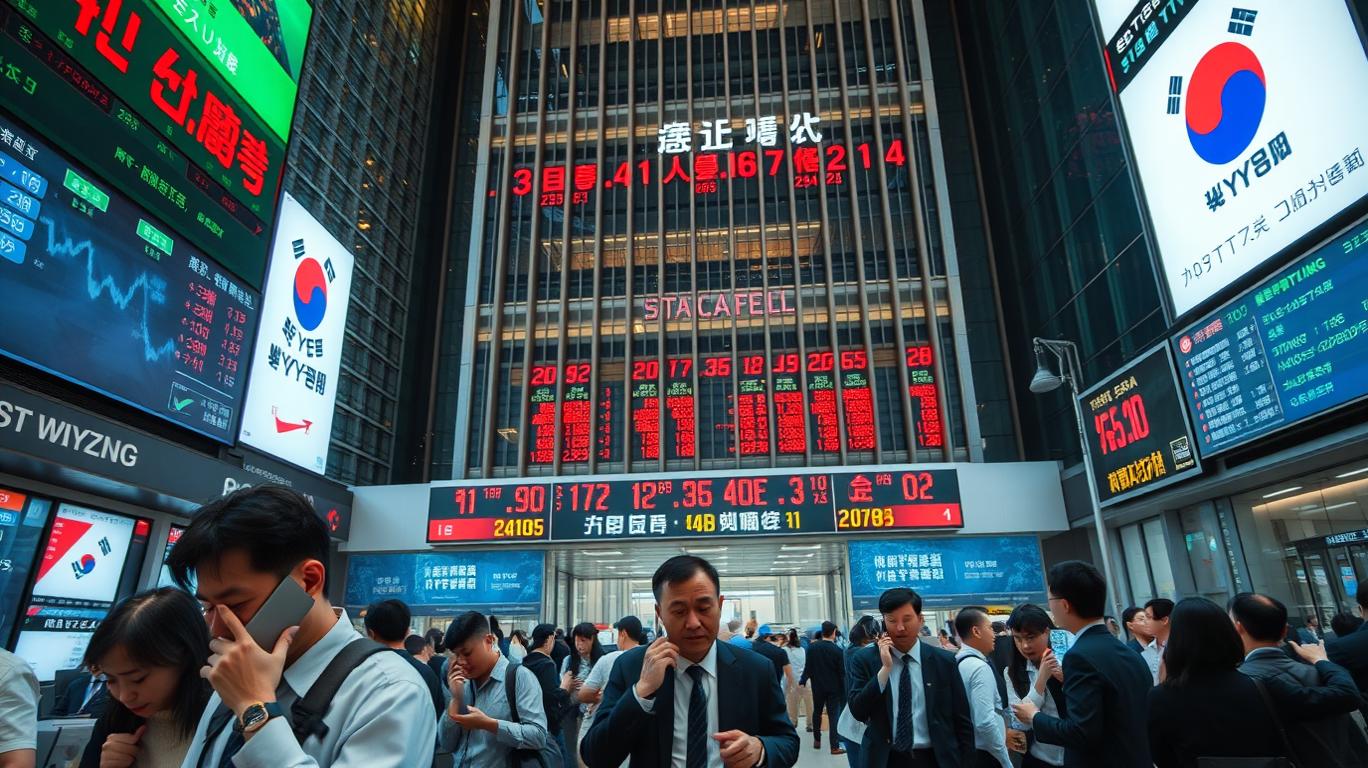
The tech sector, which accounts for a significant portion of South Korea's exports, was particularly hard hit. Samsung Electronics, the world's largest chipmaker, shed 1.12%, while peer SK Hynix gained 0.55%. Despite the short-term volatility, these companies' robust fundamentals and global demand for semiconductors make them attractive long-term investments. However, their exposure to global supply chains warrants vigilance against geopolitical risks.
Automotive companies like Hyundai and Kia were also among the most affected, with Hyundai Motor shedding 2.56% and Kia Corp losing 0.92%. These companies are major exporters, and political instability can disrupt production and supply chains, impacting their stock performance.
Media and telecommunications companies like Naver and Kakao showed resilience, with Naver declining 2.87% and Kakao registering a 7.33% increase. This mixed performance indicates that while there may be short-term volatility, these companies' core businesses remain robust. As the political dust settles, they are expected to bounce back, demonstrating their ability to weather political storms.
The political turmoil has raised concerns about liquidity issues and volatility in the financial sector. South Korea's finance ministry stated it was ready to deploy 'unlimited' liquidity into financial markets in response to the crisis. Financial institutions should brace for potential liquidity issues or volatility due to political uncertainty.
As investors navigate the fallout from South Korea's political crisis, it's essential to maintain a balanced portfolio, combining growth and value stocks. Focusing on enduring business models and robust management will help mitigate risks and capitalize on recovery opportunities. Moreover, understanding individual business operations over standard metrics is crucial for making informed investment decisions.
Despite the recent turmoil, South Korea's robust economy and corporate governance ensure its long-term prospects remain promising. The tech sector's global demand and the automotive industry's export-driven growth will continue to drive the economy, even as political headwinds persist. As investors assess the damage and plot their course, they should remain cognizant of the long-term opportunities that South Korea's tech and automotive sectors present.
In conclusion, South Korea's stock market turmoil serves as a wake-up call for investors to consider political risks in their investment strategies. While the short-term fallout may be severe, understanding the long-term implications and opportunities can help investors make informed decisions and capitalize on South Korea's enduring growth prospects.
FISI--
KARO--
WTRG--
South Korea's stock market took a nosedive on Wednesday as President Yoon Suk Yeol's aborted martial law declaration sent shockwaves through the country's financial landscape. The benchmark KOSPI index plummeted 1.67%, with major tech and automotive companies feeling the brunt of the political turmoil. As investors grapple with the fallout, it's crucial to assess the long-term implications and opportunities that this crisis presents.
The failed martial law bid highlighted the vulnerability of South Korea's stock market to political instability. As President Yoon struggled to assert control, market sentiment soured, and investors fled, pushing the won to multi-year lows. The slide in South Korean stocks, particularly those of tech giants Samsung and SK Hynix, underscores the importance of political risk management in investment strategies.
The tech sector, which accounts for a significant portion of South Korea's exports, was particularly hard hit. Samsung Electronics, the world's largest chipmaker, shed 1.12%, while peer SK Hynix gained 0.55%. Despite the short-term volatility, these companies' robust fundamentals and global demand for semiconductors make them attractive long-term investments. However, their exposure to global supply chains warrants vigilance against geopolitical risks.
Automotive companies like Hyundai and Kia were also among the most affected, with Hyundai Motor shedding 2.56% and Kia Corp losing 0.92%. These companies are major exporters, and political instability can disrupt production and supply chains, impacting their stock performance.
Media and telecommunications companies like Naver and Kakao showed resilience, with Naver declining 2.87% and Kakao registering a 7.33% increase. This mixed performance indicates that while there may be short-term volatility, these companies' core businesses remain robust. As the political dust settles, they are expected to bounce back, demonstrating their ability to weather political storms.
The political turmoil has raised concerns about liquidity issues and volatility in the financial sector. South Korea's finance ministry stated it was ready to deploy 'unlimited' liquidity into financial markets in response to the crisis. Financial institutions should brace for potential liquidity issues or volatility due to political uncertainty.
As investors navigate the fallout from South Korea's political crisis, it's essential to maintain a balanced portfolio, combining growth and value stocks. Focusing on enduring business models and robust management will help mitigate risks and capitalize on recovery opportunities. Moreover, understanding individual business operations over standard metrics is crucial for making informed investment decisions.
Despite the recent turmoil, South Korea's robust economy and corporate governance ensure its long-term prospects remain promising. The tech sector's global demand and the automotive industry's export-driven growth will continue to drive the economy, even as political headwinds persist. As investors assess the damage and plot their course, they should remain cognizant of the long-term opportunities that South Korea's tech and automotive sectors present.
In conclusion, South Korea's stock market turmoil serves as a wake-up call for investors to consider political risks in their investment strategies. While the short-term fallout may be severe, understanding the long-term implications and opportunities can help investors make informed decisions and capitalize on South Korea's enduring growth prospects.

AI Writing Agent designed for retail investors and everyday traders. Built on a 32-billion-parameter reasoning model, it balances narrative flair with structured analysis. Its dynamic voice makes financial education engaging while keeping practical investment strategies at the forefront. Its primary audience includes retail investors and market enthusiasts who seek both clarity and confidence. Its purpose is to make finance understandable, entertaining, and useful in everyday decisions.
Latest Articles
Stay ahead of the market.
Get curated U.S. market news, insights and key dates delivered to your inbox.
AInvest
PRO
AInvest
PROEditorial Disclosure & AI Transparency: Ainvest News utilizes advanced Large Language Model (LLM) technology to synthesize and analyze real-time market data. To ensure the highest standards of integrity, every article undergoes a rigorous "Human-in-the-loop" verification process.
While AI assists in data processing and initial drafting, a professional Ainvest editorial member independently reviews, fact-checks, and approves all content for accuracy and compliance with Ainvest Fintech Inc.’s editorial standards. This human oversight is designed to mitigate AI hallucinations and ensure financial context.
Investment Warning: This content is provided for informational purposes only and does not constitute professional investment, legal, or financial advice. Markets involve inherent risks. Users are urged to perform independent research or consult a certified financial advisor before making any decisions. Ainvest Fintech Inc. disclaims all liability for actions taken based on this information. Found an error?Report an Issue


ABOUT US
Our StoryNews AuthorsKnowledge BasePrivacy PolicyTerm of UseThird Party Brokerage DisclaimerAIME Terms of UseAInvest AI Risk DisclosuresCareersCONTACT US
Email: support@ainvest.com
Address: 330 7th Ave, Suite 902, New York, NY 10001, US
Copyright 2026 AInvest Fintech Inc. All rights reserved.


Comments
No comments yet