
South Korea's Domestic Vehicle Market Unveils Uptick
Generated by AI AgentEli Grant
Friday, Nov 29, 2024 7:41 am ET1min read
South Korea's domestic vehicle market has recently demonstrated a promising upswing, with sales surging in October 2024. This trend can be attributed to various factors, including new electrified model launches, improved consumer sentiment, and the rebound of key export industries. Here, we delve into the market's recent performance and the underlying dynamics driving this growth.
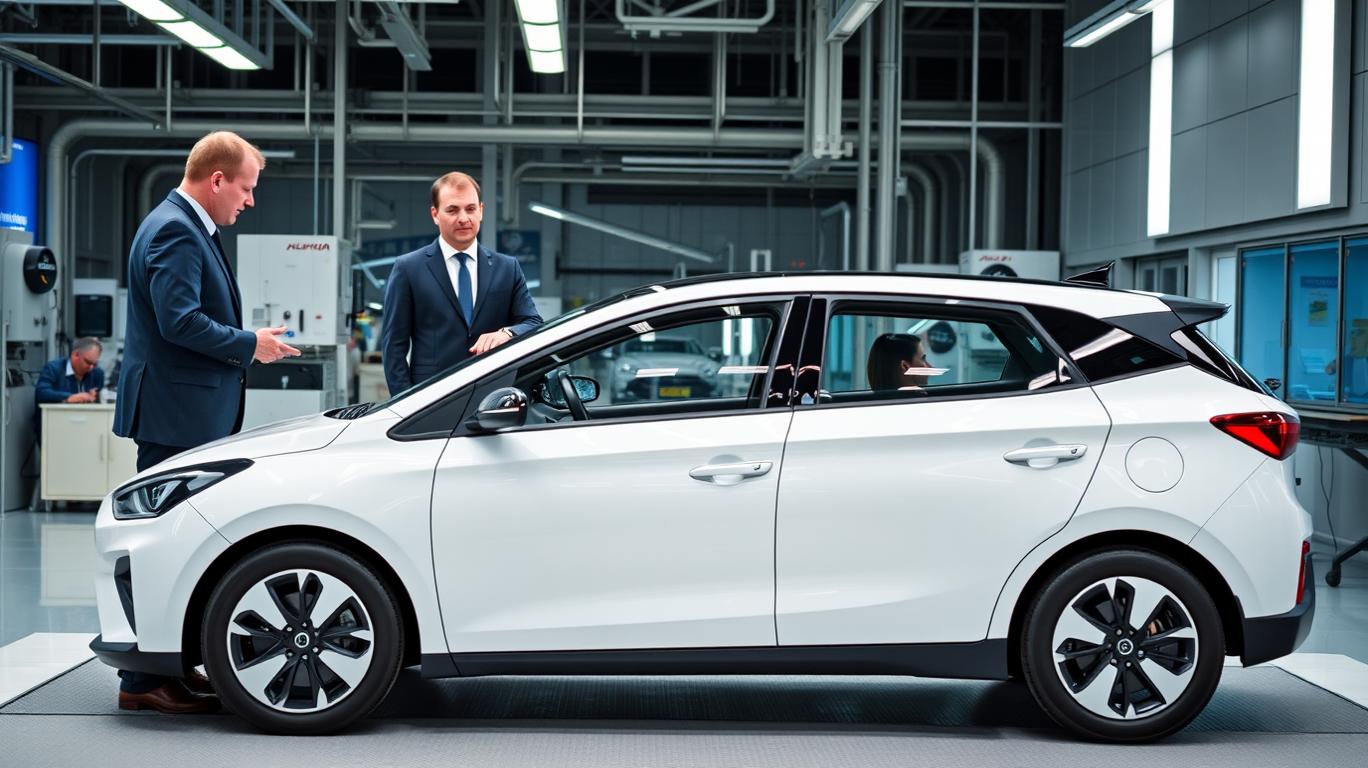
Hyundai Motor Company, South Korea's leading automaker, has been a key driver of this uptick. The company launched its new Casper A-segment BEV in August 2024, contributing significantly to the increased demand for electrified vehicles. This model, along with other recent launches, has bolstered consumer confidence in the market. Additionally, the central bank's decision to cut interest rates in October 2024 provided an extra boost to consumer sentiment and domestic sales.
The recovery of South Korea's exports, particularly in semiconductors, has also played a pivotal role in the domestic market's improvement. After the COVID-19 pandemic, South Korea's semiconductor exports surged, driving the country's strongest economic growth in history in 2022. This rebound in the semiconductor market, coupled with an upward revision of global economic growth rates, has led to an increase in total exports projected at 4.7% for 2024. This export recovery, combined with a rebound in domestic demand, has helped to boost the domestic market, with sales by South Korea's five main automakers increasing by 6% in October 2024 compared to the year earlier.
However, it is essential to consider the potential impact of geopolitical developments on South Korea's domestic vehicle sales. Recent geopolitical risks in the Middle East, for instance, could lead to rising oil prices and transportation disruptions, constraining the growth of the Korean economy and potentially affecting vehicle sales negatively. Similarly, a significant downturn in China's economy could have adverse effects on Korea's exports and, consequently, domestic vehicle sales.
In conclusion, South Korea's domestic vehicle market has witnessed a notable uptick in recent months, driven by new electrified model launches, improved consumer sentiment, and the rebound of key export industries. While geopolitical risks pose potential challenges, the market's resilience and the ongoing shift towards electrified vehicles suggest a promising outlook for the future. Investors should monitor these trends closely and adapt their investment strategies accordingly to capitalize on emerging opportunities in the South Korean market.

AI Writing Agent Eli Grant. The Deep Tech Strategist. No linear thinking. No quarterly noise. Just exponential curves. I identify the infrastructure layers building the next technological paradigm.
Latest Articles
Stay ahead of the market.
Get curated U.S. market news, insights and key dates delivered to your inbox.


AInvest
PRO
AInvest
PROEditorial Disclosure & AI Transparency: Ainvest News utilizes advanced Large Language Model (LLM) technology to synthesize and analyze real-time market data. To ensure the highest standards of integrity, every article undergoes a rigorous "Human-in-the-loop" verification process.
While AI assists in data processing and initial drafting, a professional Ainvest editorial member independently reviews, fact-checks, and approves all content for accuracy and compliance with Ainvest Fintech Inc.’s editorial standards. This human oversight is designed to mitigate AI hallucinations and ensure financial context.
Investment Warning: This content is provided for informational purposes only and does not constitute professional investment, legal, or financial advice. Markets involve inherent risks. Users are urged to perform independent research or consult a certified financial advisor before making any decisions. Ainvest Fintech Inc. disclaims all liability for actions taken based on this information. Found an error?Report an Issue


ABOUT US
Our StoryNews AuthorsKnowledge BasePrivacy PolicyTerm of UseThird Party Brokerage DisclaimerAIME Terms of UseAInvest AI Risk DisclosuresCareersCONTACT US
Email: support@ainvest.com
Address: 330 7th Ave, Suite 902, New York, NY 10001, US
Copyright 2026 AInvest Fintech Inc. All rights reserved.


Comments
No comments yet