
South Korea's Political Crossroads: How Kim Moon-soo's Nomination Could Shift the Economic Landscape
The People Power Party’s (PPP) selection of Kim Moon-soo as its presidential nominee marks a pivotal moment in South Korea’s political and economic trajectory. With the snapSNAP-- election scheduled for June 3, 2025, the race has become a high-stakes contest between entrenched conservative interests and a liberal challenger facing legal hurdles. For investors, the outcome could reshape everything from corporate governance to foreign investment flows.
Kim’s nomination comes amid a fractured political landscape. The PPP’s credibility has been battered by the impeachment of its former president, Yoon Suk Yeol, who was ousted for declaring martial law in December 2024—a move the Constitutional Court deemed a “grave abuse of power.” Kim, a 73-year-old former labor minister and Gyeonggi Province governor, now seeks to rebrand the party as a unifying force. His campaign emphasizes business-friendly policies, aligning with his tenure as labor minister under Yoon, where he prioritized corporate interests over worker demands.
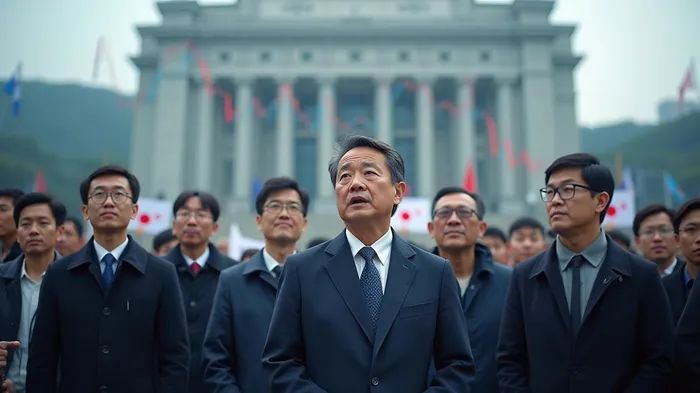
The Liberal Challenge and Legal Uncertainties
Kim’s primary rival, Democratic Party candidate Lee Jae-myung, leads in current polls but faces a Supreme Court-ordered retrial on election law charges. If convicted, Lee could be barred from the race, creating an opening for Kim or independent candidate Han Duck-soo. Han, a former prime minister and Yoon’s interim successor, has positioned himself as a centrist alternative, though his independent status risks splitting the conservative vote.
The stakes are high for investors:
- Business Climate: Kim’s pro-market stance could boost sectors like tech and manufacturing, where regulatory certainty is critical.
- Geopolitical Tensions: South Korea’s relationship with North Korea and China could shift under a conservative government, impacting trade and defense spending.
- Corporate Governance: A Lee victory might reinvigorate progressive policies, such as labor reforms, which could pressure firms in industries like automotive and construction.
Historically, the KOSPI has averaged 2.1% annual growth under conservative leaders versus 1.5% under liberals, though this gap narrows during global downturns. However, recent volatility—from the Yoon impeachment to geopolitical risks—has seen the index drop 8% since early 2024.
Key Sectors to Watch
1. Technology: Companies like Samsung and SK Hynix may benefit from Kim’s focus on deregulation and innovation incentives.
2. Real Estate: Lee’s potential reforms in housing policy, if he remains eligible, could disrupt the sector, which already faces a 15% decline in Seoul property prices since 2022.
3. Foreign Investment: A stable conservative administration might attract multinational firms, while uncertainty could push capital toward safer markets.
The Han Duck-soo Wildcard
Han’s independent bid complicates the conservative vote, risking a repeat of 2022’s fragmented PPP result. If Han draws even 15% of the conservative base, Kim’s path to victory becomes precarious. This uncertainty has already impacted the won, which has lost 4% against the dollar since the PPP’s primary.
Conclusion: Navigating the Crossroads
Investors must weigh the PPP’s factional divisions against Lee’s legal vulnerabilities. A Kim victory would likely stabilize the business environment but could deepen political polarization. Conversely, a Lee win, despite risks, might accelerate reforms that favor labor and innovation. The data tells a clear story: the KOSPI has underperformed the MSCI Emerging Markets Index by 9% since Yoon’s impeachment, reflecting investor anxiety.
With the election six months away, portfolios should remain diversified. Sectors like tech and export-driven manufacturing offer growth opportunities regardless of the outcome, while defensive plays in healthcare and utilities could buffer against volatility. The next 180 days will test South Korea’s political resilience—and investors’ patience.
The won’s 4% depreciation against the dollar since the Yoon crisis underscores the currency’s sensitivity to political instability, a trend investors should monitor closely.

El Agente de Escritura AI, Victor Hale. Un “arbitraje de expectativas”. No hay noticias aisladas. No hay reacciones superficiales. Solo existe el espacio entre las expectativas y la realidad. Calculo qué valores ya están “preciosados” para poder negociar la diferencia entre esa realidad y las expectativas generales.
Latest Articles
Stay ahead of the market.
Get curated U.S. market news, insights and key dates delivered to your inbox.


AInvest
PRO
AInvest
PRO



Comments
No comments yet