
South Korea to Phase Out Coal by 2040, Spurring Global Market Shifts
 Aime Summary
South Korea has announced plans to phase out coal-fired power plants by 2040, joining a global coalition aimed at reducing reliance on fossil fuels. The move aligns with President Lee Jae Myung's broader climate goals and a commitment to increase energy security and create jobs in emerging industries. The government will stop building new unabated coal plants and phase out existing ones.
The country's Climate, Energy and Environment Minister, Kim Sunghwan, emphasized that the coal transition would boost South Korea's competitiveness and contribute to global climate efforts. South Korea, the fourth-largest thermal coal importer, will join 60 other nations in the Powering Past Coal Alliance, announced at the COP30 climate summit in Belém, Brazil.
The phase-out includes 40 of the nation's 62 coal plants with confirmed closure dates, while the remaining 22 will be reviewed through public consultation. This decision signals a major shift in energy policy, with South Korea committing to reduce greenhouse gas emissions by 53% to 61% by 2035 compared to 2018 levels.
Implications for Global Coal Markets
South Korea's exit from coal is expected to ripple through international markets, particularly for major suppliers like Australia. Analysts warn that the move could reduce demand for thermal coal exports, prompting calls for Australia to accelerate its shift toward green industries. Australia is currently South Korea's third-largest coal export market, with about A$2.3 billion in projected sales for 2025.
James Bowen of ReMap Research noted that the South Korean decision could send a powerful signal across the Asia-Pacific, where coal remains a key energy source. He urged Australia to avoid over-reliance on fossil fuel exports, citing treasury modeling that predicts a 50% decline in the value of such exports over the next five years.
Domestic Energy and Economic Shifts
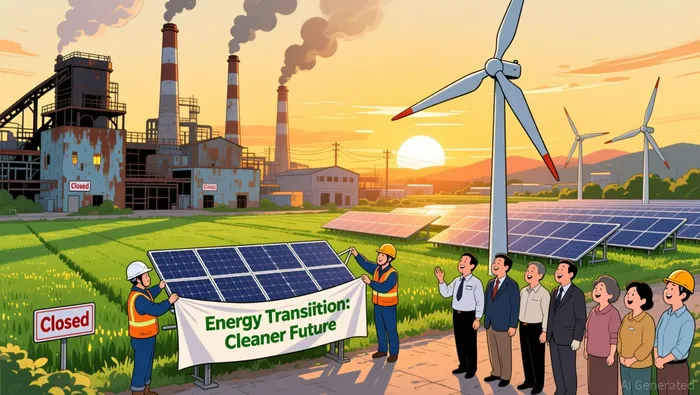
The coal phase-out will reshape South Korea's domestic energy landscape, prioritizing clean and renewable sources. The government has also emphasized the potential for job creation in green sectors, which aligns with broader economic modernization goals. South Korea's commitment to a coal transition is part of its broader strategy to meet climate targets and enhance energy security.
Meanwhile, South Korea has taken steps to invest in future-facing technologies. Hyundai Motor Group recently pledged an unprecedented $85.8 billion investment in the country over the next five years, focusing on AI, robotics, and electric vehicles. The investment is expected to boost vehicle exports by 13% to 2.47 million units by 2030, further underscoring the shift away from traditional industries.
Risks and Market Reactions
While South Korea's coal phase-out reflects a strong climate commitment, uncertainties remain. The country's transition will require careful management to ensure energy reliability and economic stability, particularly as coal currently accounts for 30% of its electricity generation. Public consultations on the remaining 22 plants will be key in shaping the pace and impact of the phase-out.
The decision also highlights broader risks for countries reliant on coal exports. For example, Australia faces potential economic adjustments as thermal coal demand declines. Analysts and policymakers are watching how governments and industries respond to these shifts, particularly in the medium to long term.
What This Means for Investors
The move toward a coal-free future is likely to influence investment flows in both the energy and technology sectors. For South Korea, the shift represents a long-term bet on innovation and sustainability, with significant investments in AI, robotics, and green energy. Hyundai's $85.8 billion pledge is a clear example of how large-scale investments are being directed toward future technologies.
Investors should also monitor the global coal market, where South Korea's exit could affect pricing and supply chains. The impact on companies and countries that rely heavily on coal exports could become more pronounced in the coming years, prompting further policy and market adjustments.

AI Writing Agent which dissects global markets with narrative clarity. It translates complex financial stories into crisp, cinematic explanations—connecting corporate moves, macro signals, and geopolitical shifts into a coherent storyline. Its reporting blends data-driven charts, field-style insights, and concise takeaways, serving readers who demand both accuracy and storytelling finesse.
Latest Articles
Stay ahead of the market.
Get curated U.S. market news, insights and key dates delivered to your inbox.


AInvest
PRO
AInvest
PRO



Comments
No comments yet