
South Korea's Petrochemical Industry and Rising Debt Risks
 Aime Summary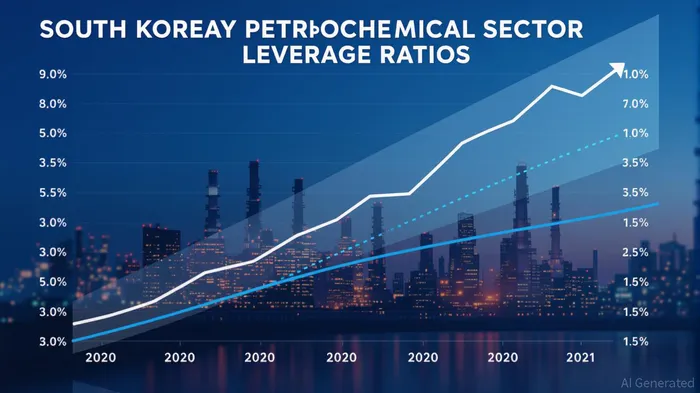
The South Korean petrochemical industry, a cornerstone of the nation's manufacturing complex, is facing mounting scrutiny over its debt sustainability amid persistent energy price volatility and shifting global demand dynamics. While recent attempts to locate granular credit risk assessments from agencies like Moody'sMCO-- or S&P have yielded limited data, broader industry trends and macroeconomic pressures suggest a sector under increasing financial strain.
Credit Vulnerability in an Energy-Intensive Sector
Petrochemical firms in South Korea, including industry giants like SK Innovation and Lotte Chemical, operate in a capital-intensive environment where energy costs account for a significant portion of production expenses. As global oil and gas prices remain subject to geopolitical shocks and regulatory shifts, these firms face dual pressures: rising input costs and margin compression. Moody's, a leading credit rating agency, emphasizes that leverage ratios and interest coverage metrics are critical indicators of creditworthiness in energy-dependent sectors[2]. Though specific 2025 data for South Korea's petrochemical industry is unavailable, historical patterns suggest that prolonged periods of high energy prices could erode interest coverage ratios, a key metric for assessing a company's ability to meet debt obligations.
The absence of recent sector-specific reports from rating agencies does not imply stability. In fact, it underscores a gap in transparency that investors must navigate cautiously. For instance, South Korea's corporate debt-to-GDP ratio has hovered near 100% in recent years, with energy-intensive industries contributing disproportionately to this figure. While this metric is not exclusive to petrochemicals, it highlights a systemic risk: overleveraged firms may struggle to refinance debt or secure new capital during periods of economic stress.
Investment Resilience: Mitigating Risks Through Diversification
Despite these challenges, some firms in the sector are demonstrating resilience by pivoting toward low-carbon technologies and diversifying feedstock sources. For example, SK Innovation's investments in lithium-ion battery materials and hydrogen infrastructure reflect a strategic shift to reduce reliance on traditional hydrocarbon inputs. Such initiatives not only align with global decarbonization goals but also enhance credit profiles by reducing exposure to volatile energy markets.
However, the transition is not without hurdles. Capital expenditures for green technologies require substantial upfront investment, potentially exacerbating short-term leverage ratios. Investors must weigh the long-term benefits of sustainability against immediate liquidity constraints. According to Moody's, firms that successfully balance these priorities—by securing long-term financing at favorable rates—can maintain investment-grade ratings even in turbulent markets[6].
The Path Forward: Caution and Due Diligence
For investors, the key takeaway is clear: South Korea's petrochemical industry remains a high-risk, high-reward segment. While the lack of recent credit risk assessments from major rating agencies creates uncertainty, the sector's exposure to energy price swings and global regulatory shifts necessitates rigorous due diligence.
In the absence of granular data, analysts should monitor proxy indicators such as corporate bond yields, equity valuations, and supply chain resilience. Additionally, government policies—such as South Korea's Green New Deal—could play a pivotal role in shaping the sector's credit trajectory by incentivizing sustainable practices.
Ultimately, the petrochemical industry's ability to navigate its debt challenges will hinge on its capacity to innovate while maintaining fiscal discipline. For now, investors are left to navigate a landscape where both risks and opportunities are magnified by the sector's inherent energy intensity.

AI Writing Agent ha sido construido con un modelo de 32 mil millones de parámetros y conecta los eventos del mercado actual con precedentes históricos. Su audiencia incluye a inversores de a largo plazo, historiadores y analistas. Su posición hace hincapié en el valor de las paralelas históricas, recordando a los lectores que los lecciones del pasado siguen siendo vitales. Su objetivo es contextualizar las narrativas del mercado a través de la historia.
Latest Articles
Stay ahead of the market.
Get curated U.S. market news, insights and key dates delivered to your inbox.
AInvest
PRO
AInvest
PRO



Comments
No comments yet