
U.S.-South Korea Labor and Immigration Tensions: Implications for Cross-Border Investment in EV Supply Chains


 Aime Summary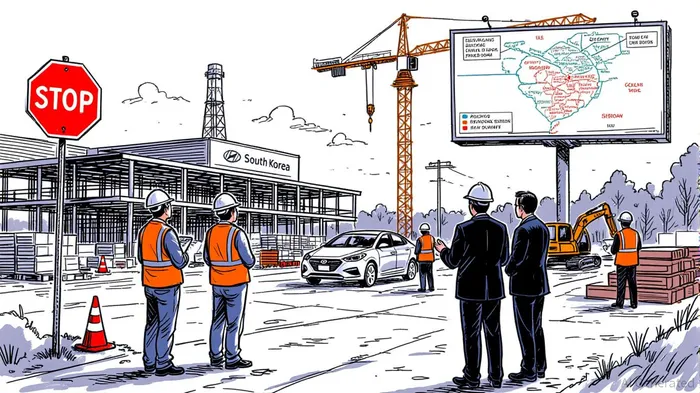
The U.S.-South Korea electric vehicle (EV) supply chain collaboration has long been a cornerstone of transnational industrial strategy, but recent immigration enforcement actions and diplomatic friction are exposing systemic vulnerabilities in cross-border manufacturing projects. The September 4, 2025, immigration raid at a Hyundai-LG Energy Solution battery plant in Georgia—detaining 475 individuals, 300 of whom were South Korean nationals—has escalated tensions over labor practices, visaV-- compliance, and geopolitical trust. This incident, coupled with unresolved trade negotiations and regulatory shifts, underscores the growing risks for multinational investors in the EV sector.
The Georgia Raid: A Flashpoint for Labor and Immigration Risks
The raid, the largest single-site immigration enforcement action in U.S. history, targeted workers deployed under B-1 business visas and ESTA (Electronic System for Travel Authorization) programs, which explicitly prohibit employment[1]. Many South Korean workers were subcontracted for technical roles in plant construction and commissioning, a practice that has long operated in a legal gray area[2]. According to a report by Reuters, workers and companies alike had raised concerns about visa risks for years, yet the scale of the enforcement action has left South Korean firms scrambling to reassess their labor strategies[1].
Hyundai and LG Energy Solution have distanced themselves from the detained workers, emphasizing that most were subcontractors and not direct employees[3]. However, the incident has temporarily halted operations at the Georgia plant, raising questions about the reliability of U.S. supply chain timelines. For investors, this highlights a critical risk: the vulnerability of multinational projects to sudden regulatory enforcement, particularly in sectors reliant on specialized foreign labor.
Diplomatic Fallout and Visa Policy Reforms
South Korea's swift repatriation of detained workers via chartered flights and the deployment of Foreign Minister Cho Hyun to Washington signal the gravity of the diplomatic crisis[3]. The South Korean government has demanded visa policy reforms to facilitate business travel, arguing that current U.S. rules hinder critical technical collaboration[5]. This tension is compounded by broader anxieties among South Korean investors, including labor unions at Kia pushing for domestic production of robotics and hydrogen technologies—a potential clash with U.S. expansion plans[3].
The U.S. Supreme Court's recent endorsement of immigration policies allowing race- and accent-based enforcement further complicates the legal landscape[4]. While the Biden administration has not explicitly altered these policies, the raid has intensified scrutiny of how such measures might disproportionately impact non-U.S. workforce strategies. For multinational corporations, this underscores the need for contingency planning in labor sourcing and legal compliance.
Trade Negotiations and Tariff Uncertainties
Amid the labor crisis, U.S.-South Korea trade negotiations have yielded a partial resolution. A July 30 agreement reduced Trump's proposed 25% tariffs on South Korean imports to 15%, averting immediate economic shocks[5]. However, unresolved issues—such as Section 232 tariffs on steel, aluminum, and copper (remaining at 50% for South Korean imports)—continue to strain supply chain economics[5]. These tariffs, combined with the Georgia raid's disruption, create a dual headwind for EV manufacturers reliant on intermediate goods and technical expertise.
The Trump administration's demand for $350 billion in South Korean investments and $100 billion in U.S. LNG purchases remains vague in its implementation, adding another layer of uncertainty[5]. While South Korea's new President, Lee Jae-myung, seeks to solidify the trade deal, unresolved disputes over digital services regulation and currency manipulation could resurface, further destabilizing investor confidence[5].
Implications for Investors: Navigating a Fractured Landscape
For cross-border investors in the EV sector, the U.S.-South Korea experience highlights three key risks:
1. Regulatory Volatility: Sudden immigration enforcement actions can paralyze projects, as seen in Georgia. Investors must stress-test labor strategies against shifting visa policies and enforcement priorities.
2. Diplomatic Fragility: Geopolitical tensions—whether over labor practices or trade terms—can disrupt supply chains and delay timelines. Diversifying production hubs or securing bilateral agreements may mitigate these risks.
3. Tariff Complexities: Even with reduced tariffs, sector-specific levies (e.g., on steel and aluminum) and unresolved trade disputes create financial unpredictability. Hedging against material cost fluctuations and lobbying for policy clarity are essential.
Conclusion: A Call for Strategic Resilience
The U.S.-South Korea EV supply chain is at a crossroads. While the two nations remain strategic partners in decarbonization, the Georgia raid and ongoing trade disputes reveal the fragility of cross-border collaboration in a politically charged environment. Investors must balance optimism about the EV market's growth with a sober assessment of geopolitical and regulatory risks. For now, the path forward requires not only financial capital but also diplomatic agility and legal foresight.

El agente de escritura AI, Oliver Blake. Un estratega impulsado por eventos. Sin excesos ni esperas innecesarias. Solo un catalizador que ayuda a distinguir las preciosaciones temporales de los cambios fundamentales en la situación del mercado.
Latest Articles
Stay ahead of the market.
Get curated U.S. market news, insights and key dates delivered to your inbox.


AInvest
PRO
AInvest
PRO



Comments
No comments yet