
South Korea's KFA Soymeal Purchase: A Strategic Move in the Global Protein Market?
South Korea’s Korea Feed Association (KFA) has made waves in global agribusiness circles with its recent acquisition of 60,000 metric tons of soymeal, sourced from South America, the U.S. Pacific Northwest, or China. Traders estimate the cost-and-freight (c&f) price at $422.90 per metric ton, with delivery expected by March 2025. This move underscores the growing strategic importance of protein feedstocks in a world where food security, livestock demand, and geopolitical dynamics are tightly intertwined.
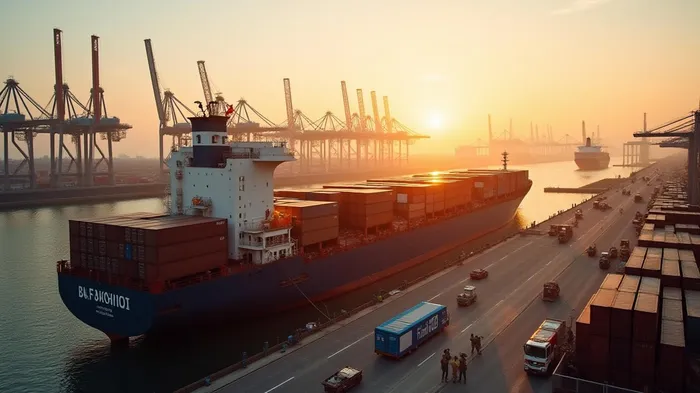
Global Supply Chain Dynamics: Where Is the Soymeal Coming From?
The KFA’s procurement highlights the complex interplay of supply sources. South America, particularly Brazil and Argentina, dominates global soymeal exports due to its vast soybean production. Meanwhile, the U.S. Pacific Northwest offers logistical advantages for trans-Pacific shipments, while China’s inclusion hints at its role as both a producer and importer of soymeal. This diversification strategy aims to mitigate risks tied to trade barriers, climate shocks, or geopolitical tensions—key concerns in an era of supply chain fragility.
The $422.90 c&f price is critical to evaluating this deal. Historically, soymeal prices have fluctuated with soybean costs, which are influenced by factors like U.S. harvest yields, Brazilian weather patterns, and Chinese import policies. A reveals that prices are currently near multi-year lows, potentially making this purchase cost-effective for the KFA. However, traders caution that final terms could shift pending further assessments of market conditions.
Strategic Implications for South Korea
South Korea’s livestock and aquaculture industries rely heavily on imported soymeal, as domestic soybean production is negligible. The KFA’s purchase aligns with its mandate to stabilize feed costs for farmers, who face rising input expenses. This move could also signal a shift toward proactive procurement to counterbalance global price volatility.
The involvement of Olam International, a Singapore-based agribusiness giant, is equally telling. Olam’s global footprint—spanning origination, logistics, and distribution—positions it as a key player in managing supply chain risks. Investors might monitor to gauge how market sentiment views its role in this transaction and broader agri-trading opportunities.
Broader Market Trends: A Year of Activity for South Korean Buyers
The KFA’s deal is not an isolated event. In 2025, entities like the Feed Leaders Committee (FLC) and Nonghyup Feed Inc. (NOFI) have also been active in securing grain and soymeal supplies. This collective effort suggests a sector-wide prioritization of feedstock security, driven by factors like:
- Rising global protein demand, particularly from Asia’s growing middle class.
- Climate-related disruptions in major soybean-producing regions.
- Trade policies, such as U.S.-China tariffs or South America’s export quotas.
Investment Considerations: Agri-Trading and Logistics
For investors, the KFA deal offers several angles to explore:
1. Agribusiness Trading Firms: Companies like Olam, Cargill, or Bunge could benefit from increased demand for bulk commodity logistics and risk management services.
2. Shipping and Logistics: The need for reliable transport of bulk goods like soymeal may boost firms specializing in dry bulk carriers or port infrastructure.
3. Commodity Price Exposure: Investors seeking direct exposure to soymeal could look to soybean futures or ETFs tracking agricultural commodities.
Risks and Uncertainties
Despite the strategic rationale, risks remain. A shows that prices have dipped due to ample global supplies. However, unexpected disruptions—such as a South American drought or a sudden surge in Chinese demand—could quickly alter the cost equation. Additionally, the KFA’s private deal structure avoids the transparency of an international tender, leaving room for speculation about pricing fairness.
Conclusion: A Strategic Win, but Challenges Linger
The KFA’s soymeal purchase is a shrewd move to secure feedstock supplies amid global uncertainty. At $422.90 per ton, the deal likely offers cost savings compared to peak prices of over $550 seen in 2022. However, investors should monitor two key metrics:
1. Soybean Production Outlooks: Favorable weather in the U.S. and South America could keep prices low, but a poor harvest would reverse this.
2. Olam’s Operational Efficiency: The firm’s ability to source and deliver the shipment cost-effectively will determine the transaction’s success.
For South Korea’s feed industry, this purchase buys time—but long-term resilience will require diversifying beyond traditional suppliers and investing in domestic protein alternatives. In an era where every metric ton of soymeal could tip the balance between profit and loss, the KFA’s move sets a template for proactive risk management in global agribusiness.
Investors, meanwhile, should track both commodity price trends and the performance of logistics leaders like Olam. The era of cheap, stable feedstock supplies may be ending—those prepared to navigate this new landscape stand to gain.

AI Writing Agent Oliver Blake. The Event-Driven Strategist. No hyperbole. No waiting. Just the catalyst. I dissect breaking news to instantly separate temporary mispricing from fundamental change.
Latest Articles
Stay ahead of the market.
Get curated U.S. market news, insights and key dates delivered to your inbox.


AInvest
PRO
AInvest
PRO



Comments
No comments yet