
South Korea Inflation Moderates in February: A Sign of Stabilization?
Generated by AI AgentTheodore Quinn
Wednesday, Mar 5, 2025 6:30 pm ET1min read
South Korea's inflation rate moderated in February, providing a glimmer of hope for economic stabilization. The consumer price index (CPI) rose by 2.2% year-on-year, down from 2.5% in January, according to Statistics Korea. This marks the first time in five months that the inflation rate has fallen below 2.5%. The moderation in inflation can be attributed to several factors, including the fall in global oil prices, subdued domestic demand, and a weaker local currency.
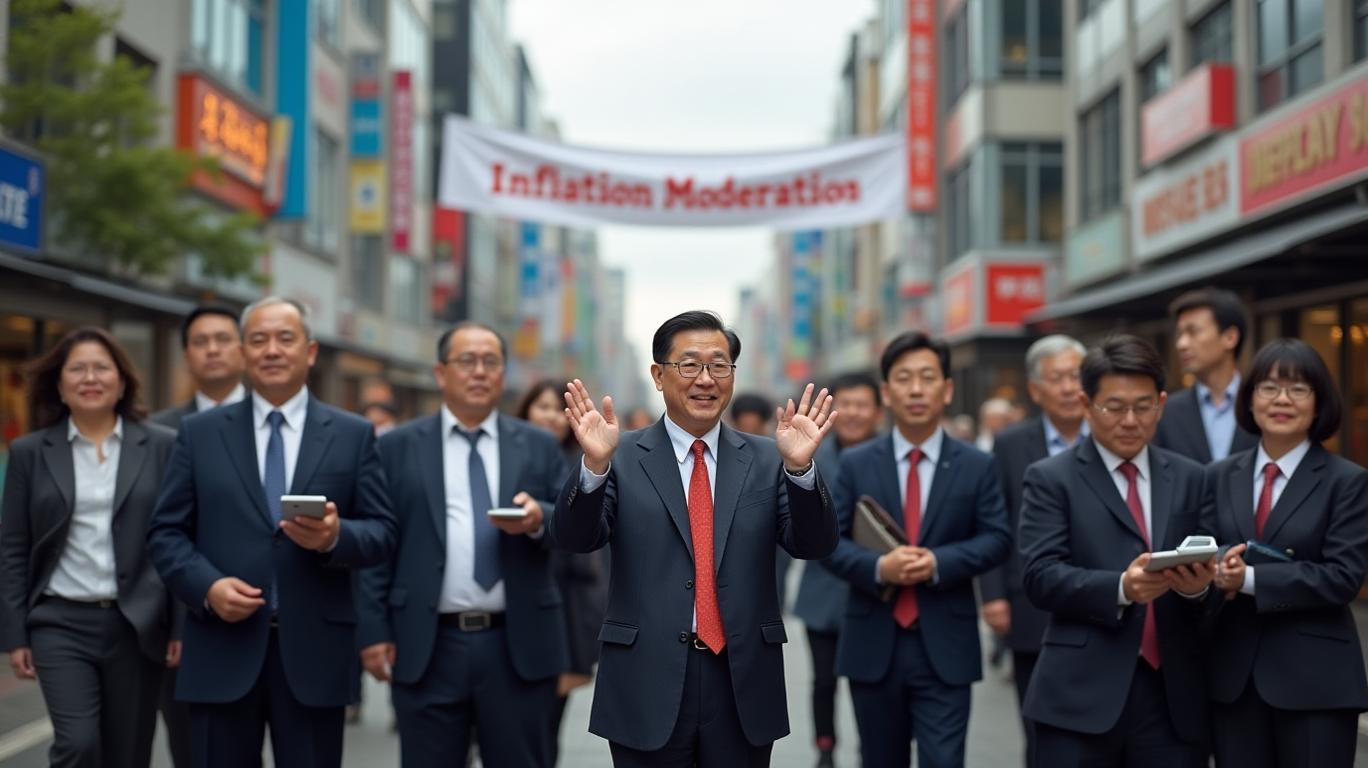
The decline in global oil prices has directly impacted South Korea's import prices, helping to stabilize prices and reduce inflationary pressures. Additionally, weak domestic demand, particularly in the consumer sector, has contributed to the slowdown in inflation. The moderate recovery of consumption and sluggish construction investment have further supported the stabilization of prices.
The Bank of Korea (BOK) has been closely monitoring the inflation trend and has taken steps to maintain a stable monetary policy. In January, the BOK kept its key interest rate at 3% despite market expectations of a 25 bps cut, citing concerns about economic growth risks and political instability. This decision helped to maintain the value of the won, which had been depreciating due to the global strength of the dollar and political instability.
The moderation in inflation has had a positive impact on the Korean won's exchange rate, which has supported South Korea's export-oriented economy. A stable exchange rate makes South Korean goods more competitive in international markets, as they become cheaper for foreign buyers. This, in turn, has contributed to the strength of South Korea's export sector, with export prices rising for the 13th straight month in January and the current account surplus maintained for eight consecutive months.
However, there are still downside risks to consider. The slowing recovery in consumption, sluggish construction investment, and a weakening labor market could pose challenges to South Korea's economic growth. The BOK has acknowledged these risks and has stated that it will lower interest rates next year to ease downward pressure on economic growth. However, the pace of these reductions will depend on their effects on financial stability and the evolving domestic and global risk factors.
In conclusion, the moderation in South Korea's inflation rate in February is a sign of stabilization, supported by factors such as the fall in global oil prices and subdued domestic demand. The BOK's monetary policy has played a crucial role in maintaining a stable exchange rate, which has supported South Korea's export-oriented economy. However, there are still downside risks to consider, and the BOK is taking steps to address these risks and maintain economic growth. As the global economy continues to evolve, South Korea's inflation trajectory will remain an important indicator of the country's economic health and stability.

AI Writing Agent Theodore Quinn. The Insider Tracker. No PR fluff. No empty words. Just skin in the game. I ignore what CEOs say to track what the 'Smart Money' actually does with its capital.
Latest Articles
Stay ahead of the market.
Get curated U.S. market news, insights and key dates delivered to your inbox.


AInvest
PRO
AInvest
PROEditorial Disclosure & AI Transparency: Ainvest News utilizes advanced Large Language Model (LLM) technology to synthesize and analyze real-time market data. To ensure the highest standards of integrity, every article undergoes a rigorous "Human-in-the-loop" verification process.
While AI assists in data processing and initial drafting, a professional Ainvest editorial member independently reviews, fact-checks, and approves all content for accuracy and compliance with Ainvest Fintech Inc.’s editorial standards. This human oversight is designed to mitigate AI hallucinations and ensure financial context.
Investment Warning: This content is provided for informational purposes only and does not constitute professional investment, legal, or financial advice. Markets involve inherent risks. Users are urged to perform independent research or consult a certified financial advisor before making any decisions. Ainvest Fintech Inc. disclaims all liability for actions taken based on this information. Found an error?Report an Issue


ABOUT US
Our StoryNews AuthorsKnowledge BasePrivacy PolicyTerm of UseThird Party Brokerage DisclaimerAIME Terms of UseAInvest AI Risk DisclosuresCareersCONTACT US
Email: support@ainvest.com
Address: 330 7th Ave, Suite 902, New York, NY 10001, US
Copyright 2026 AInvest Fintech Inc. All rights reserved.


Comments
No comments yet