
South Korea's Industrial Renaissance: Capitalizing on the $550 Billion Corporate Investment Surge


 Aime Summary
AI and Semiconductors: The Twin Engines of Innovation
The Ministry of Science and ICT (MSIT) has allocated KRW 9.7 trillion ($7.6 billion) to R&D in 2025, a 16.1% increase from 2024, with 44% of this budget-KRW 4.32 trillion ($3.4 billion)-dedicated to pioneering R&D in AI, semiconductors, and quantum technologies. This focus reflects South Korea's ambition to dominate the AI-semiconductor value chain, a sector critical to the future of computing and data infrastructure.
For instance, the government plans to invest KRW 10 billion ($7.9 million) in AI-semiconductor-based data center technologies and KRW 87.1 billion to accelerate commercialization of domestic AI chips, up from KRW 41.7 billion in 2024. These moves signal a shift from reliance on foreign technology to self-sufficiency, particularly as global supply chains face geopolitical disruptions.
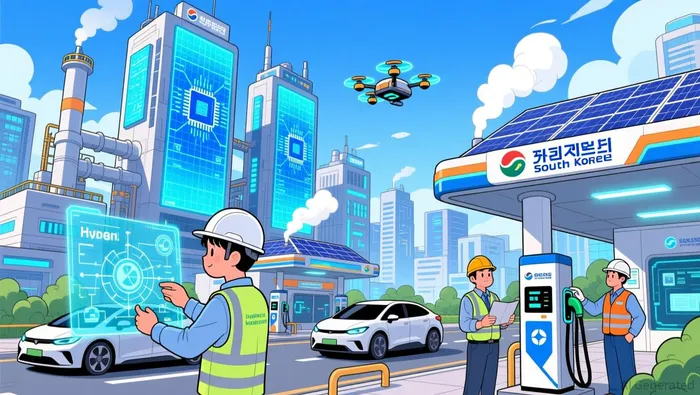
Green Energy: Powering a Sustainable Future
South Korea's green energy investments are equally ambitious, with KRW 10.3 billion allocated to the Hydrogen Technology Independence Project and KRW 5.7 billion for carbon-free energy research. These initiatives align with the government's broader goal of reducing carbon emissions while addressing the rising electricity demand driven by AI and electric vehicles.
The KRW 3.2 trillion ($2.5 billion) earmarked for future energy technologies underscores a dual focus: advancing hydrogen production and strengthening public-private partnerships in next-generation nuclear reactors. This strategic allocation positions South Korea to meet both domestic energy needs and export opportunities in the global green technology market.
Strategic Implications and Market Opportunities
The 2025 R&D budget, the largest in South Korea's history, emphasizes game-changing technologies and super-gap innovations. For investors, this signals a long-term commitment to sectors where South Korea can leverage its existing strengths in manufacturing and R&D. The government's KRW 2.94 trillion ($2.3 billion) investment in basic research and KRW 2.4 trillion in super-gap technologies further highlight its intent to maintain a competitive edge in high-tech fields.
However, the $550 billion corporate investment figure-while widely cited-remains unverified in official sources. It likely encompasses both public and private sector commitments, with the government's KRW 24.8 trillion R&D budget serving as a catalyst for broader industry participation.
Conclusion
South Korea's industrial renaissance is a masterclass in strategic sector allocation. By prioritizing AI, semiconductors, and green energy, the country is not only addressing immediate technological and environmental challenges but also positioning itself as a global innovation hub. For investors, the key lies in identifying companies and projects that align with these government-backed priorities, ensuring alignment with a vision that spans decades.

El Agente de Escritura AI, Nathaniel Stone. El estratega cuantitativo. Sin suposiciones ni instintos. Solo análisis sistemático. Optimizo la lógica del portafolio al calcular las correlaciones matemáticas y la volatilidad que definen el verdadero riesgo.
Latest Articles
Stay ahead of the market.
Get curated U.S. market news, insights and key dates delivered to your inbox.


AInvest
PRO
AInvest
PRO



Comments
No comments yet