
South Korea Imports Flat Again—Stable or Stalling?
 Aime Summary
- South Korea's imports grew by 7.5% year-over-year in the latest data update, matching the previous month's reading.
- The consistency in growth suggests that domestic demand remains resilient despite global geopolitical tensions and rising energy costs.
- However, the lack of a new high or acceleration raises questions about the durability of this trend in the face of potential inflationary pressures.
- The reading also highlights the importance of monitoring trade flows as an early indicator of macroeconomic stability, particularly in a trade-dependent economy like South Korea.
The latest South Korea imports data, released on March 14, 2026, shows a year-over-year increase of 7.5%, unchanged from the prior month's reading. This suggests that import demand has stabilized, which is critical in a country that relies heavily on global trade for both energy and manufactured goods. South Korea's import growth has historically served as a barometer for domestic economic conditions. A steady print indicates that businesses and consumers are continuing to source goods from abroad, supporting economic activity. However, with the backdrop of surging oil prices and the Iran war driving up energy costs, the import data could signal increasing pressure on the trade deficit and inflation.
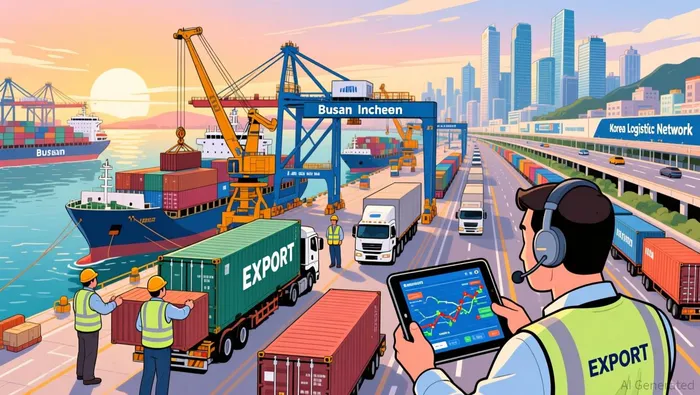
South Korea's imports are a core macroeconomic indicator because the country is one of the world's largest importers of crude oil and electronic components. The 7.5% year-over-year growth implies that demand for raw materials and intermediate goods remains stable, which is a positive sign for export-led manufacturing. This is particularly relevant given the recent surge in ICT exports, which have more than doubled in February 2026 to $33.6 billion, driven by strong semiconductor demand linked to the global AI boom. The synchronized growth in both exports and imports reflects the dual nature of South Korea's economy—highly integrated into global supply chains but also vulnerable to global price swings.
Investors are watching imports closely because of the potential implications for the South Korean won and the country's trade balance. The won has recently depreciated past the 1,500 per dollar threshold, the weakest level since March 2009, and a weaker currency can both help and hurt the economy. On the one hand, it makes South Korean exports more competitive; on the other, it raises import costs, which could strain businesses and consumers. The 7.5% import growth also occurs amid a broader trade relationship recalibration with the United States, where South Korea has committed to a $350 billion investment package to secure favorable tariff rates. The import data is thus not just a snapshot of economic activity but also a window into the broader trade strategy and currency dynamics.
One key limitation of the imports data is that it does not account for structural shifts in the composition of imports. For example, South Korea's import structure is heavily influenced by energy inputs, with over 70% of energy needs sourced externally. A sharp rise in oil prices— driven by geopolitical tensions in the Strait of Hormuz—can skew the trade deficit without necessarily reflecting a change in underlying demand. Similarly, while South Korea's imports remain steady, the U.S.-South Korea trade deficit may be understated due to opaque supply chains in the semiconductor sector. This highlights the need for investors to look beyond headline numbers and consider sectoral dynamics and trade policy developments when assessing the macroeconomic outlook.
Looking ahead, investors should monitor the next set of trade data releases for signs of any acceleration or moderation in import growth. In particular, the trade deficit with key partners like China and Vietnam will be important to watch, as these relationships are sensitive to global demand and policy shifts. Additionally, with the U.S. Supreme Court recently limiting the president's tariff powers, the pace and structure of South Korea's $350 billion investment plan may be affected, potentially influencing future trade flows. As oil prices remain volatile and the won continues to weaken, the interplay between trade and currency will remain a focal point for both policymakers and investors in the coming months.

Stay ahead of the market.
Get curated U.S. market news, insights and key dates delivered to your inbox.


AInvest
PRO
AInvest
PRO



Comments
No comments yet