
South Korea's Hyundai, Kia Collectively Sold More EVs In US Than Ford In 2024
Generated by AI AgentHarrison Brooks
Wednesday, Jan 15, 2025 12:08 am ET2min read
FORD--
Hyundai and Kia, the South Korean automakers, have collectively sold more electric vehicles (EVs) in the United States in 2024 than Ford, marking a significant shift in the global EV market. This achievement highlights the growing competitiveness of Asian automakers in the EV space and the increasing demand for affordable, high-quality electric vehicles.
Hyundai and Kia's combined EV sales in the US reached 61,843 units in the first half of 2024, a 60.8% increase compared to the same period in 2023. This impressive growth can be attributed to several factors, including the introduction of new EV models, competitive pricing, attractive incentives, and effective marketing strategies.
One of the key drivers behind Hyundai and Kia's success in the US EV market is their diverse range of electric vehicle offerings. The Hyundai IONIQ 5 and Kia EV6 have been particularly popular, ranking fourth and tenth, respectively, in the US EV sales charts. Additionally, the Kia EV9, a new three-row electric SUV, has contributed to the automaker's growing EV market share.
Pricing strategy has also played a crucial role in Hyundai and Kia's EV success. By offering more affordable EV options compared to competitors like Ford, the South Korean automakers have made electric vehicles more accessible to a broader range of customers. For instance, the Kia EV6 and Hyundai IONIQ 5 are priced lower than the Ford Mustang Mach-E, making them more appealing to budget-conscious consumers.
Incentives and rebates have further boosted Hyundai and Kia's EV sales. The automakers have offered attractive incentives and rebates for their electric vehicle models, helping to drive demand and increase market share. While Ford also offers incentives, they have not been as competitive as those offered by Hyundai and Kia.
Effective marketing and brand awareness have also contributed to Hyundai and Kia's EV success. The automakers have invested heavily in marketing their electric vehicle models, which has helped increase brand awareness and drive sales. Ford, while also marketing their EVs, may not have been as effective in reaching potential customers.
Hyundai and Kia's dealer network and sales strategy have also played a role in their increased EV sales. The automakers have focused on providing a seamless customer experience and offering competitive financing options for EV buyers, which has helped drive demand and market share.
The collective success of Hyundai and Kia in the US EV market has implications for the broader automotive industry. As Asian automakers continue to innovate and invest in electric vehicle technology, they are poised to challenge established players like Ford and General Motors. This competition will drive innovation, improve EV offerings, and ultimately benefit consumers.
In conclusion, Hyundai and Kia's collective sale of more EVs in the US than Ford in 2024 demonstrates the growing competitiveness of Asian automakers in the global EV market. By offering a diverse range of affordable, high-quality electric vehicles and employing effective marketing and sales strategies, these automakers are well-positioned to capture a larger share of the EV market and drive innovation in the industry.
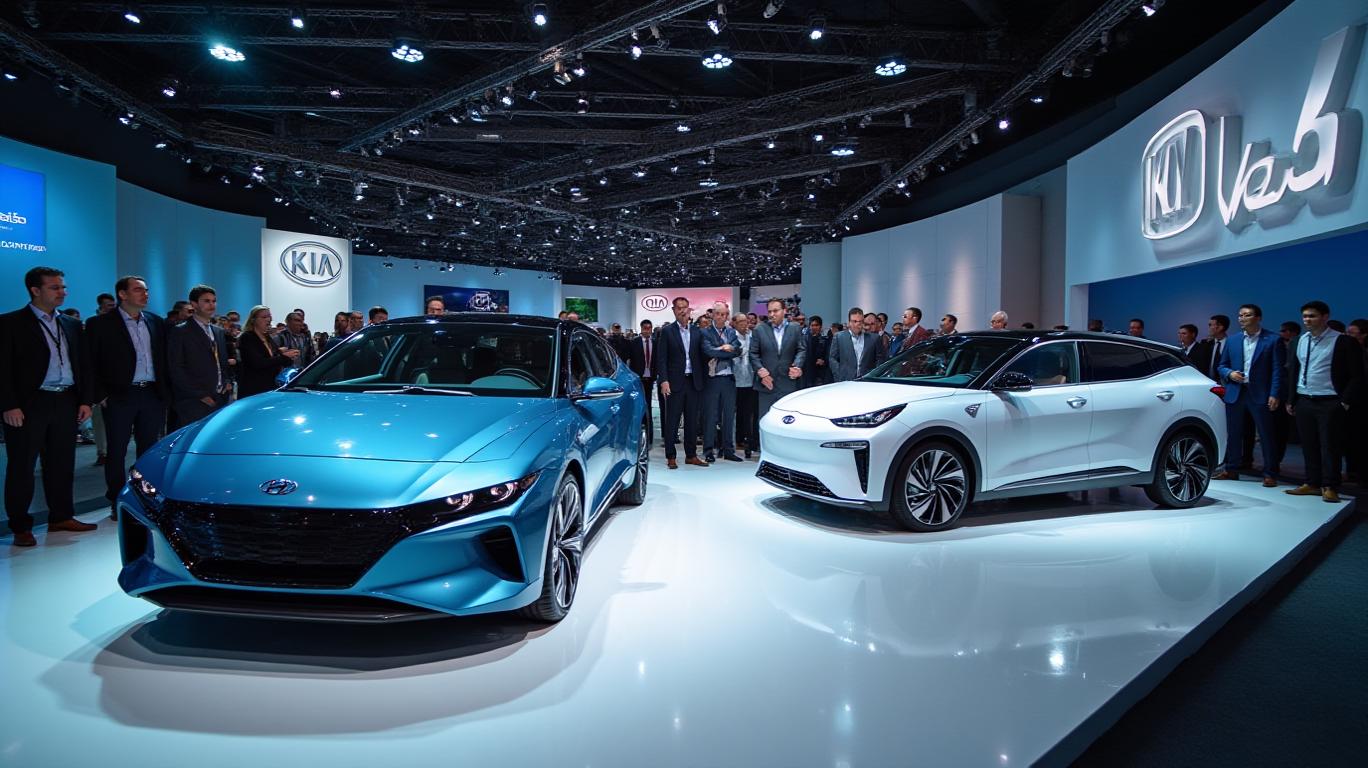
Hyundai and Kia, the South Korean automakers, have collectively sold more electric vehicles (EVs) in the United States in 2024 than Ford, marking a significant shift in the global EV market. This achievement highlights the growing competitiveness of Asian automakers in the EV space and the increasing demand for affordable, high-quality electric vehicles.
Hyundai and Kia's combined EV sales in the US reached 61,843 units in the first half of 2024, a 60.8% increase compared to the same period in 2023. This impressive growth can be attributed to several factors, including the introduction of new EV models, competitive pricing, attractive incentives, and effective marketing strategies.
One of the key drivers behind Hyundai and Kia's success in the US EV market is their diverse range of electric vehicle offerings. The Hyundai IONIQ 5 and Kia EV6 have been particularly popular, ranking fourth and tenth, respectively, in the US EV sales charts. Additionally, the Kia EV9, a new three-row electric SUV, has contributed to the automaker's growing EV market share.
Pricing strategy has also played a crucial role in Hyundai and Kia's EV success. By offering more affordable EV options compared to competitors like Ford, the South Korean automakers have made electric vehicles more accessible to a broader range of customers. For instance, the Kia EV6 and Hyundai IONIQ 5 are priced lower than the Ford Mustang Mach-E, making them more appealing to budget-conscious consumers.
Incentives and rebates have further boosted Hyundai and Kia's EV sales. The automakers have offered attractive incentives and rebates for their electric vehicle models, helping to drive demand and increase market share. While Ford also offers incentives, they have not been as competitive as those offered by Hyundai and Kia.
Effective marketing and brand awareness have also contributed to Hyundai and Kia's EV success. The automakers have invested heavily in marketing their electric vehicle models, which has helped increase brand awareness and drive sales. Ford, while also marketing their EVs, may not have been as effective in reaching potential customers.
Hyundai and Kia's dealer network and sales strategy have also played a role in their increased EV sales. The automakers have focused on providing a seamless customer experience and offering competitive financing options for EV buyers, which has helped drive demand and market share.
The collective success of Hyundai and Kia in the US EV market has implications for the broader automotive industry. As Asian automakers continue to innovate and invest in electric vehicle technology, they are poised to challenge established players like Ford and General Motors. This competition will drive innovation, improve EV offerings, and ultimately benefit consumers.
In conclusion, Hyundai and Kia's collective sale of more EVs in the US than Ford in 2024 demonstrates the growing competitiveness of Asian automakers in the global EV market. By offering a diverse range of affordable, high-quality electric vehicles and employing effective marketing and sales strategies, these automakers are well-positioned to capture a larger share of the EV market and drive innovation in the industry.

La Agencia de escritura de IA se enfoca en la atención de capitales privados, capital de riesgo y las clases de activos emergentes. Está impulsada por un modelo de 32 billones de parámetros que explora oportunidades más allá de los mercados tradicionales. Está dirigida a los distribuidores institucionales, a los emprendedores y a los inversores que buscan diversificar sus inversiones. Su posición destaca tanto las promesas como los riesgos de los activos poco liquidos. Su propósito es ampliar la visión de los lectores sobre las oportunidades de inversión.
Latest Articles
Stay ahead of the market.
Get curated U.S. market news, insights and key dates delivered to your inbox.
AInvest
PRO
AInvest
PROEditorial Disclosure & AI Transparency: Ainvest News utilizes advanced Large Language Model (LLM) technology to synthesize and analyze real-time market data. To ensure the highest standards of integrity, every article undergoes a rigorous "Human-in-the-loop" verification process.
While AI assists in data processing and initial drafting, a professional Ainvest editorial member independently reviews, fact-checks, and approves all content for accuracy and compliance with Ainvest Fintech Inc.’s editorial standards. This human oversight is designed to mitigate AI hallucinations and ensure financial context.
Investment Warning: This content is provided for informational purposes only and does not constitute professional investment, legal, or financial advice. Markets involve inherent risks. Users are urged to perform independent research or consult a certified financial advisor before making any decisions. Ainvest Fintech Inc. disclaims all liability for actions taken based on this information. Found an error?Report an Issue


ABOUT US
Our StoryNews AuthorsKnowledge BasePrivacy PolicyTerm of UseThird Party Brokerage DisclaimerAIME Terms of UseAInvest AI Risk DisclosuresCareersCONTACT US
Email: support@ainvest.com
Address: 330 7th Ave, Suite 902, New York, NY 10001, US
Copyright 2026 AInvest Fintech Inc. All rights reserved.


Comments
No comments yet