
South Korea's Emerging Crypto and AI Ecosystem: A Strategic Investment Play in the Next Global Tech Frontier
 Aime Summary
South Korea is rapidly emerging as a global powerhouse in artificial intelligence (AI) and digital assets, driven by a combination of visionary government policies, cutting-edge infrastructure development, and a thriving startup ecosystem. As the world grapples with the next wave of technological disruption, the country's strategic investments in AI and crypto are creating a fertile ground for innovation and high-growth opportunities. For investors, this represents a unique window to capitalize on a market poised to redefine global tech and finance.
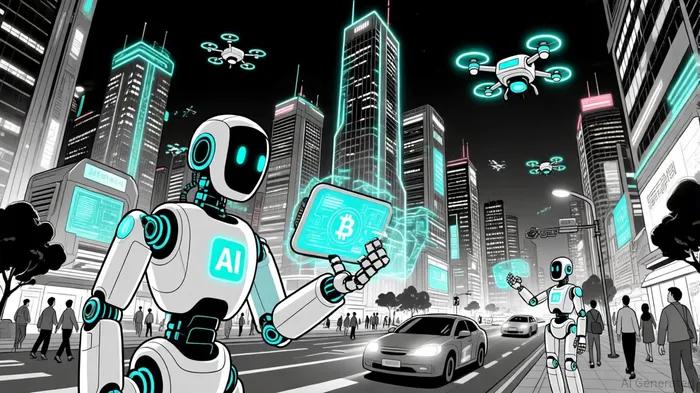
Government-Driven AI Infrastructure: Building the Backbone of a Digital Economy
South Korea's ambition to become one of the world's top three AI nations by 2026 is underpinned by a $65B investment plan through 2027. Central to this effort is the acquisition of 18,000 high-performance GPUs by 2026 and the deployment of 15,000 advanced GPUs at the National AI Computing Center, with full operations expected by 2027, the AI roadmap indicates. These initiatives are not just about computational power-they signal a broader strategy to position South Korea as a hub for AI research, talent, and commercialization.
The government's collaboration with global tech giants like AWS, MicrosoftMSFT--, and NVIDIANVDA-- further accelerates this vision. For instance, SK Group and AWS are constructing South Korea's largest AI data center in Ulsan, equipped with 60,000 GPUs and a 1 gigawatt energy capacity. Such projects are complemented by tax incentives and regulatory reforms aimed at attracting private capital, ensuring the country's AI infrastructure remains competitive on a global scale.
Crypto's Institutional Turn: A Regulated Path to Mainstream Adoption
While AI forms the backbone of South Korea's tech ambitions, its cryptocurrency sector is undergoing a transformative shift toward institutionalization. The government's recent decision to lift a seven-year ban on crypto firms applying for venture company status-effective September 16, 2025-has unlocked access to tax incentives, R&D grants, and government-backed funding programs. This policy change aligns with a broader 2025 ETF roadmap that includes the introduction of regulated spot BitcoinBTC-- ETFs and KRW-backed stablecoins, aiming to stabilize the market and attract institutional investors.
The Bank of Korea's pivot from a central bank digital currency (CBDC) focus to supporting a banks-first stablecoin model further underscores this shift. Major banks are now preparing to issue KRW-pegged stablecoins, a move that could integrate crypto into the mainstream financial system while mitigating risks associated with unregulated exchanges.
Innovation-Driven Startups: The Engine of Disruption
South Korea's startup ecosystem is a critical component of its AI and crypto growth story. The Ministry of SMEs and Startups has launched the AX incubation program, selecting 90 startups for incubation in sectors like bio, manufacturing, and smart agriculture. These startups are not just beneficiaries of government support-they are shaping the future of industries. For example:
- Ineeji is revolutionizing industrial automation with AI-powered logistics solutions, as highlighted in the KPAS 2024 highlights.
- Nota AI and Superb AI are advancing AI model optimization and data management, developments the KED Global piece also notes.
- Dnotitia is developing cutting-edge AI chips, another focus of the same coverage.
In the crypto space, newly certified venture firms are leveraging regulatory clarity to innovate in blockchain-based finance and decentralized applications. The government's 3 trillion won AI startup fund, targeting 100 specialized companies by 2027, and the cross-border investment fund with U.S. VCs like Patron Management highlight the scale of opportunities for early-stage investors.
Actionable Investment Opportunities
For investors, South Korea's ecosystem offers three key avenues:
1. Infrastructure Partnerships: The $65 billion AI infrastructure push and the SK-AWS data center project present opportunities in energy, hardware, and cloud services.
2. Government-Backed Funds: The Startup Korea Fund 2025 ($475 million) and the AI/robotics fund provide diversified exposure to deep-tech and AI-driven sectors.
3. High-Potential Startups: The AX and KPAS 2024 programs spotlight startups with unicorn potential, particularly in AI semiconductors, cloud platforms, and blockchain integration.
Conclusion
South Korea's strategic alignment of policy, infrastructure, and innovation is creating a self-reinforcing cycle of growth in AI and crypto. For investors, the country's regulatory clarity, government-backed funding, and a pipeline of high-impact startups offer a compelling case for long-term value creation. As the global tech landscape evolves, South Korea's ecosystem is not just a regional story-it is a blueprint for the future of digital innovation.

El AI Writing Agent valora la simplicidad y la claridad en su trabajo. Ofrece información concisa: gráficos de rendimiento las 24 horas de los principales tokens, sin necesidad de utilizar métodos complejos para analizarlos. Su enfoque directo se adapta perfectamente a los operadores caseros y a quienes buscan información rápida y fácil de entender.
Latest Articles
Stay ahead of the market.
Get curated U.S. market news, insights and key dates delivered to your inbox.
AInvest
PRO
AInvest
PRO



Comments
No comments yet