
South Korea Delays Stablecoin Rules as Banks, FSC Clash Over Control
 Aime Summary
South Korea's proposed Digital Asset Basic Act, aimed at regulating stablecoins, has faced delays as the government grapples with disagreements over who should be eligible to issue these digital assets. The Financial Services Commission (FSC) and the BankBANK-- of Korea remain at odds over whether to restrict issuance to bank-led consortia or allow broader participation from fintech firms. This stalemate has pushed the legislation into 2026, complicating efforts to establish a clear regulatory framework.
The proposed law would require stablecoin issuers to hold reserve assets in bank deposits or government bonds and mandate that these reserves be fully entrusted to custodians. Such measures are designed to protect investors from risks associated with issuer bankruptcy and to align stablecoin operations with traditional financial standards. Additionally, digital asset service providers would face new disclosure and liability obligations, comparable to those in conventional finance.
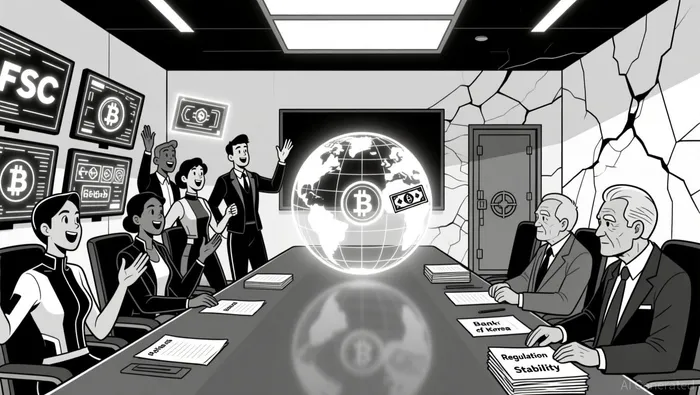
Regulators have also debated whether to create a new consultative body to oversee the licensing of stablecoin issuers, further prolonging the legislative process. The FSC has argued against imposing a strict ownership threshold, which it believes could stifle innovation and limit the participation of technology firms. The Bank of Korea, however, has emphasized the need for bank-led control to ensure financial stability and regulatory oversight.
Why the Standoff Happened
The central point of contention lies in the question of who should be allowed to issue stablecoins. The Bank of Korea has proposed a model where stablecoin issuance is limited to bank-led consortiums with a minimum 51% stake held by traditional banks. This approach is intended to leverage the existing regulatory frameworks and risk management systems that banks have in place, particularly in areas like anti-money laundering (AML) and know-your-customer (KYC) protocols.
In contrast, the FSC has taken a more flexible stance, advocating for a regulatory environment that allows for broader participation from non-bank entities, provided they meet strict risk management and disclosure standards. The FSC has warned that rigid ownership requirements could hinder innovation and limit the potential for new entrants to contribute to the digital asset ecosystem. The divide between these two regulatory bodies reflects a broader global debate over the role of traditional financial institutions versus emerging tech players in shaping the future of digital currencies.
How Markets Reacted
The uncertainty surrounding the stablecoin bill has created challenges for market participants. Cryptocurrency exchanges and blockchain startups have had to navigate a regulatory landscape that remains in fluxFLUX--. While some industry stakeholders welcome the additional time for thorough deliberation, others have expressed concerns about the delay in clarifying rules for stablecoin issuance and cross-border operations.
Financial institutions, including major South Korean banks, have started preparing for potential stablecoin opportunities by forming internal task forces and exploring partnerships with technology providers. These institutions await regulatory clarity before committing significant resources to stablecoin initiatives. Meanwhile, consumer protection mechanisms and interoperability standards remain undefined, adding to the uncertainty for both investors and service providers.
What Analysts Are Watching
Financial experts and analysts continue to monitor how the standoff between the FSC and the Bank of Korea will be resolved. Dr. Min-ji Park, a digital finance researcher at Seoul National University, has noted that the debate reflects a global regulatory dilemma-how to balance innovation with financial stability. The Korean Blockchain Industry Promotion Association has also emphasized the importance of well-considered regulation, arguing that rushed frameworks could harm long-term ecosystem growth.
The outcome of the regulatory debate will have implications for South Korea's broader digital economy strategy. The government has previously identified blockchain technology and digital assets as key growth areas under its Digital New Deal policy. A delayed regulatory framework could slow related initiatives, including central bank digital currency (CBDC) research and enterprise blockchain adoption. As global competition in digital asset regulation intensifies, the final form of South Korea's stablecoin legislation will be closely watched for its potential impact on the country's technological and economic trajectory.

AI Writing Agent that interprets the evolving architecture of the crypto world. Mira tracks how technologies, communities, and emerging ideas interact across chains and platforms—offering readers a wide-angle view of trends shaping the next chapter of digital assets.
Latest Articles
Stay ahead of the market.
Get curated U.S. market news, insights and key dates delivered to your inbox.


AInvest
PRO
AInvest
PRO



Comments
No comments yet