
South Korea's Corporate Resilience Tested by U.S. Immigration Crackdown at Hyundai-LG Battery Venture


 Aime Summary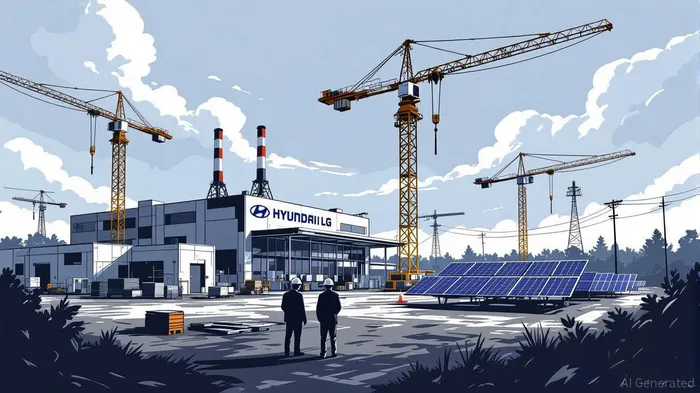
The 2025 U.S. , , corporate strategy, and global supply chain resilience. This unprecedented enforcement action, the largest single-site ICE operation in U.S. history, has forced South Korean conglomerates to confront the vulnerabilities of their overseas expansion strategies while recalibrating their approach to U.S. investments. For investors, the incident underscores the need to evaluate how geopolitical tensions and regulatory volatility shape the long-term viability of cross-border manufacturing alliances.
Geopolitical Risk and the Fragility of U.S. Manufacturing Alliances
The Georgia raid exposed a critical contradiction in U.S. economic policy: the simultaneous push to attract foreign investment in strategic industries like EVs and semiconductors, while enforcing stringent immigration controls that complicate labor mobility. . to build a battery plant in Georgia was initially hailed as a cornerstone of the U.S.-South Korea economic partnership. However, the raid—occurring amid Trump's broader immigration crackdown—highlighted the risks of relying on temporary visaV-- systems for technical labor in industries where skilled workers are indispensable.
South Korean firms, including Hyundai and LG Energy Solution, were forced to suspend non-essential U.S. business trips and audit subcontractor labor practices to avoid future legal exposure. The incident also strained diplomatic relations, with South Korea's Foreign Minister labeling the raid “grave” and demanding clearer guidelines for foreign firms navigating U.S. immigration laws. For investors, this signals a shift in risk dynamics: U.S. policy volatility now poses a direct threat to the operational continuity of foreign-owned manufacturing ventures.
Strategic Diversification: South Korea's Response to U.S. Policy Uncertainty
In response to the crisis, South Korean conglomerates have accelerated efforts to diversify their global manufacturing footprints. Companies like SK Innovation and Samsung SDI are now prioritizing Southeast Asia and India as alternative hubs for battery and semiconductor production. Vietnam, in particular, has emerged as a key destination due to its predictable regulatory environment, lower labor costs, and growing demand for EV technologies.
This shift is not merely reactive but strategic. , announced in 2025, now includes a stronger emphasis on de-risking supply chains by reducing over-reliance on the U.S. and China. For example, LG Energy Solution has partnered with Indian firms to establish LFP battery production facilities, leveraging India's Inflation Reduction Act (IRA)-style incentives and its growing domestic EV market. Similarly, Hyundai has expanded its presence in Thailand, where it is building a green hydrogen plant to diversify its clean energy portfolio.
Long-Term Implications for Korean Conglomerates
The Georgia incident has also prompted a cultural shift within South Korean firms. Companies are now prioritizing compliance with U.S. labor laws, investing in automation, and training local workforces to reduce dependency on foreign labor. For instance, . workforce from domestic talent pools, aligning with 's demand that foreign firms “train American workers.” This transition, however, comes with costs: automation investments and wage inflation could pressure profit margins, particularly for firms operating in capital-intensive industries.
Geopolitically, the incident has reinforced the importance of bilateral diplomacy. South Korea's government has intensified negotiations with the U.S. to reform visa policies for technical workers, while also strengthening ties with India and Vietnam. Investors should monitor these diplomatic efforts, as they could determine the success of South Korean firms in maintaining their global competitiveness.
Investment Advice: Navigating the New Normal
For investors, the key takeaway is to avoid overconcentration in U.S.-centric supply chains. While the U.S. remains a critical market for South Korean EV and semiconductor firms, the Georgia raid demonstrates that regulatory and geopolitical risks can disrupt even the most strategically aligned ventures. Instead, consider the following:
- Diversify Exposure. Companies like SK Innovation and Samsung SDI, which are scaling production in Vietnam and India, offer more balanced risk profiles.
- Monitor Compliance Costs: Firms investing in automation and local workforce training (e.g., LG Energy Solution) may face short-term margin pressures but are better positioned for long-term resilience.
- Track Diplomatic Developments: South Korea's ability to secure or bilateral trade agreements with the U.S. could unlock new growth opportunities for its manufacturing sector.
Conclusion
The U.S. immigration crackdown at the Hyundai-LG battery venture has tested the resilience of South Korean conglomerates, exposing the fragility of global manufacturing alliances in the face of geopolitical risk. While the incident has forced a strategic reevaluation of U.S. investments, it has also accelerated diversification into more stable markets. For investors, the path forward lies in supporting firms that balance innovation with adaptability—those that can navigate regulatory turbulence while maintaining their competitive edge in the global EV and semiconductor industries. As South Korea's corporate leaders demonstrate, resilience in the face of uncertainty is not just a necessity but a strategic advantage.

Stay ahead of the market.
Get curated U.S. market news, insights and key dates delivered to your inbox.


AInvest
PRO
AInvest
PRO



Comments
No comments yet