
South Korea's Constitutional Court to Rule on President Yoon's Impeachment April 4
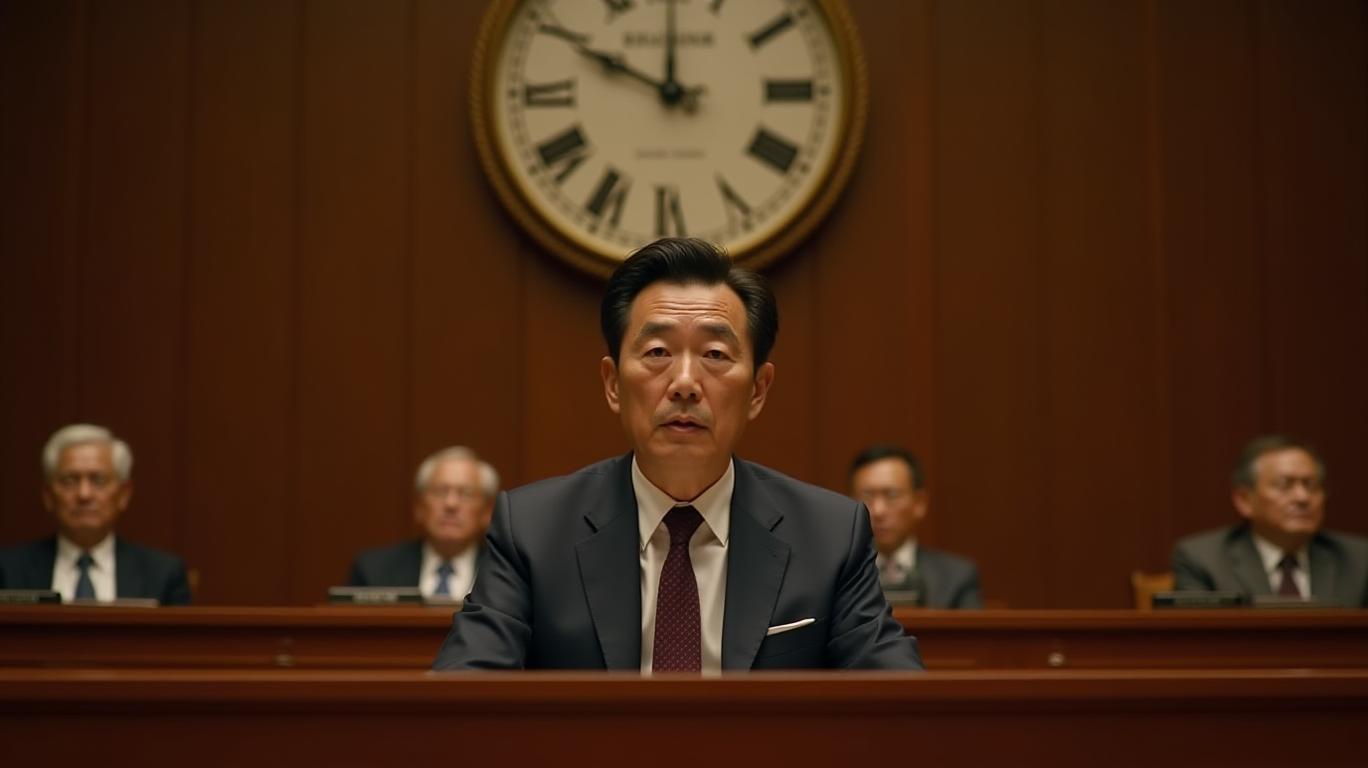
South Korea's political landscape is poised for a dramatic shift as the Constitutional Court prepares to rule on April 4 regarding the impeachment of President Yoon Suk Yeol. This pivotal moment comes just four months after Yoon's controversial attempt to impose martial law on December 3, an action that failed and ignited widespread public outcry and political turmoil.
Yoon's attempt to subvert civilian rule by sending armed soldiers into parliament was metMET-- with strong resistance from various sectors of society, including political opponents, civil society groups, and even some members of the military. This failed move further weakened Yoon's position and led to calls for his removal from office, ultimately triggering the impeachment process.
The Constitutional Court's decision on April 4 will determine whether Yoon will be removed from his position. If the court rules against Yoon, he will be officially dismissed from office, and a national election will be held within two months to elect a successor. This scenario would mark a significant shift in South Korea's political dynamics, as the country would be without a president for a brief period while a new leader is chosen.
The arrest of Kim Yong Hyun, the former defense minister, on charges of colluding with Yoon and others in the attempted imposition of martial law, has added another layer of complexity to the situation. Kim's arrest underscores the seriousness of the allegations against Yoon and highlights the extent to which his actions have divided the country.
The impending ruling by the Constitutional Court has also raised questions about the future of South Korea's political stability. The country has been grappling with internal divisions and external pressures, and the outcome of the impeachment process could have far-reaching implications for its domestic and international policies. The decision will not only affect the political landscape but also influence public confidence in the government and its institutions.
As the nation awaits the court's verdict, the atmosphere in South Korea is tense. The ruling will be closely watched by both domestic and international observers, who are keen to see how the country navigates this critical juncture. The outcome will shape the future of South Korea's leadership and its ability to address the challenges it faces.

Stay ahead of the market.
Get curated U.S. market news, insights and key dates delivered to your inbox.


AInvest
PRO
AInvest
PRO



Comments
No comments yet