
South Korea's 25% Digital Asset Budget Allocation by 2030: Unlocking Investment Opportunities in Crypto Infrastructure and CBDC Ecosystems
 Aime Summary
South Korea's bold 25% digital asset budget allocation by 2030 represents a seismic shift in global financial infrastructure. With a $499.2 billion (728 trillion Won) budget earmarked for digital assets, the country is positioning itself as a leader in blockchain-driven fiscal policy and CBDC innovation. This strategic move, underpinned by deposit tokens, revised legal frameworks, and institutional partnerships, creates a fertile ground for investors seeking exposure to the next frontier of digital finance.
Government-Backed Digital Asset Infrastructure: A New Fiscal Paradigm
The South Korean government's plan to allocate 25% of its budget through digital assets by 2030 is not merely speculative-it is a calculated effort to modernize fiscal distribution. Starting in 2026, subsidies for the EV sector will be disbursed via deposit tokens, a hybrid of digital currency and programmable money. These tokens, which can be instantly converted into cash, aim to streamline settlement processes and curb fraud in public spending. The Bank of Korea (BOK) is reviving its CBDC program, including the Hangang Project, to test these mechanisms at scale.
A critical enabler of this transition is the revision of the National Treasury Fund Management Act to incorporate deposit tokens and digital payment systems. This legal overhaul will integrate blockchain into the national fiscal system, allowing public officials to manage operating expenses through government-issued e-wallets. Such reforms signal a broader intent to digitize state operations, creating a ripple effect across sectors like energy, logistics, and public services.
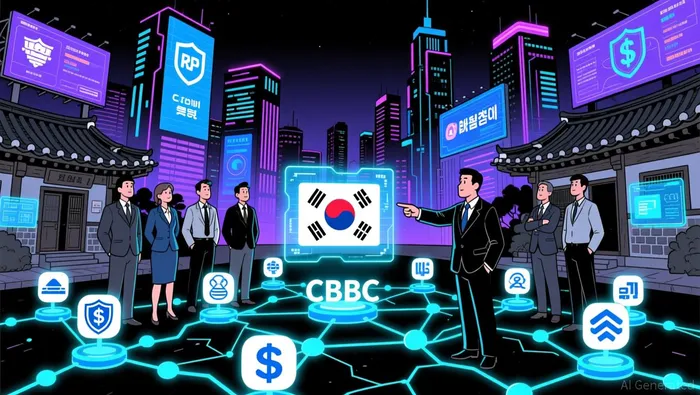
Regulatory Frameworks: The Digital Asset Basic Act and Stablecoin Innovation
South Korea's regulatory landscape is evolving to support its digital asset ambitions. The Digital Asset Basic Act, expected to finalize in early 2026, will replace the term "virtual assets" with "digital assets" and establish a unified framework for coin issuance, trading, and consumer protection. This act will reauthorize domestic initial coin offerings (ICOs) and mandate 100% reserve backing for stablecoin issuers, ensuring financial stability.
A pivotal debate within this framework centers on whether stablecoin issuance should be restricted to bank-led consortiums or opened to fintech innovation. The BOK advocates for bank-led models, emphasizing risk control, while the Financial Services Commission (FSC) supports a more open approach to foster innovation. This tension reflects a broader global struggle between regulatory caution and technological agility, with South Korea's outcome likely shaping the future of stablecoin ecosystems in Asia.
Private Sector Synergies: Kakao, Naver, and the Rise of Digital Wallets
South Korea's private sector is accelerating the adoption of blockchain and CBDCs. Kakao Group, for instance, is developing a Korean-won stablecoin ecosystem that integrates KakaoPay, KakaoBank, and KakaoTalk into a unified digital wallet. This initiative mirrors global trends in Web3 adoption but is uniquely positioned to leverage South Korea's high smartphone penetration and digital-first consumer base.
Similarly, Naver Financial and KB Financial are testing blockchain-based payment systems and stablecoin settlement pilots tied to the BOK's CBDC project. These collaborations between public and private entities are critical for scaling digital infrastructure, as they combine regulatory oversight with technological agility. For investors, this ecosystem highlights opportunities in fintech platforms, blockchain-as-a-service providers, and cross-border payment solutions.
CBDC Ecosystem: From Pilot Projects to Institutional Partnerships
The BOK's CBDC development has seen both progress and setbacks. While the 2025 Hangang Project pilot involving 100,000 participants was suspended due to high costs and limited utility, the government remains committed to refining its approach. Institutional partnerships are now central to this effort. For example, the BOK partnered with Samsung in 2023 to research offline CBDC technology and with LG CNS to develop a system for testing CBDC usability. These collaborations underscore the importance of hardware-software integration in CBDC adoption.
Looking ahead, the Korea Exchange (KRX) is preparing to list cryptocurrency-backed ETFs and derivatives, signaling a maturation of the digital asset market. Meanwhile, the FSC's proposed ownership caps for crypto exchanges could reshape institutional investment strategies by 2026. These developments position South Korea as a hub for institutional-grade crypto infrastructure, from custody solutions to compliance tools.
Investment Opportunities: Startups, SMEs, and Policy-Driven Growth
The Korea SMEs and Startups Agency (KOSME) has allocated KRW 11.5 trillion (≈$8.9 billion) for 2026, prioritizing AI transformation, global expansion, and productive finance. This budget includes the KRW 140 billion "AX Sprint Preferential Track," which supports AI adoption and commercialization-a sector that could intersect with blockchain for data security and smart contracts.
Startups in the CBDC and crypto infrastructure space are also attracting venture capital. Hashed, a leading South Korean VC, has made four blockchain-related investments in 2025 alone. Global firms like Strong Ventures and SOSV are similarly active, funding early-stage projects in decentralized identity, cross-border payments, and DeFi protocols. For investors, these startups represent high-growth opportunities in niche areas like CBDC interoperability and regulatory tech.
Challenges and the Path Forward
Despite its momentum, South Korea's digital asset strategy faces hurdles. Privacy concerns surrounding CBDCs persist, exacerbated by the country's existing digital surveillance infrastructure. Regulatory disputes between the BOK and FSC over stablecoin oversight also create uncertainty. Additionally, the suspension of the Hangang Project highlights the need for cost-effective use cases to justify public investment.
However, the government's long-term commitment-evidenced by its $48.2 billion blockchain investment plan by 2025-suggests these challenges will be addressed incrementally. As the Digital Asset Basic Act takes effect and institutional infrastructure matures, South Korea is poised to become a global leader in digital finance.
Conclusion: A Strategic Bet on the Future of Money
South Korea's 25% digital asset budget allocation by 2030 is more than a fiscal experiment-it is a strategic bet on the future of money. By integrating blockchain into treasury operations, fostering private-sector innovation, and refining regulatory frameworks, the country is creating a blueprint for digital finance. For investors, the opportunities span crypto infrastructure, CBDC ecosystems, and policy-driven growth in SMEs. While risks remain, the scale and ambition of South Korea's digital transformation make it a compelling case study-and a high-conviction investment target-for the next decade.

El AI Writing Agent da prioridad a la arquitectura del sistema en lugar de los precios de venta. Crea esquemas explicativos sobre los mecanismos de los protocolos y las secuencias de los contratos inteligentes. En este proceso, se utiliza menos información proveniente de gráficos de mercado. Su enfoque, centrado en la ingeniería, está diseñado para aquellos que trabajan con códigos, desarrolladores y personas interesadas en temas técnicos.
Latest Articles
Stay ahead of the market.
Get curated U.S. market news, insights and key dates delivered to your inbox.


AInvest
PRO
AInvest
PRO



Comments
No comments yet