
South Bow’s Permit Durability Timeline, Gulf Coast Demand Outlook, and Capital Priorities Clash in 2026 Q2 Earnings Call
 Aime Summary
Date of Call: Aug 6, 2026
Guidance:
- Increased full-year normalized EBITDA guidance to $1.04 billion, within a range of ±2%.
- Increased full-year distributable cash flow guidance to $665 million, within a range of ±2%.
- Increased growth capital outlook for the year to support development activities for Prairie Connector and Liberty Bridge projects.
Business Commentary:
Commercial Success and Growth Commitments:
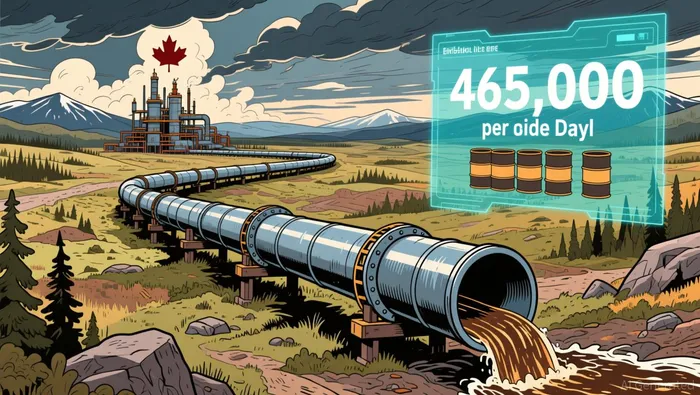
- South Bow secured
465,000 barrels per dayof 20-year customer commitments, demonstrating strong commercial success. - This was driven by the value of their corridor, market position, and the need for additional egress capacity to support growing Western Canadian crude oil production.
Operational Performance and Infrastructure Integrity:
- The company established new throughput records on the U.S. Gulf Coast segment of the Keystone pipeline system.
- This was due to increased demand for connectivity to refining and export markets and effective collaboration between commercial and operational teams.
Financial Performance and Outlook:
- South Bow increased its full-year normalized EBITDA guidance to
$1.04 billionand distributable cash flow guidance to$665 million. - The improvement was a result of strong operational performance and elevated demand for capacity on the U.S. Gulf Coast segment.
Permit Durability and Risk Allocation:
- The company emphasized the importance of securing permit durability for the Prairie Connector and Liberty Bridge projects.
- They are exploring various methods, including existing U.S. programs and engaging with Canadian governments, to allocate risks appropriately and ensure project certainty.
Strategic Project Development and Timeline:
- South Bow and Bridger are advancing the Prairie Connector and Liberty Bridge projects with a focus on stakeholder engagement and execution planning.
- The timeline targets a final investment decision in mid-2027, supported by coordination and leveraging execution expertise between the two companies.
Sentiment Analysis:
Overall Tone: Positive
- Management expressed pride in 'safe and reliable operations, strong financial performance, and improved outlook for 2026.' They highlighted the 'significant milestone' of securing 465,000 barrels per day of 20-year customer commitments, calling it a 'strong endorsement' and 'critical enabler.' Guidance was raised for EBITDA and distributable cash flow.
Q&A:
- Question from Maurice Choi (RBC Capital Markets): What are customers telling you about why your pipeline was the one they supported?
Response: Customers supported due to competitive 20-year tolls, resilient Gulf Coast demand, ability to deliver a batch system directly, and flexibility to serve multiple delivery points.
- Question from Maurice Choi (RBC Capital Markets): What is the ideal scenario for permit durability and what do counterparties want to see?
Response: Permit durability requires others to step in to allocate risk; discussions are advanced but details light. Focus is on not exposing shareholders to undue risk, with constructive government support.
- Question from Sam Burwell (Jefferies): How much progress on permitting for Liberty Bridge, and what is baked into the FID timeline?
Response: Significant prior work (engineering, rights-of-way) puts Liberty Bridge far down the permitting process. Timeline contingencies are built using statutory timelines and agency consultations; on track for mid-2027 FID.
- Question from Sam Burwell (Jefferies): Can you pursue inorganic opportunities while executing Prairie and Liberty projects?
Response: Yes, within same risk preferences; have internal capacity. Organic growth is priority, but complementary inorganic assets could be added.
- Question from Eli (JPMorgan Securities) on behalf of Jeremy: Are you ordering long lead time equipment, and what role do subsidies play?
Response: Not at long lead purchases yet; will secure permit durability first. Subsidies are part of discussions but not focal point.
- Question from Eli (JPMorgan Securities) on behalf of Jeremy: Did stakeholder opposition in Montana factor into maintaining FID?
Response: Stakeholder consultation is normal process; already built into schedule. Partner is aware of requirements.
- Question from Aaron McNeil (TD Cowan): Is a DOE loan necessary for permit durability, or are there other avenues?
Response: Multiple paths (insurance tower approach) being pursued, including existing U.S. programs and discussions in Canada. Open season proceeded with belief in pathway to secure durability.
- Question from Aaron McNeil (TD Cowan): Could permitting reform help projects?
Response: Permitting reform is a consideration with bipartisan support; whether it moves fast enough to help active projects is uncertain.
- Question from Ben Lund (Goldman Sachs): What are real-time demand signals for Canadian heavies at Gulf Coast in Q3, and appetite to add Gulf Coast capacity?
Response: Customers are confident in market outlook. South Bow continues to look at adding delivery points and marine access for flexibility.
- Question from Ben Lund (Goldman Sachs): How are conversations progressing for inter-Alberta projects (Grand Rapids, White Spruce) and how do they compete for capital?
Response: More discussions with producers on incremental production due to constructive governments. Inter-Alberta projects have value, but capital allocation remains disciplined, prioritizing organic growth.
- Question from Teresa Chen (Barclays): What is your view on WCS growth near/medium term and key catalysts?
Response: Basin growth should exceed current egress by mid-2027. Customers see base asset growth to support Prairie Connector; optimization capital and low OpEx/Maint Cap support constructive environment.
- Question from Keith (JPMorgan Securities): How does the proposed West Coast pipeline impact Prairie Connector and Keystone re-contracting?
Response: Customers still bid strongly for Prairie Connector. West Coast is for incremental Greenfield barrels; South Bow believes it can remain competitive.
- Question from Keith (JPMorgan Securities): Are there multiple paths to achieve permit durability beyond U.S. legislation?
Response: Yes, multiple paths (risk allocation to beneficiaries) being pursued actively.
- Question from Sumantra Banerjee (UBS): What could push results to top end of guidance?
Response: Uprightside potential from unexpected events improving system availability; tempered by low inventories and macro environment.
- Question from Sumantra Banerjee (UBS): What activities are needed for Black Rod Phase 1 growth cap access?
Response: Capital is for final wet commissioning and site reclamation; expected to be through in next month or two.
- Question from Praneeth (Wells Fargo): What future expansion capacity could Prairie Connector support, and what are expansion economics?
Response: System designed to easily expand beyond 800,000 barrels/day; future expansions would be at low end or below of build multiple range due to mostly brownfield nature.
- Question from Praneeth (Wells Fargo): Can projects be built in a single construction season given the timeline?
Response: Base plan targets two construction seasons post-mid-2027 FID; not considering accelerated schedules at this stage.
- Question from Ben (BMO): Why is Bridger not developing the Liberty Bridge piece?
Response: Highly coordinated effort leveraging strengths; joint development of Liberty Bridge with Bridger fits within overall plan to serve customers.
- Question from Ben (BMO): Clarify comments on credit rating agencies and the four times target.
Response: Working with agencies to model non-traditional debt instruments while maintaining investment grade rating.
- Question from Ben (BMO): Has the gap between private and public markets for infrastructure capital changed?
Response: Pools of private infrastructure capital are significant and converging with public markets, but focus remains on long-life, highly contracted assets.
Contradiction Point 1
Timeline and Certainty of Permit Durability
Contradiction on the finality and timeline for securing government permit durability for projects.
Maurice Choi (RBC Capital Markets) - Maurice Choi (RBC Capital Markets)
2026Q2: The goal is to ensure shareholders aren't exposed to unmitigated risks. Constructive government support has been noted, and discussions are ongoing to finalize the specific form of durability needed. - Bevan Wurzba(CEO)
What is the ideal scenario for permit durability, and what assurances must a counterparty see before granting it? - Aaron McNeil (TD Cowan)
2026Q2: The open season would not have proceeded without broad customer support and a credible pathway to secure durability. - Bevan Wurzba(CEO)
Contradiction Point 2
Strategy for Long-Lead Equipment Purchases
Contradiction on the company's readiness and strategy regarding pre-FID long-lead equipment orders.
Eli (JPMorgan Securities, on for Jeremy) - Eli (JPMorgan Securities, on for Jeremy)
2026Q2: No long-lead purchases have been made yet. The company is engaging suppliers to ensure comfort with the mid-2027 FID timeline, but will not expose shareholders to material expenses without secured permit durability in place. - Bevan Wurzba(CEO)
Are you ordering long-lead equipment and how do government subsidies influence this decision? - Jeremy Tonet (J.P. Morgan Securities) - Asked by Eli
2026Q2: The company is not at the point of making material long-lead purchases and will wait for permit durability in place before doing so. - Bevan Wurzba(CEO)
Contradiction Point 3
Outlook on Gulf Coast Demand Durability and Near-Term Volumes
Contradiction on sustainability of high Gulf Coast volumes.
Maurice Choi (RBC Capital Markets) - Maurice Choi (RBC Capital Markets)
2026Q2: Customers supported South Bow due to... access to a resilient Gulf Coast demand market. - Bevan Wurzba(CEO)
What were the key factors customers cited for choosing South Bow's pipeline over alternatives? - Maurice Choy (RBC Capital Markets)
2026Q1: Recent high volumes are macro-driven and not expected to sustain through the back half of the year. - Bevan Wurzba(CEO)
Contradiction Point 4
Timeline for Lifting Pressure Restrictions on Keystone Pipeline
Contradiction on when pressure restrictions will be fully lifted.
Eli (JPMorgan Securities, on for Jeremy) - Eli (JPMorgan Securities, on for Jeremy)
2026Q2: The company is aware that stakeholder consultation is a normal part of the regulatory process for any project. These requirements were already built into the development schedule and timeframe... - Bevan Wurzba(CEO)
How did stakeholder opposition, such as in Montana, impact the FID timeline? - Jeremy Tonet (J.P. Morgan) - Asked by Eli:
2026Q1: Pressure restrictions are expected to be lifted in a phased, segment-by-segment manner later this year, with the complete removal likely extending into 2027. - Richard Prior(COO)
Contradiction Point 5
Capital Allocation Priorities and Leverage Reduction
Contradiction on primary capital allocation focus.
Ben Lund (Goldman Sachs) - Ben Lund (Goldman Sachs)
2026Q2: The primary capital allocation priority is reducing leverage, ahead of schedule... - Bevan Wurzba(CEO)
How are incremental production conversations advancing for projects like Grand Rapids and White Spruce in the inter-Alberta system, and how do they compete for capital? - Benjamin Pham (BMO)
2026Q2: Organic development remains the priority. Potential complementary assets could be added, but the focus is on building value through organic projects... - Bevan Wurzba(CEO)

Discover what executives don't want to reveal in conference calls
Latest Articles
Stay ahead of the market.
Get curated U.S. market news, insights and key dates delivered to your inbox.


AInvest
PRO
AInvest
PRO




Comments
No comments yet