
South Asia's Tectonic Shift: Geopolitical Risks and Investment Implications in a Post-Ceasefire Era
The 2025 Modi-Trump ceasefire dispute, rooted in India-Pakistan tensions over Kashmir, has exposed profound vulnerabilities in South Asia's geopolitical landscape. While the crisis itself was brief, the fallout has lasting implications for foreign direct investment (FDI), technology partnerships, and commodity trade routes. India's emphatic rejection of U.S. mediation—a stark rebuke of President Trump's transactional diplomacy—has reshaped regional dynamics, creating new risks for investors in infrastructure, energy, and tech sectors.
Regional Stability and FDI: A New Era of Uncertainty
The Modi government's refusal to acknowledge U.S. involvement in the ceasefire reflects a broader shift toward asserting sovereignty over matters of national security. This stance, while politically popular domestically, complicates U.S.-India diplomatic ties and signals that New Delhi may increasingly prioritize unilateralism over multilateral partnerships. For investors, this means heightened risks for projects tied to regional stability:
- Infrastructure Projects:
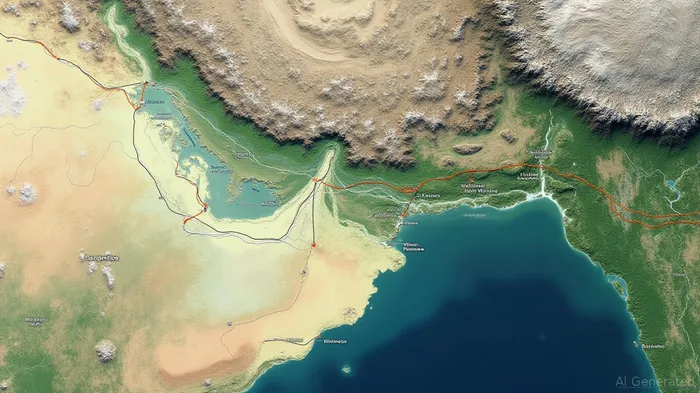
- Risk Exposure: Cross-border infrastructure initiatives, such as the stalled Iran-Pakistan-India (IPI) gas pipeline or the China-Pakistan Economic Corridor (CPEC), face renewed uncertainty.
- Data Insight: .
Investment Implications: Sectors like ports and highways in Pakistan or Bangladesh may see delayed approvals or renegotiated terms due to geopolitical volatility.
Energy Sectors:
- Geopolitical Leverage: India's reliance on Middle Eastern oil (accounting for ~80% of imports) intersects with its nuclear deterrence posture, making energy supply chains vulnerable to regional conflicts.
- Data Insight: .
- Investment Advice: Consider hedging energy portfolios with liquefied natural gas (LNG) assets in Australia or Qatar, which offer more stable supply routes.
Tech Partnerships: Testing the U.S.-India Alliance
The Modi-Trump clash has strained the $5 trillion U.S.-India tech partnership, particularly in semiconductors and 5G. While the two nations have collaborated on initiatives like the Initiative on Critical and Emerging Technology (iCET), India's rejection of U.S. mediation in a security crisis raises questions about alignment on strategic priorities:
- Semiconductor Manufacturing:
- Opportunity vs. Risk: U.S. firms like Intel and Micron have invested billions in Indian fabs, but geopolitical tensions could delay technology transfers.
- Data Insight: .
Investment Note: While India's “Make in India” incentives remain attractive, investors should demand clauses protecting against export controls or IP disputes.
Data Security and AI:
- Regulatory Crosscurrents: India's Data Localization Policy and the U.S. CHIPS Act create conflicting incentives. U.S. companies may face pressure to align with either New Delhi or Washington, complicating supply chains.
Commodity Trade Routes: Navigating a Nuclear Flashpoint
South Asia's commodity trade routes—critical for global supply chains—now operate under the shadow of nuclear deterrence. The 2025 crisis, though brief, demonstrated how quickly conventional conflicts could escalate, with India and Pakistan trading airstrikes. For investors in commodities:
- Agriculture and Textiles:
- Border Trade Risks: Cross-border trade in textiles and agricultural goods between India and Pakistan could face disruptions, given the fragile ceasefire.
Data Insight: .
Shipping and Logistics:
- Alternative Routes: Investors in ports like Colombo (Sri Lanka) or Chittagong (Bangladesh) may benefit as traders seek alternatives to Pakistan's Gwadar Port, a Chinese-backed project.
Strategic Re- Evaluation for Investors
The Modi-Trump ceasefire dispute underscores a pivotal truth: South Asia's geopolitical volatility is now a systemic risk for investors. Key recommendations include:
- Diversify Geographically: Reduce exposure to infrastructure projects in Pakistan or Bangladesh tied to cross-border agreements.
- Focus on Defensive Sectors: Prioritize healthcare, renewable energy, and consumer tech—sectors less dependent on regional stability.
- Monitor Diplomatic Signals: Track U.S.-India 2+2 dialogues and Quad summits for shifts in strategic alignment.
The era of assuming South Asia's geopolitical risks as “manageable” is over. Investors must now treat the region's stability as a core variable in their risk models—a lesson the 2025 crisis has etched in bold.

Stay ahead of the market.
Get curated U.S. market news, insights and key dates delivered to your inbox.






Comments
No comments yet