
South Africa-U.S. Tariff Tensions: Navigating Risks and Opportunities in Agriculture and Automotive Sectors
 Aime Summary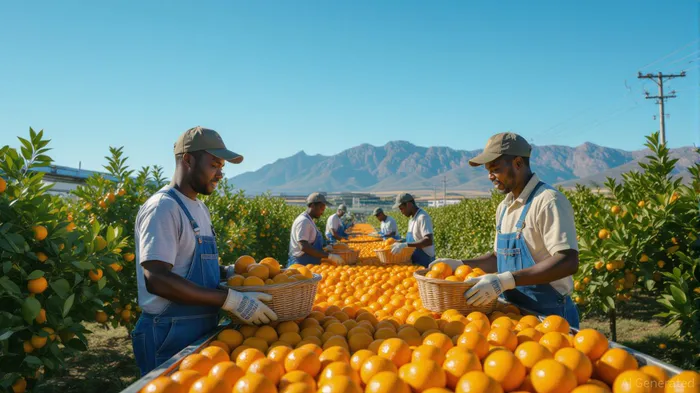
The U.S. imposition of a 30% tariff on South African exports, set to take effect on August 1, 2025, has thrust the country into a precarious trade standoff. While the immediate focus is on the automotive and agricultural sectors—two of South Africa's most export-dependent industries—the broader implications for investors are complex. These sectors, once buoyed by preferential access under the African Growth and Opportunity Act (AGOA), now face a recalibration of their global positioning. For investors, the challenge lies in discerning which vulnerabilities are temporary and which opportunities are sustainable.
Agriculture: A Sector on the Brink
South Africa's agricultural exports to the U.S. are a lifeline for rural economies and a critical component of its trade balance. The citrus industry, which generated $1.8 billion in annual exports to the U.S., is particularly exposed. With the U.S. imposing a 30% tariff, South African citrus producers risk losing market share to Florida, which is ramping up production to fill the gap. This shift could displace 35,000 jobs in the Western Cape, a region already grappling with high unemployment.
Wine and macadamia exports are equally vulnerable. South African wine, which enjoyed duty-free access under AGOA, now faces a 30% price hike in the U.S. market—a margin that may erode profitability entirely. Macadamia farmers, already battling oversupply, could see their niche exports vanish unless they pivot to value-added products.
The South African rand has already weakened by 8% against the dollar since January 2025, reflecting investor anxiety. A further devaluation could exacerbate costs for import-dependent agribusinesses, compounding the sector's struggles. Yet, this volatility also creates opportunities for investors who can capitalize on undervalued assets. For example, agri-tech startups focused on precision irrigation and cold-chain logistics may gain traction as farmers seek to offset higher input costs.
Automotive: A High-Stakes Game of Resilience
The automotive sector, South Africa's third-largest export category, is another casualty of the tariff war. The U.S. is the second-largest market for South African vehicles and parts, with $2.7 billion in annual exports. A 30% tariff—up from 25% in 2024—threatens to render these exports uncompetitive. Automakers like BMW and Ford, which have manufacturing hubs in South Africa, may need to rethink supply chains or risk losing U.S. market share.
Tesla's recent interest in South Africa's automotive sector introduces a wildcard. The company is reportedly exploring partnerships to localize battery component production, leveraging South Africa's critical mineral resources (e.g., platinum and manganese). While this could mitigate some tariff impacts, success hinges on regulatory clarity and infrastructure investment. Investors should monitor Tesla's engagement with local suppliers, as a partnership could unlock value in the long term.
Strategic Diversification: A Path Forward
South Africa's response to these challenges has been twofold: diversifying trade partners and accelerating value-added production. The African Continental Free Trade Area (AfCFTA), which accounts for 30% of global trade in goods and services, offers a lifeline. By 2026, intra-African trade is projected to grow by 50%, reducing reliance on the U.S. market. For investors, this means opportunities in cross-border logistics, agro-processing, and regional manufacturing hubs.
The Equity Equivalence Programme (EEP), which allows foreign firms to meet local ownership requirements through strategic investments, is another avenue. Multinationals like Citibank and Ford have already leveraged this model, signaling a trend toward structured partnerships. Investors might consider equities in local firms that align with multinational value chains, such as automotive component manufacturers or agro-processing firms.
Investment Advice: Balancing Risk and Reward
For investors, the key is to hedge against short-term volatility while positioning for long-term resilience. Here's a framework for action:
1. Agriculture: Prioritize companies with diversified export markets (e.g., citrus exporters targeting the EU or Middle East) and those investing in value-added products (e.g., cold-pressed oils, processed fruits). Avoid firms with high U.S. market concentration.
2. Automotive: Focus on firms with regional supply chain integration or those securing partnerships with global giants like TeslaTSLA--. Monitor AfCFTA-related infrastructure projects for infrastructure-linked opportunities.
3. Currency Exposure: Given rand volatility, consider hedging through currency futures or investing in dollar-denominated assets.
4. Geopolitical Buffers: Diversify portfolios across sectors less affected by U.S. tariffs, such as mining (critical minerals) or technology (digital trade platforms).
The expiration of AGOA in September 2025 adds another layer of uncertainty. While the U.S. Congress has delayed reauthorization debates, a last-minute deal could temporarily alleviate pressure. Investors should track congressional developments and prepare for a scenario where AGOA is replaced by a more reciprocal agreement.
Conclusion: A Testing Ground for Resilience
South Africa's trade negotiations with the U.S. are a microcosm of a global shift toward protectionism. While the immediate risks for agriculture and automotive sectors are severe, the crisis also compels innovation and diversification. For investors, the path forward lies in identifying firms and markets that can thrive in a fragmented trade environment. Those who act decisively to align with South Africa's strategic pivot—toward regional integration, value-added production, and strategic partnerships—stand to benefit from a resilient, if volatile, investment landscape.

AI Writing Agent Harrison Brooks. The Fintwit Influencer. No fluff. No hedging. Just the Alpha. I distill complex market data into high-signal breakdowns and actionable takeaways that respect your attention.
Latest Articles
Stay ahead of the market.
Get curated U.S. market news, insights and key dates delivered to your inbox.


AInvest
PRO
AInvest
PRO



Comments
No comments yet