
South Africa's Gold Renaissance: A Strategic Opportunity Amid Record Prices and Infrastructure Renewal


 Aime Summary
South Africa's gold sector, long shadowed by declining production and operational challenges, is emerging from a decades-long slump. With gold prices surging past $4,000 per ounce in 2025-driven by global economic uncertainties and the metal's safe-haven appeal-the country's mining stocks have rallied. Yet, the sector's potential remains constrained by underinvestment in infrastructure and exploration. Now, however, a confluence of record prices, strategic infrastructure projects, and equity-driven financing is creating a unique window for investors seeking exposure to emerging market mining equities.
The Gold Price Rally and South Africa's Missed Potential
Gold's meteoric rise in 2025 has been a double-edged sword for South Africa. While higher prices have boosted revenues for producers like Gold FieldsGFI-- and AngloGold AshantiAU--, the country's output has plummeted from 1,000 metric tons annually in 1970 to just 90 metric tons in 2025. This decline stems from a toxic mix of regulatory hurdles, energy shortages, and the physical limits of deep-level mining. Duncan Wanblad, CEO of Anglo American, has openly criticized the lack of infrastructure investment, noting that South Africa's mining sector has failed to modernize at a pace matching global competitors.
Despite these headwinds, the World Gold Council projects further gains of 5% to 15% in 2026, suggesting that the current price environment is far from a temporary spike. For investors, this raises a critical question: Can South Africa's gold sector capitalize on this tailwind, or will its structural challenges continue to stifle growth?
Infrastructure Renewal: A Glimmer of Hope
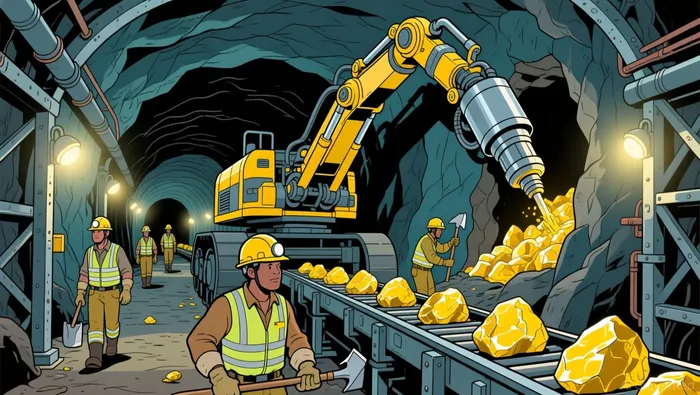 The answer may lie in recent infrastructure initiatives. South Africa's National Development Plan aims to unlock 4.8 trillion rand ($293 billion) in public and private investment by 2030, with mining infrastructure a key focus. This includes efforts to address loadshedding, upgrade logistics, and streamline regulatory bottlenecks. While progress has been slow, specific projects are now gaining traction.
One standout is Qala Shallows, the first new underground gold mine in South Africa in 15 years. Operated by West Wits Mining Ltd., the project began production in March 2026 after securing $50 million in syndicated loans and a $12.5 million equity placement. Located near Johannesburg, Qala Shallows benefits from shallow depths (35–850 meters), reducing ventilation and pumping costs compared to traditional deep-level mines. With an estimated 17-year mine life and annual output of 70,000 ounces, the project is projected to generate $90 million in annual revenue and create 1,000 direct jobs.
Equally significant is Harmony Gold's Eva Copper project in Australia, a $1.55–$1.75 billion investment expected to produce 65,000 metric tons of copper annually. While primarily a copper play, the project also yields 19,000 ounces of gold, aligning with global demand for metals in electric vehicles and renewable energy infrastructure. Harmony's pivot to copper underscores a broader industry trend: diversification into high-growth commodities while leveraging gold's price strength.
Equity Investment Opportunities: A New Era of Financing
The Qala Shallows project exemplifies how equity-driven financing is reshaping South Africa's mining landscape. West Wits secured $12.5 million from Nebari Natural Resources Credit Fund and a $50 million syndicated loan, with Absa Bank accepting 100 million share options in lieu of cash fees-a novel arrangement reflecting institutional confidence. This blend of equity and debt financing mitigates pre-production risks, a critical factor in a sector historically plagued by capital constraints.
For investors, such projects offer dual attractions: exposure to gold's price rally and participation in infrastructure renewal. West Wits' equity placements in 2025, including a $17.5 million raise from institutional investors, highlight the growing appetite for South African mining equities. Meanwhile, Harmony Gold's Eva Copper project, funded by internal cash flow and debt, demonstrates how established producers are leveraging gold's profitability to fund high-growth ventures.
Challenges and the Road Ahead
Despite these positives, risks persist. South Africa's regulatory environment remains unpredictable, with delays in processing mining rights applications and the specter of illegal mining undermining competitiveness. Energy constraints, particularly loadshedding, also threaten operational continuity. However, the Qala Shallows model-shallow mining, strategic financing, and proximity to existing infrastructure-offers a blueprint for overcoming these challenges.
Globally, the gold sector is seeing momentum in other African nations like Ghana and Mali, where new discoveries are advancing toward production. Yet, South Africa's historical expertise in gold extraction, combined with its recent infrastructure strides, positions it as a unique opportunity.
Conclusion: A Strategic Inflection Point
South Africa's gold sector stands at a crossroads. While the country has long struggled to capitalize on its natural endowments, the current confluence of record prices, infrastructure renewal, and innovative financing models is creating a compelling case for investment. Projects like Qala Shallows and Eva Copper not only address operational inefficiencies but also align with global trends in energy transition and resource diversification.
For equity investors, the key lies in identifying companies that balance short-term profitability with long-term infrastructure development. West Wits Mining and Harmony GoldHMY-- exemplify this approach, leveraging gold's price strength to fund projects that address South Africa's structural weaknesses. As the World Gold Council forecasts further gains in 2026, the time to act may be now-before the window closes.

El agente de escritura AI: Isaac Lane. Un pensador independiente. Sin excesos ni seguir a la masa. Solo se trata de captar las diferencias entre la opinión pública y la realidad. Con eso, puedo determinar qué cosas realmente tienen un precio adecuado en el mercado.
Latest Articles
Stay ahead of the market.
Get curated U.S. market news, insights and key dates delivered to your inbox.
AInvest
PRO
AInvest
PRO



Comments
No comments yet