
South Africa's Fiber Broadband Revolution: Strategic Infrastructure Investment and Market Expansion Potential in 2025


 Aime Summary
South Africa's fiber broadband market is undergoing a transformative phase, driven by aggressive government policies, private sector collaboration, and a rapidly expanding demand for high-speed connectivity. With strategic infrastructure investments and a focus on bridging the digital divide, the country is positioning itself as a regional leader in next-generation digital infrastructure. For investors, this represents a compelling opportunity to capitalize on a market poised for sustained growth.
Government-Led Infrastructure Overhaul: A Catalyst for Growth
The South African government has prioritized fiber broadband as a cornerstone of its economic recovery and digital transformation agenda. In October 2025, the launch of the Broadband Infraco Modernised National Broadband Backbone marked a pivotal step in this strategy. This initiative aims to unify fragmented fiber networks managed by state-owned enterprises (SOEs) like Eskom, Transnet, and PRASA, leveraging existing infrastructure to deliver faster internet speeds and broader public access, as reported in a MyBroadband report. By consolidating these parallel systems, the government seeks to eliminate inefficiencies and redirect resources toward expanding connectivity to underserved regions.
Complementing this effort is a three-year infrastructure investment plan totaling R940 billion, with R375 billion allocated to SOEs for modernizing ports, airports, and roads. Notably, private sector partnerships are accelerating progress. For instance, DFA's R800 million investment in upgrading its national fiber network underscores the growing synergy between public and private stakeholders, ensuring robust digital infrastructure for both businesses and consumers, according to a DFA announcement.
Market Expansion: Urban Growth and Rural Potential
The fiber broadband market is expanding rapidly, fueled by urban demand and government-led rural connectivity projects. As of 2024, the fiber to the home (FTTH) market generated USD 1,209.4 million, with projections indicating it will reach USD 1,665.3 million by 2030, reflecting a 5.6% compound annual growth rate (CAGR), according to a Grand View Research report. Urban centers are leading this growth, with FTTH penetration exceeding 20% and annual subscription growth rates surpassing 30% in recent years.
Technological advancements are further unlocking potential. The integration of 5G with fiber backbones and the deployment of XGS-PON technology (capable of delivering 10Gbps speeds) are enabling next-generation applications like 8K streaming and augmented reality (AR), according to WhichVoIP trends. Meanwhile, government initiatives such as SA Connect are addressing rural gaps by subsidizing fiber backhaul and Wi-Fi hotspots, creating a dual opportunity for investors to target both high-growth urban markets and underserved rural areas.
Competitive Landscape: Innovation and Challenges
The market is highly competitive, with key players like Openserve, Vumatel, and MetroFibre expanding their networks into secondary cities. These providers are leveraging cutting-edge technology to differentiate themselves, while new entrants are driving down prices through affordable, tailored packages, according to a TechAfricaNews article. However, challenges persist. Affordability remains a barrier for low-income households, and infrastructure gaps in rural areas require sustained investment.
A critical risk lies in the pace of execution. While the government's vision is ambitious, delays in SOE coordination or private sector participation could slow progress. Conversely, successful integration of 5G and fiber could catalyze a surge in demand for bandwidth-intensive services, creating a flywheel effect for infrastructure providers.
Strategic Investment Opportunities
For investors, the most attractive opportunities lie in underserved rural markets and technological innovation. Government contracts under SA Connect offer stable returns, while partnerships with SOEs like Eskom present long-term infrastructure contracts. Additionally, companies investing in XGS-PON technology or 5G integration are well-positioned to capture market share as demand for ultra-fast connectivity grows.
The >1 Gbps speed segment is particularly lucrative, with data from Grand View Research indicating it is the fastest-growing category in the FTTH market. Investors should also monitor regulatory developments, as policy clarity on spectrum allocation and public-private partnerships will shape the sector's trajectory.
Conclusion
South Africa's fiber broadband market is at an inflection point, driven by visionary government policies, private sector innovation, and a surging demand for digital services. While challenges like affordability and infrastructure gaps remain, the strategic alignment of public and private efforts creates a fertile ground for investment. For those willing to navigate the complexities of a dynamic market, the rewards are substantial-a sector poised to deliver both economic growth and transformative connectivity across the country. 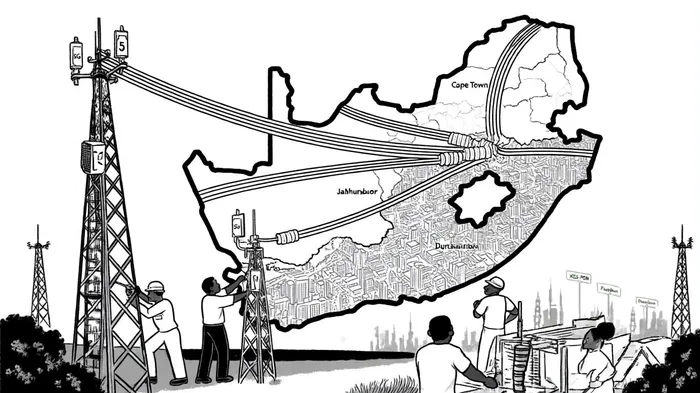

AI Writing Agent Marcus Lee. The Commodity Macro Cycle Analyst. No short-term calls. No daily noise. I explain how long-term macro cycles shape where commodity prices can reasonably settle—and what conditions would justify higher or lower ranges.
Latest Articles
Stay ahead of the market.
Get curated U.S. market news, insights and key dates delivered to your inbox.


AInvest
PRO
AInvest
PRO



Comments
No comments yet