
South Africa's Energy Transition: A Strategic Investment Play in Renewables and Battery Storage
South Africa's energy landscape is undergoing a profound transformation, driven by landmark renewable energy projects, ambitious government frameworks, and a growing emphasis on battery storage. This transition presents a rare investment opportunity to capitalize on the nation's shift from coal-dependent power to a diversified, low-carbon grid. With over R377 billion in renewable energy projects in the pipeline and strategic partnerships unlocking private capital, the time is ripe for investors to engage in this structural shift.
The Renewable Energy Renaissance
At the heart of South Africa's energy transition are large-scale wind and solar projects that are reshaping the country's power mix. The Impofu Wind Farm Complex, a R9-billion venture in the Eastern Cape by Enel Green Power and Red Cap, exemplifies this shift. Comprising three 110MW wind farms, it will supply SasolSSL-- and Air Liquide with renewable energy, demonstrating the growing role of corporate power-purchase agreements (PPAs) in driving demand. Similarly, the Koruson 2 hybrid project—a wind-solar combo spanning the Eastern and Northern Cape—highlights the efficiency of hybrid systems, combining Nordex turbines with solar panels to maximize output.
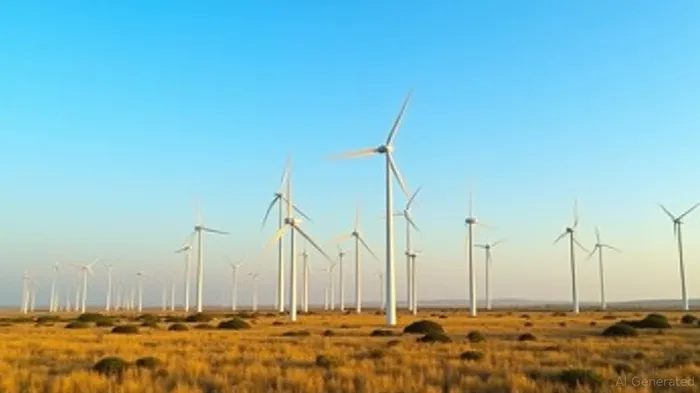
The Seriti Green Wind Project in Mpumalanga takes this a step further. At 750MW of wind capacity paired with 800MW of battery storage, it underscores the critical role of energy storage in stabilizing grids and enabling renewables to meet baseload demands. These projects are not isolated: the Renewable Energy Independent Power Producer Procurement Programme (REIPPPP) has seen applications surge to 4.5GW in 2023, a stark rebound from its post-2015 stagnation. This pipeline reflects renewed investor confidence, fueled by policy clarity and the Just Energy Transition Partnership (JETP), which has mobilized $8.5 billion in international funding.
Battery Storage: The Unsung Hero of Grid Stability
While solar and wind dominate headlines, battery storage is the linchpin enabling their scalability. The 616MW/2,464MWh Battery Energy Storage System (BESS) procurement program, approved in late 2024, is a case in point. Projects like the Haru BESS (123MW) and Bloemhoek BESS (124MW)—developed by Scatec and Mulilo, respectively—are designed to address grid bottlenecks and integrate intermittent renewables. These systems are expected to reduce reliance on coal-fired “peaking” plants, which previously cost Eskom $661 million annually to meet peak demand.
The Renewable Energy Masterplan (SAREM), approved in March 2025, further accelerates this trend. It mandates 40% black shareholding in IPPs and commits R3.7 billion to local procurement, ensuring South African suppliers (like Nordex's concrete tower factory in Humansdorp) benefit from the boom. Meanwhile, the JSE's Voluntary Carbon Market, paired with Xpansiv's blockchain infrastructure, offers investors a new revenue stream through tradable carbon credits.
Investment Opportunities: Where to Look
1. Utilities and IPPs: Companies like Enel Green Power, EDF Renewables, and local firms such as Renergen (which supplies Ivanhoe Mines) are well-positioned to profit from PPAs and grid modernization.
2. Battery Storage Developers: Mulilo Energy and Scatec are leading BESS projects with strong local content commitments.
3. Manufacturing Plays: Nordex Energy's Humansdorp plant, producing wind turbine towers, exemplifies the growth in green manufacturing.
4. Energy Aggregators: Firms like Discovery Green and NOA are unlocking liquidity in the power market by bundling corporate PPAs and trading energy via the unbundled grid.
Risks and Mitigation
Grid constraints remain a hurdle. The Northern Cape's underdeveloped transmission network has shifted project focus to Mpumalanga, where existing infrastructure can absorb capacity. Investors should monitor progress on Eskom's grid unbundling and the $21 billion grid expansion plan, which are critical to unlocking stranded renewable projects. Skills shortages in engineering and battery tech also pose risks, though government-funded training programs and partnerships with institutions like the African Energy University aim to address this.
Conclusion
South Africa's energy transition is no longer a distant goal but an active market reality. With landmark projects, supportive policies, and a nascent battery storage industry, the nation is poised to become a regional renewable energy hub. Investors should prioritize firms with strong local partnerships, exposure to battery storage, and participation in JETP-funded initiatives. While grid and regulatory risks linger, the structural tailwinds—falling technology costs, climate mandates, and capital inflows—make this a compelling long-term play. The shift from coal to renewables is irreversible; the question is no longer if, but when South Africa's grid will reflect this future.

Delivering real-time insights and analysis on emerging financial trends and market movements.
Latest Articles
Stay ahead of the market.
Get curated U.S. market news, insights and key dates delivered to your inbox.
AInvest
PRO
AInvest
PRO



Comments
No comments yet