
SoundHound AI: Voice-Activated Growth in the Automotive AI Revolution
The automotive industry is undergoing a seismic shift, driven by the fusion of artificial intelligence and in-vehicle technology. Among the key beneficiaries of this transformation is SoundHound AI (SOUN), a company positioned at the intersection of voice recognition and automotive innovation. As demand for intuitiveLUNR--, AI-powered voice systems surges—projected to grow from $3.51 billion in 2025 to $6.99 billion by 2030—SoundHound's expertise in natural language processing (NLP) and its strategic partnerships place it at the forefront of this disruption.
The Automotive Voice Recognition Market: A Tailwind for SoundHound
The automotive AI market, fueled by rising adoption of connected and autonomous vehicles, is booming. A 14.77% CAGR through 2030 underscores the urgency for automakers to differentiate through cutting-edge tech. Voice recognition systems are no longer a luxury—they're a necessity. They reduce driver distraction, enhance safety, and provide seamless control over navigation, climate, and entertainment.
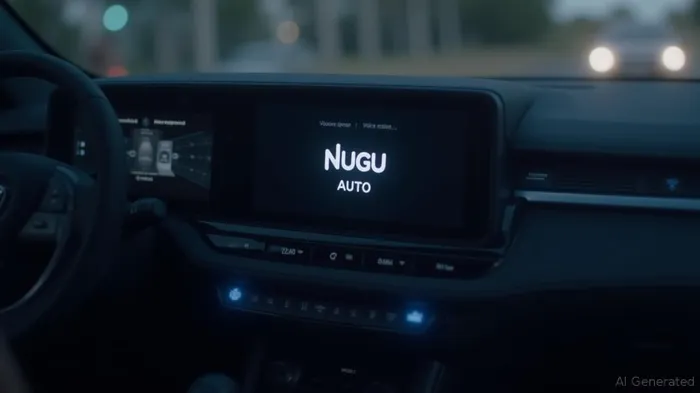
SoundHound's AI-powered voice assistants are designed to meet these demands. Its NUGU Auto platform, developed with Tmap Mobility, is already embedded in Renault's hybrid SUVs, offering hands-free control and contextual understanding. Meanwhile, its collaboration with Mercedes-Benz—enabling ChatGPT integration into the MBUX system—demonstrates its ability to compete in high-margin luxury markets. These partnerships highlight SoundHound's dual play: capturing both mass-market segments (via mid-priced vehicles) and premium brands seeking advanced AI features.
Why SoundHoundSOUN-- Stands Out
Technological Edge:
SoundHound's Houndify AI platform offers real-time, multi-language support and contextual awareness, outperforming basic voice assistants. Its ability to handle complex, multi-step commands (e.g., “Find a Thai restaurant, book a table, and navigate there”) sets it apart in an industry where accuracy and speed are critical.Strategic Partnerships:
The company's alliances with automakers and tech giants are multiplying. Beyond Renault and Mercedes, it has partnered with LG Electronics to integrate voice controls into infotainment systems and with Cerence to enhance AI-driven virtual assistants. These partnerships create a moat against competitors like Amazon and Microsoft, which lack SoundHound's automotive-specific focus.Asia-Pacific Growth:
The fastest-growing region for automotive AI (driven by China's EV boom and India's expanding middle class) is a key battleground. SoundHound's early entry into these markets—via partnerships like its work with Tmap Mobility in South Korea—positions it to capitalize on surging demand for connected cars.
Risks and Competitors to Watch
The road isn't without potholes. SoundHound faces stiff competition from tech giants like Microsoft (MSFT) and Alphabet (GOOGL), which leverage their existing ecosystems to push voice solutions into cars. Additionally, the market's fragmentation—across regions, vehicle classes, and languages—requires constant innovation.
Financially, SoundHound's valuation remains a concern. While its revenue growth (up 15% YoY in Q1 2024) is promising, profitability is elusive. Investors must weigh its long-term potential against near-term execution risks.
Investment Thesis: A High-Risk, High-Reward Play
SoundHound's moat lies in its AI prowess and automotive-specific focus—a niche that broader tech players may undervalue. The Asia-Pacific market's 30% contribution to global passenger vehicle sales and the luxury sector's push for AI integration (e.g., Mercedes' ChatGPT trial) create tailwinds.
For investors, SoundHound is a speculative bet on the voice-first future of cars. Those willing to take on volatility might consider a position if the stock retraces below its 52-week high (currently ~$12.50). Key catalysts include:
- New partnerships with automakers in emerging markets.
- Breakthroughs in multilingual support for regions like Southeast Asia.
- Profitability milestones, such as positive EBITDA by 2026.
However, historical performance around earnings events suggests caution. A strategy of buying 5 days before earnings and holding for 30 days from 2020 to 2025 underperformed significantly, with a total return of -39.18% and a maximum drawdown of -74.65%, underscoring the stock's volatility and the risks of short-term timing.
Conclusion
The automotive industry's shift toward AI-driven voice systems is irreversible. SoundHound AI, with its deep tech expertise and strategic alliances, is primed to dominate this space. While risks abound, the $6.99 billion opportunity by 2030 and SoundHound's early leadership suggest it's a company to watch closely. For aggressive investors, this could be a voice-activated ticket to the next wave of automotive innovation.
Disclaimer: Past performance does not guarantee future results. Always conduct your own research before making investment decisions.

Delivering real-time insights and analysis on emerging financial trends and market movements.
Latest Articles
Stay ahead of the market.
Get curated U.S. market news, insights and key dates delivered to your inbox.
AInvest
PRO
AInvest
PRO



Comments
No comments yet