
Sony's Stablecoin Blurs Lines Between Banking and Commerce


 Aime Summary
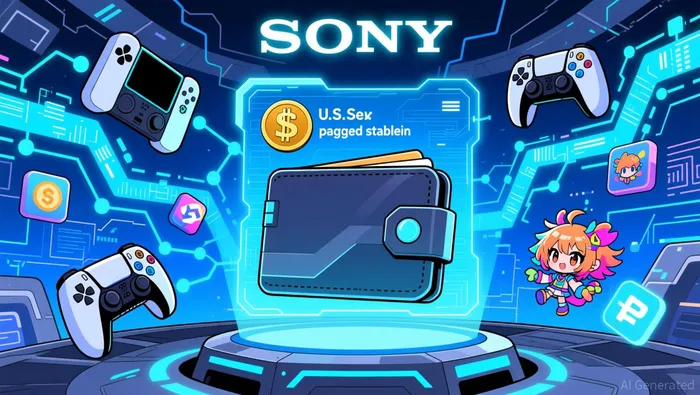
Sony Bank, the financial services arm of Japanese tech giant Sony GroupSONY--, is preparing to launch a U.S. dollar-pegged stablecoin in the United States as early as fiscal 2026, according to reports. The initiative, aimed at streamlining payments within Sony's gaming and anime ecosystem, seeks to reduce transaction fees traditionally associated with credit card usage and expand the company's digital footprint in Web3. The stablecoin will be issued under a U.S. banking charter applied for in October by Sony's subsidiary, Connectia Trust, and will leverage blockchain infrastructure provided by stablecoin issuer Bastion.
The stablecoin is expected to facilitate payments for PlayStation games, anime subscriptions, and other digital content, targeting U.S. customers who account for approximately 30% of SonySONY-- Group's external sales. By integrating a stablecoin into its ecosystem, Sony aims to create a more efficient payment system that bypasses traditional card networks, which charge significant fees for cross-border transactions. The move aligns with broader efforts by Sony Bank to explore blockchain technology, including the launch of its EthereumETH-- Layer 2 network, Soneium, in January 2025.
However, the project faces regulatory hurdles. The Independent Community Bankers of America (ICBA) has criticized Sony's application for a national crypto bank charter, arguing that Connectia Trust's model could undermine traditional banking principles by blending commerce and financial services. The ICBA contends that approving the charter would weaken the separation between banking and commercial activities, disadvantaging community banks. Despite these concerns, Sony Bank's partnership with Bastion—a firm supported by Coinbase Ventures—highlights its commitment to compliant, scalable stablecoin operations.
The U.S. stablecoin market, already valued at over $306 billion, is expanding rapidly, with major players like Tether (USDT) and Circle (USDC) dominating the landscape. Sony's entry comes as global adoption of dollar-pegged stablecoins accelerates, with forecasts suggesting over $1 trillion in inflows from emerging market banks by 2028. The timing positions Sony to capitalize on a growing demand for stable, low-cost digital payment solutions, particularly in sectors like gaming and entertainment.
In Japan, Sony Bank's Web3 ambitions extend beyond the U.S. initiative. The company established a dedicated Web3 subsidiary, BlockBloom, in June 2025, with a focus on integrating blockchain into fan-driven ecosystems, including NFTs and hybrid currency models. This effort complements Japan's broader push to develop a yen-pegged stablecoin market, where regulators have recently approved projects like JPYC and supported collaborations among major banks.
The stablecoin's success will depend on regulatory approvals, user adoption, and Sony's ability to navigate competitive pressures from established stablecoin providers. If launched, the initiative could mark a significant step in bridging traditional finance and Web3, particularly in entertainment and gaming, where seamless, low-cost transactions are critical .

Stay ahead of the market.
Get curated U.S. market news, insights and key dates delivered to your inbox.




Comments
No comments yet