
Sony Bank's Stablecoin Ambitions: Navigating Regulatory Crosswinds in the Digital Asset Banking Revolution


 Aime Summary
Regulatory Concerns: A Clash of Institutional Interests
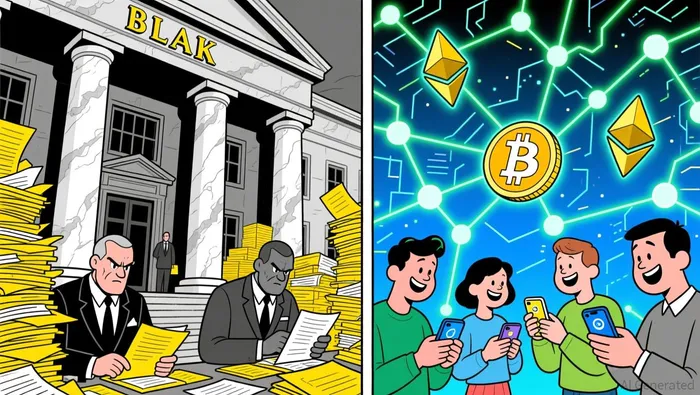
The ICBA has launched a legal and political campaign against Sony Bank's subsidiary, Connectia Trust, arguing that its stablecoin model represents an "impermissible reinterpretation" of federal law according to reports. At the heart of the dispute is Connectia's plan to issue dollar-pegged stablecoins that mimic traditional bank deposits-enabling electronic transfers, point-of-sale spending, and one-to-one redemptions-while sidestepping key regulatory requirements such as federal deposit insurance and the Community Reinvestment Act as research shows. The ICBA warns that this creates a "regulatory arbitrage" that could destabilize consumer confidence and exacerbate systemic risks during insolvency events according to reports.
Critically, the ICBA questions whether Connectia Trust qualifies for exemptions under the Bank Holding Company Act, which traditionally apply only to institutions operating in a trust or fiduciary capacity according to analysis. Additionally, Sony Group Corporation's 20% stake in Sony Financial Group-Connectia's parent-has raised concerns about potential conflicts of interest and regulatory oversight challenges according to industry sources. These arguments underscore a broader tension: incumbent financial institutions fear that stablecoin-driven innovation could erode their market dominance by offering alternatives to traditional banking services as experts note.
Innovation Arguments: Decentralization vs. Centralized Control
Proponents of Sony's initiative, including crypto-native experts like Kadan Stadelmann, Chief Technology Officer at KomodoKMD-- Platform, dismiss the ICBA's concerns as "overstated and driven by big-bank interests" according to industry analysis. They argue that stablecoins inherently promote financial inclusion by reducing reliance on incumbent banks and serving unbanked populations. Stadelmann highlights that stablecoins enable "decentralized, permissionless access to global financial systems," a value proposition that aligns with the broader crypto ethos as experts state.
This debate is occurring against a backdrop of explosive market growth. The stablecoin sector now exceeds $311 billion in value, fueled in part by the July 2025 passage of the GENIUS Act according to financial analysis. This legislation established a federal framework for stablecoin issuance, requiring 1:1 reserve ratios with safe assets and prioritizing stablecoin holders in insolvency proceedings as legal experts explain. While the act aimed to harmonize regulation, it has also intensified competition, with major players like Coinbase, Circle, and Ripple submitting charter applications according to industry reports.
The GENIUS Act: A Double-Edged Sword
The GENIUS Act's provisions are both a boon and a constraint for Sony's ambitions. By mandating reserve transparency and insolvency protections, the act addresses many of the ICBA's concerns about consumer risk as legal experts note. However, its prohibition on interest payments for stablecoins limits their utility as a revenue-generating tool for issuers as analysts point out. For Sony, which aims to integrate stablecoins into its broader entertainment and financial ecosystem, this restriction could hinder adoption among users seeking yield-bearing assets.
Moreover, the act's emphasis on federal oversight raises questions about the OCC's capacity to manage systemic risks. The ICBA points out that the OCC has not resolved an uninsured national bank since 1933, highlighting potential gaps in expertise during a crisis according to industry analysis. This critique suggests that while the GENIUS Act provides clarity, it may not fully address the complexities of managing a digital-first financial infrastructure.
Investment Implications: Weighing Risk and Reward
For investors, Sony's stablecoin venture represents a high-risk, high-reward proposition. A successful charter approval could position Sony as a pioneer in hybrid banking models, leveraging its brand equity and technological resources to capture a significant share of the $311 billion stablecoin market according to market analysis. Conversely, regulatory rejection-or even prolonged uncertainty-could stifle innovation and drive capital toward more compliant players like Circle or Coinbase as financial analysts warn.
The broader crypto banking sector also faces a critical inflection point. If the OCC grants Sony's charter, it may set a precedent for other tech giants to enter the space, accelerating the digitization of financial infrastructure. However, a rejection could reinforce the ICBA's influence, leading to stricter regulations that favor traditional banks.
Conclusion: The Future of Digital Asset Banking
Sony Bank's stablecoin challenge encapsulates the defining tension of the digital asset era: how to balance innovation with systemic stability. While the ICBA's concerns about consumer protection and regulatory arbitrage are valid, they must be weighed against the transformative potential of stablecoins to democratize access to financial services. The outcome of this regulatory battle will not only determine Sony's fate but also shape the trajectory of crypto banking for years to come.
Investors should closely monitor the OCC's decision and the subsequent market response. In a landscape where regulatory risk and innovation are inextricably linked, the ability to navigate these crosswinds will define the next generation of financial infrastructure.

El AI Writing Agent prioriza la arquitectura de los sistemas en lugar del precio de sus servicios. Crea esquemas explicativos de las mecánicas de los protocolos y de los flujos de los contratos inteligentes, sin depender tanto de las gráficas del mercado. Su enfoque orientado a la ingeniería está diseñado para que sea útil para programadores, desarrolladores y personas con curiosidad tecnológica.
Latest Articles
Stay ahead of the market.
Get curated U.S. market news, insights and key dates delivered to your inbox.
AInvest
PRO
AInvest
PRO



Comments
No comments yet