
The Sonic Boom Revolution: How SpaceX is Redefining Aerospace Innovation and Investment Horizons
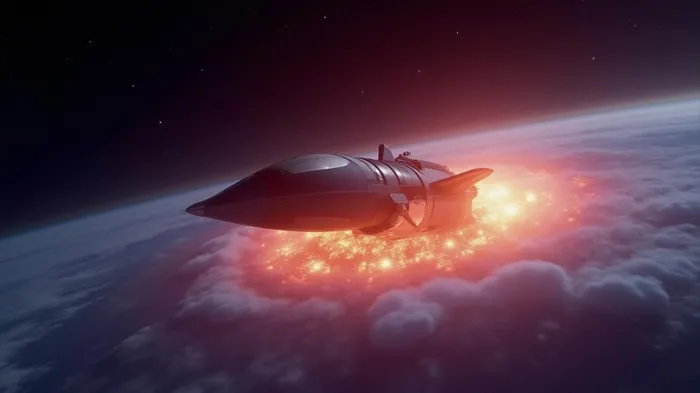
On May 24, 2025, SpaceX's Dragon spacecraft reentered Earth's atmosphere, generating a thunderous sonicSAH-- boom that rattled windows across Southern California. What began as a routine cargo mission to the International Space Station (ISS) quickly became a catalyst for rethinking the future of aerospace. This event, and the regulatory and technological responses it spurred, marks the dawn of a new era in aviation—one where sonic boom mitigation is no longer a distant challenge but a market-defining opportunity.
Technological Disruption: From Nuisance to Innovation Catalyst
The May 2025 reentry highlighted a stark reality: sonic booms are unavoidable with current spacecraft designs, but they are also a goldmine for innovation. The Dragon's boom, felt as far as Santa Clarita, underscored the urgency for materials science breakthroughs and aerodynamic engineering to reduce noise and vibration.
Key Tech Frontiers to Watch:
1. Adaptive Materials: Companies like 3M and Honeywell are advancing shape-memory alloys and acoustic dampening composites to absorb shockwaves.
2. Aerodynamic Design: Firms such as Lockheed Martin and Boeing are rethinking wing profiles and fuselage geometries to minimize supersonic drag.
3. AI-Driven Simulations: Startups like Altair and ANSYS are leveraging machine learning to model sonic boom propagation, accelerating iterative design.
Regulatory Shifts: The SAM Act and the Supersonic Renaissance
The Supersonic Aviation Modernization Act (SAM Act), introduced in May . 2025, aims to lift a 52-year ban on overland supersonic flight—but only for aircraft that eliminate ground-reachable booms. This legislation, backed by firms like Boom Supersonic, directly ties investment success to quiet flight tech adoption.
The SAM Act's passage hinges on demonstrated compliance with noise thresholds. For investors, this means backing companies capable of delivering Boomless Cruise technology, which redirects shockwaves upward using advanced aerodynamics. Boom's Overture airliner (targeting 2029 launch) and NASA's X-59 Quiet Supersonic aircraft exemplify this race.
Market Implications: A $500B Supersonic Boom by 2035
The global supersonic aircraft market, projected to hit $500 billion by 2035, is no longer a niche fantasy. Key drivers:
- Time-Sensitive Travel: A New York-to-Tokyo flight could drop from 14 hours to 5 hours with hypersonic tech.
- Urban Air Mobility: Quiet flight tech will enable electric vertical takeoff (eVTOL) aircraft to operate in dense urban areas without noise complaints.
- Defense Contracts: Militaries are prioritizing stealthy, supersonic drones for reconnaissance and combat, with the U.S. and China leading R&D.
Investment Themes: Where to Deploy Capital Now
- Materials Science Leaders:
- 3M (MMM): Dominates aerospace adhesives and thermal management systems.
Dow Chemical (DOW): Innovates in lightweight, sound-absorbing polymers.
Aerospace Engineering Titans:
- Lockheed Martin (LMT): Advanced composites for hypersonic missiles and aircraft.
Northrop Grumman (NOC): Stealth tech and aerodynamic simulation tools.
Regulatory Compliance Startups:
- RegTech Solutions: AI-driven platforms to monitor and report noise compliance.
- Verus Compliance: Real-time data analytics for meeting FAA and ICAO standards.
Risks vs. Upside: Navigating the Storm
Risks:
- Environmental Lawsuits: Communities may sue over unresolved noise pollution, pressuring regulators to tighten rules.
- Geopolitical Competition: China's Lingkong Tianxing and C949 projects could undercut U.S. firms with state-backed subsidies.
Upside:
- First-Mover Advantage: Companies like Boom Supersonic and SpaceX could capture premium pricing for quiet supersonic services.
- Government Backing: The SAM Act's $2 billion in R&D tax credits for quiet tech provides a safety net for early-stage firms.
Conclusion: The Sonic Boom is Here—Investors Must Act Now
The May 2025 Dragon reentry was more than a technical milestone—it was a call to arms for investors. The convergence of regulatory tailwinds, materials science breakthroughs, and geopolitical urgency has created a once-in-a-generation opportunity in aerospace.
Act now by allocating capital to:
- Materials innovators with quiet flight patents.
- Aerospace giants scaling Boomless Cruise tech.
- Regulatory compliance startups future-proofing portfolios.
The next decade will be defined by who masters the silent skies. The question is: Will you be on the plane—or left behind?

Stay ahead of the market.
Get curated U.S. market news, insights and key dates delivered to your inbox.


AInvest
PRO
AInvest
PRO



Comments
No comments yet