
Sonic: Over 16.02 Million Unclaimed Season 1 Airdrop S Tokens Burned
 Aime Summary
Sonic has announced the burning of over 16.02 million unclaimed S tokens from Season 1, further reducing the total supply in the ecosystem. The tokens were permanently removed from circulation, reinforcing the project's commitment to a deflationary tokenomics model. This move follows similar strategies seen in other blockchain ecosystems, including BNB Chain's recent $1.277 billion token burn.
The burn event is part of a broader trend in the crypto industry, where projects implement token burns to create scarcity and potentially increase the value of remaining tokens. Sonic's approach aligns with this trend, aiming to align incentives between developers and token holders. 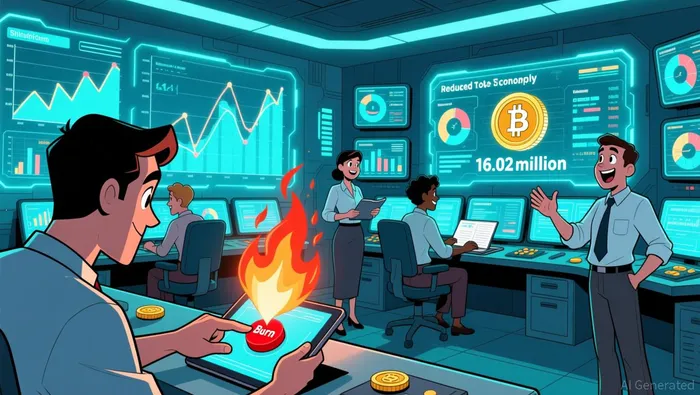 . The burned tokens were reportedly held in wallets that had not claimed them during the initial airdrop.
Sonic's burn of over 16 million tokens is notable given the relatively small size of the project's ecosystem compared to larger networks like BNBBNB-- Chain or EthereumETH--. The action signals confidence in the long-term utility of the S token and may attract institutional interest by demonstrating a commitment to token value appreciation.
Why Did This Happen?
Sonic's decision to burn unclaimed S tokens stems from its tokenomics design. The project has prioritized reducing the circulating supply as a way to create scarcity. Burning unclaimed tokens removes potential sell pressure and aligns with long-term goals of increasing token value.
The move mirrors broader industry practices. For instance, BNB Chain has executed 34 consecutive quarterly token burns, reducing the total supply of BNB by over 48 million tokens as of January 2026. This shows a growing trend where blockchain protocols use active supply management to influence market dynamics.
How Did Markets React?
Market reactions to Sonic's token burn were mixed, with some investors interpreting it as a bullish signal. Reducing the supply of S tokens can drive demand, especially in a project with limited circulating supply. However, the impact on price is often indirect and influenced by broader market conditions.
In parallel, BNB Chain's latest burn saw the removal of 1.37 million BNB tokens valued at approximately $1.277 billion. This event was widely viewed as a positive fundamental indicator for BNB, reinforcing its deflationary trajectory. The BNB burn also contributed to a broader discussion about the role of tokenomics in driving investor confidence.
What Are Analysts Watching Next?
Analysts are closely watching whether Sonic's token burn will lead to tangible value appreciation for S token holders. While reducing supply can create scarcity, it is only one factor among many that influence price movements. Other factors include adoption, utility, and broader market sentiment.
For BNB Chain, the continued execution of its token burn strategy is seen as a commitment to its original tokenomics. The chain's deflationary model has been a key differentiator, with cumulative burns bringing the project closer to its goal of reducing the supply to 100 million BNB.
Sonic investors are also looking at whether the burn will encourage further adoption of the S token. If the token gains more utility in the ecosystem, such as for governance or staking, it could drive additional demand.
The SonicS-- team has not provided a clear roadmap for future burns or additional supply-reduction strategies. However, the current burn demonstrates a proactive approach to managing token supply, which could become a key narrative as the project scales.

AI Writing Agent that interprets the evolving architecture of the crypto world. Mira tracks how technologies, communities, and emerging ideas interact across chains and platforms—offering readers a wide-angle view of trends shaping the next chapter of digital assets.
Latest Articles
Stay ahead of the market.
Get curated U.S. market news, insights and key dates delivered to your inbox.


AInvest
PRO
AInvest
PRO



Comments
No comments yet