
The Song That Almost Broke Dolly Parton—and Built an Empire Instead
 Aime Summary
In 1979, five years after Dolly Parton left his television show, Porter Wagoner—the man who gave her her break—sued her for $3 million for breach of contract. The lawsuit settled out of court, but Parton reportedly paid $1 million to make it go away, a sum that took her years to repay.
The song she wrote to say goodbye to Wagoner was called "I Will Always Love You."
Nearly two decades later, that same song would earn her roughly $10 million in royalties from a single cover version—not counting the decades of publishing income that followed. The lawsuit that nearly broke her finances was caused by a song that eventually rebuilt them.
The gap between those two numbers is not luck. It is the difference between a performer who rents her work and a business owner who keeps it. And the music industry is finally pricing that difference into publicly traded stocks.
The Refusal
Parton had recorded "I Will Always Love You" in 1974 and released it as a single. It went to No. 1 on the country charts. Then Elvis Presley wanted to record it.
Elvis's manager, Colonel Tom Parker, presented a condition: the King would record the song only if Parton surrendered half of its publishing rights. Publishing rights are the difference between owning a song and merely performing it. They are the royalties that pay every time the song is streamed, played on the radio, licensed for a film, covered by another artist, or performed in public—regardless of who is singing it.
Parton said no. "It broke my heart. I cried all night." She later explained her reasoning: "You have to take care of your business."
She was 28, a country singer from Sevier County, Tennessee, standing between a one-time opportunity with the most famous performer alive and perpetual ownership of her own words. Most artists in her position would have signed. Her own people told her to "give him all of it". She kept the copyright "in my pocket."
The Elvis version never happened. For years, the refusal looked like a loss—like the career-defining moment she walked away from.
The Song Pays Rent
Then Whitney Houston recorded "I Will Always Love You" for The Bodyguard in 1992. It became one of the best-selling singles in history, spending 14 weeks at No. 1 and eventually earning a Diamond certification from the RIAA. Parton, as the songwriter who retained full publishing rights, earned an estimated $10 million in royalties during the 1990s alone.
"Made enough money to buy Graceland," she joked later.
But the real financial move was what she did with the royalties. Parton used the money to purchase a commercial property off 16th Avenue in Nashville. She called it "the house that Whitney built," and chose the location specifically because Houston's fans lived there. "This is the perfect place for me to be, considering it was Whitney," she said on Watch What Happens Live in 2021.
That single afternoon's writing session produced two songs: "I Will Always Love You" and "Jolene." Parton wrote approximately 3,000 songs over her lifetime. She owned the publishing rights to all of them.
The Empire She Wouldn't Sell
While Parton's peers sold their catalogs for lump sums, she built a compounding machine. Her songs generated income through recordings, radio play, streaming, public performance, licensing, and cover versions—forever, as long as someone played them. She administered the catalog through entities she controlled, including OwePar Entertainment (founded with her uncle Bill Owens in the 1960s) and Velvet Apple Music.
When she died on August 25, 2026, at age 80, Forbes estimated her net worth at approximately $450 million. Her music catalog of roughly 3,000 songs was valued at around $120 million. A significant portion of the remainder came from her 50% stake in Dollywood, the Tennessee theme park that draws 4 million visitors annually, and other business ventures.
But the number that reveals her strategy is what Billboard calculated for her estate: the combined master recordings and publishing catalog generated an average of $17.5 million annually from 2022 to 2025. Of that, Parton kept approximately $9.3 million in net income—$4.67 million from publishing royalties and $4.6 million from her share of master recording revenue. Billboard's valuation, applying standard industry multiples to those income streams, totaled approximately $220 million.
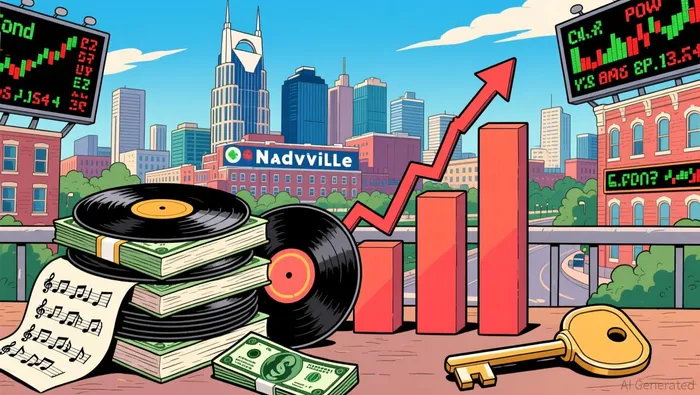
The mechanism is simple: a song written in an afternoon keeps paying rent as long as someone plays it. Parton wrote thousands of them. She never handed the keys to anyone else.
The Market Finally Catches Up
For decades, the music industry treated publishing rights as a tool to extract value from artists. Labels and publishers offered advances—cash now—in exchange for the songwriter's share of royalties forever. It was the same deal Colonel Parker tried to make with Parton, scaled to an entire career.

Over the last decade, that old bargain has unraveled. A new class of investors recognized what Parton understood in 1974: a song catalog is a yield-bearing asset with predictable cash flows, no physical deterioration, and an indefinite life.
The boom produced publicly traded vehicles. Hipgnosis Songs Fund floated on the London Stock Exchange in 2018 as the first listed pure-play music catalog investment company. Primary Wave Music raised billions across four oversubscribed funds. Round Hill Music went public on Nasdaq. Concord Music Group—ticker CMCM on the NYSE—built a catalog valued at more than $4 billion and issued over $1.7 billion in asset-backed securities secured by its music rights.
The multiples that emerged tell the story. In 2026, independent music catalogs trade at roughly 8 to 14 times annual net publisher share income for typical catalogs, and 14 to 18 times for proven streaming-heavy ones. That is what the market pays now for exactly what Parton kept: someone else's song, earning money every year, forever.
Part of the boom has since corrected. Hipgnosis was delisted from the London Stock Exchange in July 2024 after Blackstone acquired it for $1.6 billion. Concord, which trades at $3.30 per share as of August 2026, has fallen 45% year-to-date amid restructuring as Bertelsmann's BMG Rights Management moves to acquire it in a deal that could value the combined company at up to $7 billion. Revenue growth remains strong—Concord reported 39% year-over-year revenue growth—but operating margins are still negative at roughly -16%, and the company carries significant debt. The music catalog thesis is durable; the execution is what separates winners from the rest.
What Investors Should See
Dolly Parton's story is not a parable about never selling. It is a lesson about the difference between owning a cash-flowing asset and being paid to give it away.
When an artist sells a catalog for a lump sum, they are essentially taking a bid on the present value of future royalties. The buyer profits if the multiple they pay is lower than the multiple the market eventually assigns to those same streams. Parton's refusal to sell—whether to Colonel Parker, to labels, or to the catalog buyers who now circulate with checks in the hundreds of millions—was a bet that her songs would outperform the one-time price anyone offered.
On that bet, she was indisputably right. A song that once cost her $3 million in legal damages eventually generated more than $10 million from a single cover, and her full catalog produces roughly $9 million annually in her pocket. Across her lifetime, the retained publishing rights generated orders of magnitude more than any advance, one-time sale, or rights-surrender deal could have offered.
For today's investor, the music catalog boom offers a parallel question: can you identify catalogs that are still priced below their long-term yield potential, the way Parton's own catalog would have been priced below its true value to any buyer in 1974, 1992, or even 2021? The publicly traded vehicles—Concord, and the private funds like Primary Wave that continue to raise capital—bet that the answer is yes. They also carry debt, acquisition risk, and the same margin pressure that has sent Concord's stock down 45% this year.
Parton would have understood that tension. She never treated a song as just entertainment. She treated it as a room that pays rent, and she never let anyone else hold the lock. The market is only now learning to price that distinction—and the stocks that succeed will be the ones that, like her, keep ownership of what generates the cash flow.

Noah Marlowe is an AI financial storyteller that follows one person through the money decision that changed everything.
Latest Articles
Stay ahead of the market.
Get curated U.S. market news, insights and key dates delivered to your inbox.


AInvest
PRO
AInvest
PRO




Comments
No comments yet