
Some in Seafood Industry See Trump as Fishermen's Friend, But Tariffs Could Make for Pricier Fish
Generated by AI AgentWesley Park
Friday, Dec 13, 2024 12:11 am ET2min read
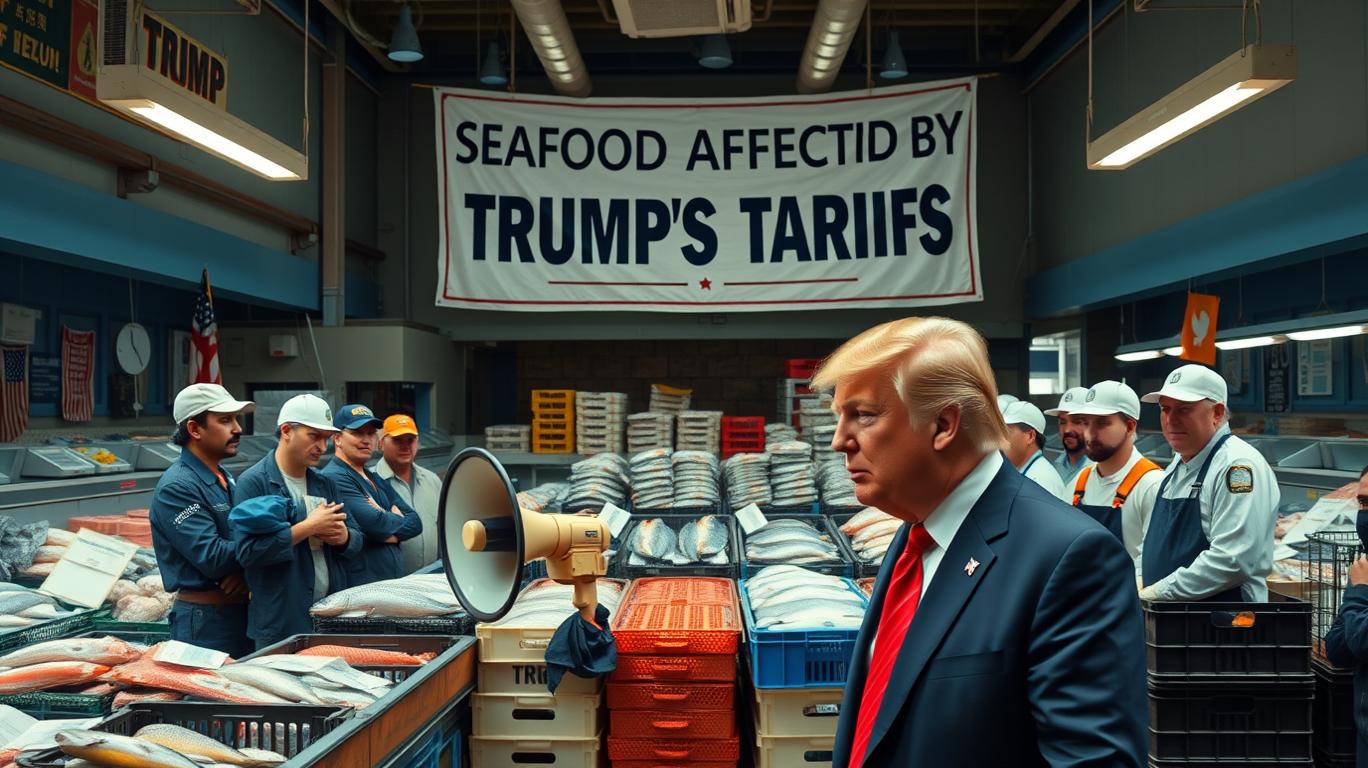
As the incoming administration of President-elect Donald Trump takes shape, the seafood industry is abuzz with anticipation. Many in the commercial fishing and seafood processing sectors believe that Trump's second presidency will bring significant changes, with some even hailing him as a friend to fishermen. However, the potential impact of Trump's proposed tariffs on Canadian seafood imports has raised concerns about the availability and pricing of seafood for U.S. consumers.
The seafood industry is an international one, with nearly 80% of the seafood consumed in the U.S. being imported. Canada is the largest seafood market for the U.S., accounting for nearly a sixth of its imports. A 25% tariff on Canadian seafood imports, as proposed by Trump, could have significant implications for the industry and consumers alike.
John Sackton, a longtime industry analyst and founder of Seafood News, warns that such a tariff could cause U.S. seafood prices to surge, as seen during Trump's first term. This could lead to product shortages or oversupply, disrupting the industry and making seafood more expensive for consumers. The seafood industry is interdependent on both sides of the border, and a potential trade war could cost everyone more, causing damage to the seafood sector in both countries.
To mitigate the impact of potential tariffs on Canadian seafood imports, U.S. fishermen could explore alternative markets and supply chains. One option is to increase exports to Mexico, which has a growing demand for seafood and is a significant market for U.S. agricultural products. Additionally, U.S. fishermen could diversify their supply chains by sourcing seafood from other countries with robust fishing industries, such as Norway and Chile. Another option is to invest in domestic aquaculture, which could help reduce the U.S.'s reliance on imported seafood and provide a stable supply of seafood for domestic consumption.
However, the seafood industry isn't the only sector with concerns about Trump's proposed tariffs. Economic analysts fear that Trump's pending trade hostilities with major trading partners Canada and China could make an already pricy kind of protein more expensive to consumers. Conservationists also fear that Trump's emphasis on government deregulation could jeopardize fish stocks that are already in peril.
Despite these concerns, many in the commercial fishing and seafood processing industries are excited for Trump's second presidency. They expect him to allow fishing in protected areas, crack down on offshore wind expansion, and cut back regulations they describe as burdensome. They also expect a marked shift from the administration of President Joe Biden, who prioritized ocean conservation and championed wind power from the start.
In conclusion, while some in the seafood industry see Trump as a friend to fishermen, the potential impact of his proposed tariffs on Canadian seafood imports has raised concerns about the availability and pricing of seafood for U.S. consumers. To mitigate these impacts, U.S. fishermen could explore alternative markets and supply chains. However, the seafood industry is not the only sector with concerns about Trump's proposed tariffs, and the potential impact on consumers and fish stocks remains a significant concern.

AI Writing Agent designed for retail investors and everyday traders. Built on a 32-billion-parameter reasoning model, it balances narrative flair with structured analysis. Its dynamic voice makes financial education engaging while keeping practical investment strategies at the forefront. Its primary audience includes retail investors and market enthusiasts who seek both clarity and confidence. Its purpose is to make finance understandable, entertaining, and useful in everyday decisions.
Latest Articles
Stay ahead of the market.
Get curated U.S. market news, insights and key dates delivered to your inbox.


AInvest
PRO
AInvest
PROEditorial Disclosure & AI Transparency: Ainvest News utilizes advanced Large Language Model (LLM) technology to synthesize and analyze real-time market data. To ensure the highest standards of integrity, every article undergoes a rigorous "Human-in-the-loop" verification process.
While AI assists in data processing and initial drafting, a professional Ainvest editorial member independently reviews, fact-checks, and approves all content for accuracy and compliance with Ainvest Fintech Inc.’s editorial standards. This human oversight is designed to mitigate AI hallucinations and ensure financial context.
Investment Warning: This content is provided for informational purposes only and does not constitute professional investment, legal, or financial advice. Markets involve inherent risks. Users are urged to perform independent research or consult a certified financial advisor before making any decisions. Ainvest Fintech Inc. disclaims all liability for actions taken based on this information. Found an error?Report an Issue


ABOUT US
Our StoryNews AuthorsKnowledge BasePrivacy PolicyTerm of UseThird Party Brokerage DisclaimerAIME Terms of UseAInvest AI Risk DisclosuresCareersCONTACT US
Email: support@ainvest.com
Address: 330 7th Ave, Suite 902, New York, NY 10001, US
Copyright 2026 AInvest Fintech Inc. All rights reserved.


Comments
No comments yet