
The Solid-State Revolution: How Battery Breakthroughs Are Redefining EV Dominance and Investment Winners
The electric vehicle (EV) industry is on the brinkBCO-- of a paradigm shift, driven by a technology once deemed science fiction: solid-state batteries. Recent advancements, including major automakers’ 2025 commercialization roadmaps, are poised to supercharge EV adoption by破解 the "range anxiety" and cost barriers that have limited mainstream acceptance. For investors, this is a once-in-a-decade opportunity to position in companies at the forefront of this revolution—and avoid those clinging to outdated lithium-ion tech.
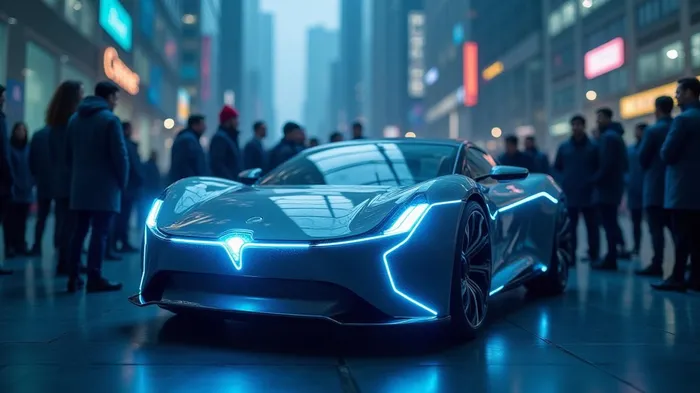
The 2025 Tipping Point: Automakers Bet Big on Solid-State
The 2025 milestone marks the dawn of commercialization for solid-state batteries, with automakers racing to embed this game-changing tech into their vehicles. Take Nissan, which plans to launch its all-solid-state battery production process by March 2025, a critical step toward mass production by 2028. Hyundai is even further ahead, with trial production of EVs using solid-state batteries set for 2025, followed by partial mass production in 2027. Meanwhile, Changan Automobile aims to begin mass-producing these batteries by 2025, targeting energy densities of 350–500Wh/kg—a leap over today’s lithium-ion batteries.
This is no niche play. By 2025, semi-solid-state batteries—a transitional but powerful tech—are expected to hit mass production, enabling 700km+ ranges (CLTC) and 12-minute fast charging in models like NIO’s ET7. The data is clear: . The company’s partnership with Volkswagen’s PowerCo subsidiary is accelerating the scaling of anode-free solid-state cells, with commercialization slated for 2026.
The Materials and Manufacturing Gold Rush
Solid-state batteries aren’t just about energy density; they’re reshaping supply chains. Traditional lithium-ion dependencies on cobalt and nickel are fading as companies pivot to lithium-sulfur, silicon-carbon anodes, and other alternatives. BYD, for example, is betting on a high-nickel sulfide route, while Factorial Energy’s FEST® cells (backed by Stellantis) deliver 375Wh/kg with 4C discharge rates, minimizing reliance on scarce metals.
But the real prize is cost reduction. Today, solid-state batteries cost 3–5x more than lithium-ion, but ProLogium’s Taoyuan gigafactory has already achieved 2.6x production efficiency gains. Pair this with advancements like dry electrode technology and AI-driven electrolyte design, and the path to parity with lithium-ion is clear. Investors should target firms like Panasonic (already developing 95% lithium recovery systems) and Northvolt (EU-backed recycling infrastructure), which are tackling sustainability and scalability.
Investment Thesis: Pivot or Perish
The stakes are existential. Legacy EV players tied to lithium-ion—such as those still betting on graphite-heavy batteries—risk obsolescence. Meanwhile, undervalued firms with solid-state patents are primed to dominate:
- QuantumScape (QS): Leading in anode-free tech with Volkswagen’s backing.
- Factorial Energy: Its FEST® cells offer unmatched cold-weather performance.
- Gotion Hi-Tech: Mass trials by 2027 with a 350Wh/kg battery already in hand.
Avoid companies like Solid Power (focusing on slower 2030 timelines) and LG Energy Solution, which prioritizes lithium-sulfur over solid-state until 2030.
Risks and the Road Ahead
No revolution is risk-free. Solid-state’s interfacial impedance and temperature challenges remain unresolved, as does the need for global recycling frameworks to meet EU’s 2030 Battery Regulation. But with $50 billion+ in R&D commitments from automakers and battery firms, these hurdles are surmountable.
BYD’s rise—a result of its battery vertical integration—foreshadows what solid-state winners will achieve.
Conclusion: Act Now or Be Left Behind
The solid-state era is here. By 2025, the groundwork for full commercialization by 2027–2030 will be laid, with automakers like Nissan, Hyundai, and Changan leading the charge. Investors ignoring this shift risk missing the next Tesla-like disruptor. Act now: allocate capital to firms with patent exposure, scalable production, and diversified material strategies. The EV future belongs to those who dare to go solid.
The time to position is now—before the next wave hits.

Stay ahead of the market.
Get curated U.S. market news, insights and key dates delivered to your inbox.






Comments
No comments yet