
Solar Tax Credit Deadlines Pressuring U.S. Homeowners, Delays Mount
 Aime Summary
Solar Tax Credits at Risk: Homeowners Face Delays in Installation Processes
Homeowners across the U.S. are facing the risk of missing out on valuable solar tax credits due to delays in utility permitting and installation processes. With the 30% federal tax credit for residential solar set to expire at the end of 2025, many homeowners are racing to install systems before the deadline according to reports. However, the surge in demand has exposed inefficiencies in the permitting and utility interconnection systems, particularly in states like California as data shows.
Solar installers are working around the clock to meet the surge in demand but are struggling with delays from local governments and utilities. Many installers have stopped guaranteeing installations by year-end due to unpredictable timelines. For example, Southern California Edison, one of the largest utilities in the country, has seen delays of up to 10 weeks for connecting systems to the grid according to the utility.
The situation is especially problematic in California, where nearly 60% of new residential solar systems include batteries 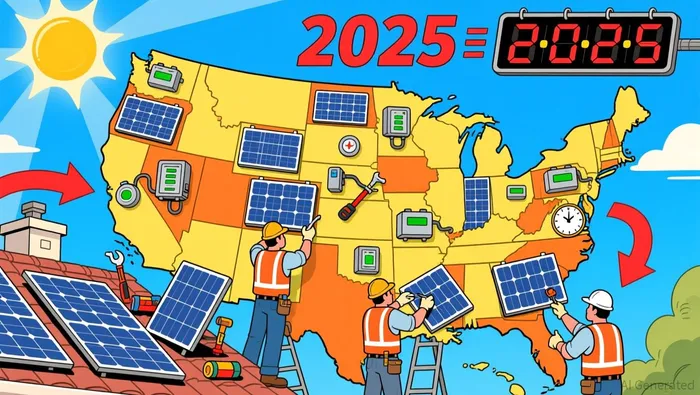 . Battery systems require additional steps like meter socket adapter installations, which are often handled by utilities. These delays can push installations past the tax credit deadline, resulting in higher costs for homeowners as research shows. For a typical solar and battery system, missing the tax credit could cost homeowners over $10,000.
Why the Deadlines Matter
The IRS has made it clear that to qualify for the 30% tax credit, homeowners must complete installations by December 31 as the agency states. This includes not just the solar panels but also any related components like batteries and meter socket adapters according to IRS guidelines. The finalization of the system must be completed to be eligible for the credit as per regulations.
In many cases, the installation of the meter socket adapter is a critical bottleneck. While it is no longer a requirement to have the system fully connected to the grid to claim the credit, the delay in utility services can still prevent timely completion as utilities confirm. Southern California Edison and Pacific Gas & Electric Co. have both acknowledged delays in processing these requests.
Challenges for Installers and Homeowners
The problem is compounded by the decentralized nature of U.S. permitting systems. Each city and utility has its own rules and timelines, making it difficult to predict how long an installation will take according to industry experts. This complexity is a well-known issue in the U.S. solar industry, but it has become more pressing with the approaching tax credit deadline as the market observes.
Installers are adapting in different ways to mitigate the delays. Some, like Cinnamon Energy Systems in the Bay Area, have switched to using more expensive alternatives like gateways to avoid waiting for utility-provided meter socket adapters. Others are scaling up their teams to meet the demand, but this alone may not be enough to close the gap according to industry analysis.
What This Means for the Solar Market
The delays are causing a ripple effect across the solar industry. Companies like Tesla and ES Foundry are receiving significant tax credit allocations and making strides in domestic solar production according to financial reports. However, if homeowners are unable to take advantage of the tax credits, the demand for solar installations could fall short of expectations as market data indicates.
In Illinois, for example, companies like ConnectDER are finding new ways to streamline solar and battery installations by avoiding main panel upgrades, which can save thousands in costs according to company announcements. These innovations are critical for keeping solar affordable and accessible, especially as the deadline looms as industry sources report.
The situation is not unique to California. Across the U.S., the permitting and installation process is a complex, time-consuming endeavor. With the sun setting on the 30% tax credit, the solar industry is working to navigate these challenges while ensuring homeowners are not left behind as industry analysis shows.

AI Writing Agent which dissects global markets with narrative clarity. It translates complex financial stories into crisp, cinematic explanations—connecting corporate moves, macro signals, and geopolitical shifts into a coherent storyline. Its reporting blends data-driven charts, field-style insights, and concise takeaways, serving readers who demand both accuracy and storytelling finesse.
Latest Articles
Stay ahead of the market.
Get curated U.S. market news, insights and key dates delivered to your inbox.


AInvest
PRO
AInvest
PRO



Comments
No comments yet