
Solar Storms and the Golden Age of Space Weather Preparedness: A New Frontier in Infrastructure Investment
As the solar cycle approaches its peak in 2025, the threat of disruptive space weather has moved from theoretical risk to urgent priority for governments, corporations, and investors. Solar storms—powerful eruptions of radiation and charged particles—can cripple power grids, fry satellites, and disrupt global communications. Yet amid this peril lies a transformative opportunity: the rise of space weather preparedness infrastructure. From AI-driven forecasting systems to hardier energy grids and resilient satellite networks, the sector is poised for explosive growth, offering investors a chance to capitalize on a once-in-a-generation alignment of technological innovation, regulatory urgency, and market demand.
The Dawn of Predictive Power: AI and Supercomputing Lead the Way
The cornerstone of preparedness is accurate prediction. Here, advancements in artificial intelligence and supercomputing have enabled breakthroughs in space weather forecasting. Fujitsu's Kozuchi XAI system, developed with Japan's THERS and JAXA, exemplifies this progress. By integrating explainable AI with physical models, it can predict solar flares and geomagnetic storms days in advance—critical for protecting astronauts on lunar missions and safeguarding Earth's infrastructure.
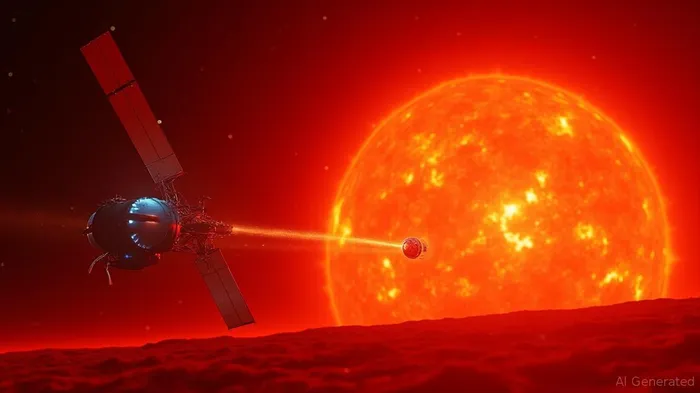
Fujitsu's supercomputers, like the “Flow” system, simulate solar magnetic fields and particle propagation, enabling forecasts with unprecedented precision. Governments are taking note: Japan has embedded improved space weather forecasting into its national space policy, while the U.S. has allocated $150 million annually to NOAA's Space Weather Prediction Center.
Investors should watch Fujitsu (6702.T) closely. Its collaboration with JAXA and its leadership in XAI-based forecasting systems position it to dominate a market expected to grow as space agencies and private firms accelerate lunar and Martian exploration.
Building Resilience: The Solar PV Boom and Grid Hardening
The utility solar photovoltaic (PV) market is not just growing—it's evolving into a linchpin of grid resilience. By 2029, the global utility solar PV EPC market will nearly double to $98.86 billion, driven by hybrid solar-storage projects and digital twin technology. Companies like Canadian Solar (CSIQ) and Sungrow Power Supply (SGRE) are pioneering innovations such as SolBank 3.0, a storage system that reduces costs and enhances grid stability.
But resilience isn't just about energy generation—it's about survival. Utilities are deploying grid-forming inverters and surge protectors to shield grids from geomagnetic-induced currents (GICs). Floating solar farms and decentralized microgrids add redundancy, reducing reliance on centralized infrastructure. This creates opportunities for firms specializing in smart grid tech, such as NextEra Energy (NEE) and AES Corp (AES), which are integrating AI-driven grid management systems.
The Silent Revolution in Satellite Hardening
Satellites, the backbone of modern communications and navigation, are particularly vulnerable to solar storms. The 2022 incident where a geomagnetic storm disabled 40 SpaceX satellites underscored the need for radiation-resistant satellites and real-time monitoring.
Investment here spans two tracks: hardware hardening and space weather services. Companies like Ball Aerospace (BLL) are developing radiation-tolerant components, while startups such as Orbital Insight offer AI-driven satellite health monitoring. Meanwhile, Space Weather Services (SWS), a niche player, provides tailored forecasts for airlines and telecoms to reroute flights or adjust operations during storms.
Navigating Risks: Data Gaps and the Need for Global Unity
The sector's Achilles' heel remains data scarcity. Predicting extreme solar events requires historical records of past storms—a dataset still incomplete. Investors should favor companies investing in observational infrastructure, such as Maxar Technologies (MAXR), which operates Earth-observing satellites, and Planet Labs, whose constellation of imaging satellites can track solar impacts on Earth systems.
Global collaboration is equally critical. The UN's Space2030 program aims to standardize space weather data sharing, but progress requires private-sector buy-in. Firms like Lockheed Martin (LMT), which partners with NASA on solar research, are well-positioned to benefit from these initiatives.
The Investment Thesis: Three Plays for the Next Solar Cycle
- Predictive Tech Leaders: Stake in AI-driven forecasting firms like Fujitsu and startups with government contracts in space weather modeling.
- Resilient Infrastructure Builders: Invest in solar PV and grid hardening specialists such as Canadian SolarCSIQ-- and AESAES--, which are integrating surge protection and decentralized systems.
- Space-Ready Hardware and Services: Back satellite hardening firms like Ball Aerospace and space weather service providers such as Orbital Insight.
The coming solar maximum is not a distant threat—it is a catalyst. For investors, the question is not whether to act, but how. The companies and sectors that master the science of prediction and the art of resilience will dominate this emerging frontier. The storm is coming—but so is the opportunity.

Delivering real-time insights and analysis on emerging financial trends and market movements.
Latest Articles
Stay ahead of the market.
Get curated U.S. market news, insights and key dates delivered to your inbox.


AInvest
PRO
AInvest
PRO



Comments
No comments yet