
Solar Sector's Storm Clouds: Tax Credit Dependency and GOP Risks
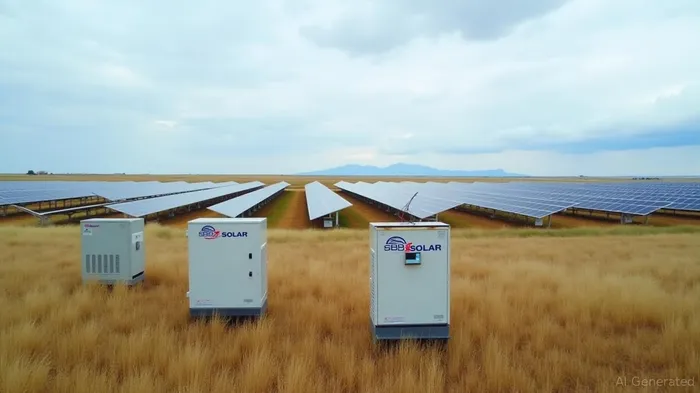
The solar energy sector, once a beacon of green growth, now faces a storm of uncertainty as U.S. tax policy shifts threaten to upend its foundation. At the heart of the turmoil are proposed GOP tax reforms that could strip critical incentives for solar projects, disproportionately impacting small businesses like SBSSBS-- Solar in Montana. This article explores the vulnerabilities exposed by these reforms, the cascading regional economic risks, and strategies for investors to navigate the turbulence.
The Tax Credit Dependency Trap
Solar's rapid expansion since 2022 has relied heavily on federal tax credits, particularly the Investment Tax Credit (ITC) and the residential 25D credit. These incentives, part of the Inflation Reduction Act (IRA), slashed costs for homeowners installing panels and financed utility-scale projects. However, the GOP's “One Big Beautiful Bill” proposes to eliminate the 25D credit by end-2025 and accelerate the ITC's phaseout, requiring projects to start construction within 60 days of the bill's passage or face expiration by 2028.
For small firms like SBS Solar, this is a death knoll. CEO Kevin Schulte (a parallel to the referenced Ralph Walters) has warned that without the 25D credit, installation costs could rise by $8,000–$9,000 per rooftop system. “We'll be forced to cut staff or shut down,” he stated, echoing broader industry fears. SEIA estimates the reforms could erase 300,000 solar jobs by 2028, with over 10,000 cancellations already reported in 2025.
Note: A sharp decline post-April 2025 aligns with GOP bill disclosures, signaling investor anxiety.
Regional Fallout: Red States in the Crosshairs
The irony is acute: GOP-leaning states like Montana, Texas, and Arizona are solar investment hotspots. Montana's Solar Shares program, a bipartisan effort to democratize rooftop ownership, could collapse without federal backing. Over $280 million in projected economic impact and 1,200 jobs hang in the balance. Nationwide, 830,000 jobs (including manufacturing and construction) are at risk by 2030, per Energy Innovation.
The policy shift's geographic bias is stark. States that voted for Trump in 2024—like Texas and Florida—are set to lose $336 billion in clean energy investment by 2040. As one Montana legislator noted, “This bill guts the very communities that supported it politically.”
Investor Exposure: Beyond the ETFs
The risks extend beyond solar ETFs. Small firms with thin margins—SBS Solar included—are most vulnerable. Their stock valuations (if public) or private equity valuations could crater if projects stall. Even giants like Enphase (ENPH) face headwinds: delayed installations mean fewer inverters sold.
Note: A 30–40% drop in 2026 revenue estimates post-bill passage reflects sector-wide uncertainty.
Mitigation Strategies: Navigating the Policy Minefield
- Lobbying & Diversification: Investors should favor companies with lobbying muscle (e.g., Tesla, Vestas) or diversified revenue streams (e.g., utilities like NextEra).
- State-Level Incentives: States like California and New York may boost subsidies to offset federal cuts. Monitor policies in Montana, where the Solar Shares program could still be saved.
- Hedging with Storage Tech: Pair solar investments with battery storage stocks (e.g., Powin Energy) to reduce reliance on tax credits for viability.
- Short-Term Plays: Capitalize on a “panic sell-off” by buying undervalued solar stocks post-bill passage, assuming Senate negotiations soften deadlines.
Conclusion: A Solar Crossroads
The GOP's tax reforms are a reckoning for solar's growth model. While the sector's long-term potential remains strong, near-term volatility is inevitable. Investors must scrutinize companies' credit dependency, geographic exposure, and lobbying strength. For SBS Solar and its peers, survival hinges on state-level support and a Senate compromise. Stay vigilant—this storm won't pass quietly.
Investment Takeaway: Avoid pure-play small-caps until policy clarity emerges. Focus on diversified firms and pair solar ETFs with storage stocks for hedging.

Stay ahead of the market.
Get curated U.S. market news, insights and key dates delivered to your inbox.






Comments
No comments yet