
Solar Sector Opportunities Amid Turbulence: Navigating Policy and Tariff Headwinds to Find Resilient Winners
The U.S. solar industry is at a crossroads. A perfect storm of federal policy shifts, trade wars, and economic pressures is reshaping the landscape, leaving many projects on ice and investors wary. Yet within this chaos lie clear opportunities for companies that can pivot, innovateVATE--, and capitalize on structural shifts. Let's dissect the challenges, the emerging trends, and the firms positioned to thrive.
The Turbulence: Policy, Tariffs, and Economic Headwinds
The solar sector faces unprecedented uncertainty. The recently passed House budget reconciliation bill threatens to eliminate residential tax credits by 2026, forcing developers to rush projects to meet deadlines. Meanwhile, trade actions—from 145% tariffs on Chinese imports to a 10% “Liberation Day” tariff on non-NAFTA goods—have upended supply chains. Module imports from key Southeast Asian markets (Cambodia, Malaysia, Thailand, Vietnam) have plummeted by 71% year-over-year, while costs for steel trackers and inverters have surged due to Section 232 tariffs.
Add to this mix high interest rates, which have crimped residential demand (down 13% in Q1 2025), and labor shortages delaying grid connections, and you've got an industry in survival mode.
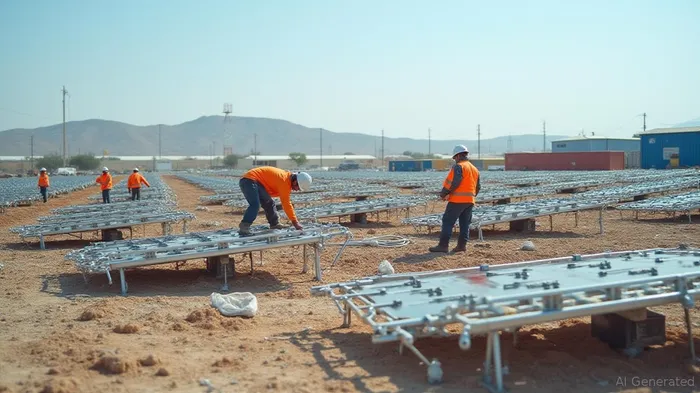
Structural Shifts: Where the Sun Still Shines
Despite the turmoil, the sector is evolving in ways that favor agility. Three trends stand out:
1. Segment Divergence
- Residential Solar: Slumping demand (down 30% in California last year) and expiring tax credits make this segment risky.
- Utility-Scale Solar: Still growing, driven by corporate PPAs (Meta, Amazon) and Texas' dominance (2.7 GWdc installed in Q1).
- Commercial Solar: NEM 2.0 tailwinds in California are fading, but projects tied to data centers and industrial customers remain robust.
- Community Solar: Collapsed 71% QoQ in early 2025 but could rebound in New York and Illinois.
2. Geographic Shifts
Texas now leads in installations, but Midwest states like Ohio and Indiana are emerging as bright spots due to favorable policies. Meanwhile, traditional hubs like Maine and California face saturation or regulatory headwinds.
3. Tech Innovation
The rise of TOPCon modules (higher efficiency, lower BOOM costs) is a game-changer. Companies adopting this tech can offset tariff-driven price hikes.
Resilient Players: Companies to Watch
The winners will be those that adapt to these shifts. Here's how to spot them:
1. Supply Chain Diversifiers
- ES Foundry (private): Its 1 GW cell factory in South Carolina leverages reshoring incentives and avoids reliance on Asian imports.
- First Solar (FSLR): A U.S. manufacturer of thin-film modules, it's less exposed to polysilicon volatility and CMTV tariffs.
2. Policy Savvy and Project Timing
- NextEra Energy (NEE): With 50 GW of contracted solar projects, its scale and corporate PPAs (e.g., Meta's Texas deals) provide stability.
- SunPower (SPWR): Focused on high-efficiency residential systems, it's leveraging partnerships with utilities to navigate tax credit deadlines.
3. Tech Leaders
- Maxeon Solar (MAXN): A pioneer in bifacial and TOPCon modules, it's capturing premium markets like commercial and industrial (C&I) installations.
4. State-Level Specialists
- Orion Energy Systems (OREI): Focused on Midwest states with strong net metering policies, it's capitalizing on commercial solar's tailwinds.
Investment Strategy: Play the Long Game
The next 12–18 months will be rough. Near-term growth is projected to shrink by 2% annually through 2027, but post-2028, the outlook brightens as tax credits stabilize, storage integration accelerates, and corporate sustainability goals kick in.
Buy now?
- Hold off on residential plays like SunPower until policy clarity emerges.
- Double down on utility-scale leaders: NextEra and First Solar have the scale and flexibility to weather tariffs.
- Look for TOPCon adopters: Maxeon's tech edge could pay off as module efficiency becomes a must-have.
Final Takeaway: Solar's Long-Term Promise Remains
The solar sector is in a holding pattern, but the fundamentals of falling costs, corporate demand, and grid modernization are unshaken. Investors who focus on companies that diversify supply chains, master policy dynamics, and lead in tech will be positioned to profit when the clouds clear.
As always, the sun will rise again—but only for those prepared for the storm.
Joe Weisenthal

Delivering real-time insights and analysis on emerging financial trends and market movements.
Latest Articles
Stay ahead of the market.
Get curated U.S. market news, insights and key dates delivered to your inbox.


AInvest
PRO
AInvest
PRO



Comments
No comments yet