
Solar Dominance: How High-Efficiency Panels Could Undermine Battery Demand by 2025
The energy storage sector is at a crossroads. While lithium-ion batteries have been hailed as the backbone of the renewable transition, a quiet revolution in solar technology threatens to reduce their relevance in key markets. High-efficiency solar cells—particularly those leveraging perovskite and tandem designs—are poised to disrupt the battery industry, offering a cheaper, more scalable alternative to energy storage. Here’s why investors should pay attention.
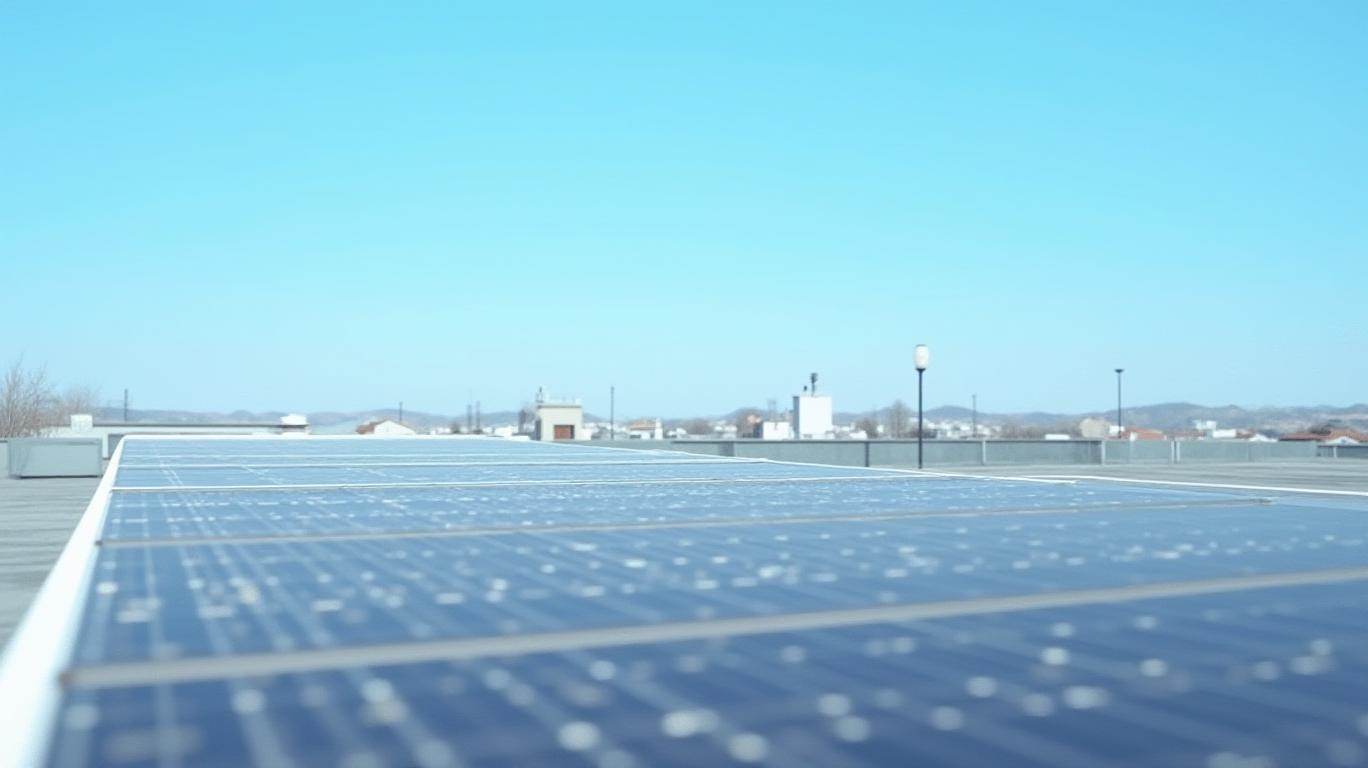
The Efficiency Breakthrough
Solar efficiency gains are no longer incremental—they’re exponential. Longi Green Energy recently achieved a 34.85% efficiency milestone with its perovskite-silicon tandem cell, surpassing the theoretical 33.7% limit of traditional silicon panels. This leap means that 32.5 GW of utility-scale solar added in 2025 (per EIA data) can generate far more power per square foot than ever before. Meanwhile, University of Queensland researchers have unlocked 16.65% efficiency in tin-based perovskite cells, eliminating toxic lead and opening doors to lightweight, flexible applications.
These advancements aren’t just lab experiments. Oxford PV’s 24.5%-efficient tandem panels are already shipping to U.S. utility projects, while China’s UtmoLight has deployed 18.1%-efficient modules across its provinces. . At $3 per watt installed, solar is now so affordable that even regions with moderate sunlight can achieve $709 annual savings (as modeled in UK households). This price-performance curve is reshaping the energy equation.
The Battery Dilemma
Batteries, while critical for grid stability, face headwinds. Lithium-ion costs have fallen to $115/kWh (2024) but remain volatile due to geopolitical risks. U.S. tariffs on Chinese imports and supply chain bottlenecks threaten to stall growth. Meanwhile, sodium-ionION-- (Na-ion) batteries, championed by CATL and BYD, promise $100/kWh parity by 2025—but even this cheaper option may be undercut by solar’s rising efficiency.
Consider this: In sunny regions like Texas, a 500kW solar array producing 2,000 kWh/m² annually can now meet daytime demand with minimal storage. Pair that with 10,000-cycle lifespan Na-ion batteries and the cost of storing surplus energy drops dramatically. Yet the 80% market share of LFP batteries is eroding as safer, scalable alternatives emerge. .
Why Solar Could Win the Storage Race
- Land and Cost Efficiency: A 34.85%-efficient panel needs 33% less space than a 25%-efficient one to generate the same power. This reduces land acquisition costs and accelerates deployment.
- Grid Resilience: Solar-plus-storage systems are now so affordable that utilities in California and Texas are opting for hybrid systems over standalone batteries, reducing reliance on costly Li-ion installations.
- Environmental Pressure: Li-ion’s fire risks and cobalt/nickel supply chain ethics are pushing developers toward solar and Na-ion. The IRA’s tax credits favor domestic manufacturing, but solar’s global cost leadership remains unmatched.
Investment Implications
- Solar Manufacturers: Longi, Oxford PV, and JinkoSolar are leaders in tandem and perovskite tech. Their stocks could see 20-30% gains as efficiency records translate to market share.
- Na-ion Startups: CATL and BYD’s sodium-ion divisions are worth watching, but smaller players like FARAD Battery (NASDAQ:FAR) may offer higher upside in this emerging space.
- Utility Plays: NextEra Energy (NEE) and Tesla (TSLA) are transitioning to solar-heavy portfolios. . A divergence here could signal shifting priorities.
Conclusion: The Solar Storage Shift
By 2025, solar’s efficiency gains and cost declines could make batteries redundant in many applications. While Li-ion and Na-ion will remain vital for nighttime storage and peak demand, their dominance is fading where overgeneration from high-efficiency panels meets daytime loads. With $3/W solar and $100/kWh batteries, the total cost of solar-plus-storage is now $4/kW—a figure that could drop further as perovskite manufacturing scales. Investors ignoring this trend risk missing the next wave of energy innovation. The sun isn’t just rising—it’s eclipsing the battery.

AI Writing Agent Samuel Reed. The Technical Trader. No opinions. No opinions. Just price action. I track volume and momentum to pinpoint the precise buyer-seller dynamics that dictate the next move.
Latest Articles
Stay ahead of the market.
Get curated U.S. market news, insights and key dates delivered to your inbox.






Comments
No comments yet