
Solana's Sudden Price Drop in Late October 2025: Liquidity Shocks and Validator Outages as Catalysts for Market Panic


 Aime Summary
The ETF Launch and Profit-Taking Panic
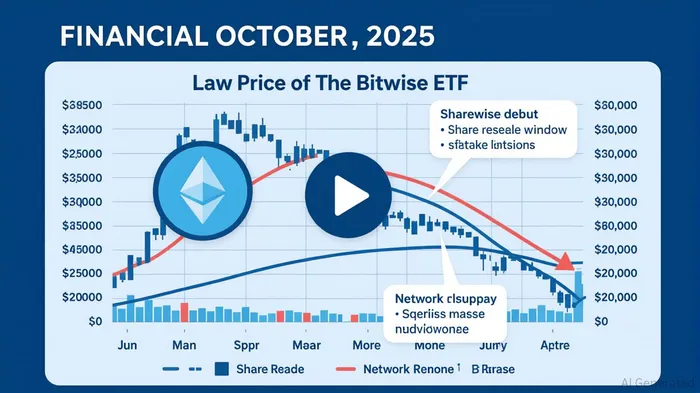
The Bitwise Solana Staking ETF, launched on October 2025, initially attracted $69.45 million in first-day inflows, pushing total assets under management to $289 million, according to Coinotag. Coinotag However, the euphoria was short-lived. Traders executed widespread profit-taking, triggering a classic "buy the rumor, sell the news" pattern, as Coinotag reported. Coinotag The ETF's staking component, which generates yield via Jito's validator network, introduced new competition for liquidity, fragmenting capital flows between token markets and structured products, as Coinotag noted. Coinotag
This fragmentation coincided with the Solana Company's private share resale window, allowing early investors from a $500 million funding round to liquidate restricted shares. The event caused HSDTHSDT-- stock to plummet over 11% as trading volumes surged, as Coinotag reported. Coinotag The Coinotag report highlighted a structural shift in how Solana exposure is priced-shifting from token markets to equity markets.
Validator Economics and Network Resilience
Despite the market turmoil, Solana's technical infrastructure held firm. During the October 2025 liquidity event, the network achieved a peak of 100,000 TPS, with the Agave validator client handling six times the usual traffic without performance degradation, according to Coinfomania. Coinfomania This marked a significant stress test, contrasting with earlier congestion incidents in 2021 and 2022, as reported by EthNews. EthNews
The network's resilience is partly attributed to stake-weighted Quality of Service (QoS), introduced in version 1.18 to allocate block space based on validator stake, as Cryptoslate reported. Cryptoslate Additionally, hybrid clients like Frankendancer and new entrants such as Mithril and Sig are diversifying the validator ecosystem, according to Lookonchain. Lookonchain These improvements, however, did little to quell token price volatility, as market participants focused on macroeconomic and institutional factors.
Liquidity Shocks and the Role of Saros
The Saros DEX's $10 million Liquidity Grant Program, as reported by CryptoTimes, aimed to mitigate liquidity risks by providing "zero cost" liquidity for new projects. CryptoTimes While this initiative enhanced trading depth for tokens like BONKBONK--, it did not offset broader market pressures. The CryptoTimes report underscored a critical gap: institutional-grade liquidity tools remain underdeveloped for Solana's rapidly expanding ecosystem.
The Alpenglow Upgrade and Future Outlook
Marinade Labs' CEO, Michael Repetny, highlighted the Alpenglow upgrade as a key solution to validator onboarding costs, as Lookonchain reported. Lookonchain By reducing voting fees-which account for 80% of the $5,000 monthly validator operating cost-the upgrade aims to decentralize the network further. However, its implementation is slated for late 2025 or early 2026, leaving the current validator infrastructure exposed to short-term shocks.
Conclusion
Solana's price drop in late October 2025 was not a failure of its technical architecture but a reflection of market dynamics. The interplay between ETF-driven profit-taking, equity liquidity events, and underdeveloped institutional tools created a perfect storm of panic. While the network's throughput and resilience are commendable, token holders must now grapple with the reality that Solana's value proposition is increasingly tied to its ability to attract and retain liquidity in both on-chain and off-chain markets.

Blending traditional trading wisdom with cutting-edge cryptocurrency insights.
Latest Articles
Stay ahead of the market.
Get curated U.S. market news, insights and key dates delivered to your inbox.
AInvest
PRO
AInvest
PRO



Comments
No comments yet