
Solana (SOL) Gains Regulatory Clarity and Network Upgrades Amid Market Volatility
 Aime Summary
- Solana has been designated as a digital commodity in the United States under joint classification by the SEC and CFTC, with protocol staking excluded from securities regulation, providing legal clarity for institutional and validator participants.
- A major network upgrade called Alpenglow (SIMD-0326) is being prepared by SolanaSOL-- to introduce fundamental performance and scalability improvements.
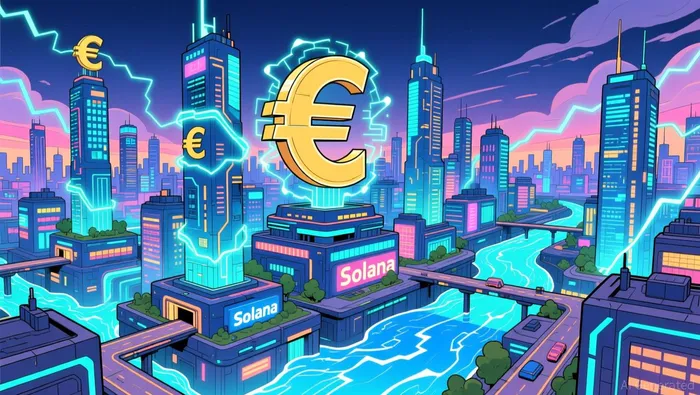
- The European UnionU-- is evaluating the use of Solana as a platform for a potential digital euro, reflecting the blockchain's growing role in central bank digital currency (CBDC) infrastructure.
Solana's recent regulatory clarification in the United States has established a clearer legal framework for participants in the ecosystem, particularly institutional and validator stakeholders according to reports. This development is expected to facilitate broader adoption and institutional participation in the Solana network. The U.S. classification also excludes protocol staking from securities regulation, further distinguishing Solana from traditional financial instruments.
Solana is preparing a significant network upgrade known as Alpenglow (SIMD-0326), aimed at enhancing the network's fundamental architecture. This upgrade is expected to improve performance and scalability, enabling Solana to handle increased demand as the ecosystem expands according to analysis.
The European Union's consideration of Solana for its digital euro reflects the growing interest in blockchain infrastructure for CBDCs. The decentralized nature of Solana aligns with the EU's exploration of blockchain solutions that offer security, efficiency, and transparency for digital currency initiatives.
Solana's ecosystem is expanding with the launch of new tools and initiatives. The Solana Foundation has introduced STRIDE and SIRN to enhance security for DeFi protocols, offering threat monitoring and incident response support according to reports. Additionally, the Trojan trading bot, built on Solana, has gained popularity for its automation and integration with Telegram, processing over $25 billion in trading volume.
What is the significance of Solana's regulatory designation in the U.S.?
The U.S. classification of Solana as a digital commodity, rather than a security, provides a clearer legal framework for participants in the Solana ecosystem according to official statements. This distinction allows for greater institutional participation and validator activity, as it removes the regulatory ambiguities previously associated with staking and other protocol functions. The clarity provided by the SEC and CFTC may also encourage further investment and adoption, as it reduces legal uncertainties for businesses and investors operating on the Solana network.
The exclusion of protocol staking from securities regulation is a key benefit for Solana. This means that individuals and entities involved in staking SOL tokens are not subject to the same regulatory requirements as those involved in securities trading. This distinction is expected to foster innovation and growth in the staking sector, which is a critical component of Solana's consensus mechanism and overall network security as reported.
How does the Alpenglow upgrade aim to improve Solana's performance and scalability?
The Alpenglow upgrade is designed to introduce fundamental changes to Solana's architecture, focusing on enhancing performance and scalability. Anatoly Yakovenko, Solana's founder, has emphasized the importance of expanding block capacity to improve throughput and transaction efficiency. This upgrade is expected to support the growing demand for Solana-based applications, particularly in DeFi, NFTs, and Web3 development. By optimizing the network's infrastructure, Solana aims to accommodate higher transaction volumes without compromising speed or cost efficiency.
The need for such an upgrade is driven by the increasing adoption of Solana in real-world applications. For example, in March 2026, Solana's RWA (real-world asset) lending deposits exceeded $1.2 billion, and the network surpassed Ethereum in the number of RWA holders. These developments highlight the importance of maintaining a robust and scalable infrastructure to support continued growth.
What tools and projects are emerging in the Solana ecosystem in 2026?
The Solana ecosystem is seeing the development of new tools and platforms that enhance its functionality and appeal to users. The Solana Foundation has launched the Solana Developer Platform (SDP), which integrates multiple infrastructure providers into a single interface, facilitating institutional and enterprise adoption. This platform includes modules for issuance, payments, and trading, making it easier for businesses to leverage Solana's capabilities.
Institutional financial workflows are also expanding on Solana, with companies like Aon and Gusto integrating Solana-based solutions for stablecoin insurance and international payments. These integrations demonstrate Solana's growing role in mainstream finance, particularly in cross-border transactions and enterprise solutions.
Additionally, the Trojan trading bot has become a major player in the Solana trading ecosystem, offering automation and cross-chain features like the ETH-SOL bridge according to analysis. This bot allows users to execute orders directly from Telegram, making it a convenient tool for both novice and experienced traders. The bot's success highlights Solana's appeal for high-speed, low-cost transactions, which are essential for efficient trading operations.
The Solana Foundation has also launched security initiatives such as STRIDE and SIRN to enhance the security of DeFi protocols. STRIDE provides threat monitoring for protocols with over $10 million in TVL, while SIRN offers rapid incident response support according to reports. These initiatives aim to raise the baseline security standards for the Solana ecosystem, addressing concerns about vulnerabilities and exploits that have affected other platforms.
The recent exploit on the Drift protocol, which resulted in a $1 billion loss in TVL, has prompted a shift in market attention toward more security-focused protocols. This trend is evident in the growing interest in projects like Mutuum Finance, which offers secure, non-custodial lending solutions according to reports. While Solana continues to face challenges, these developments underscore the importance of continuous innovation and security improvements in maintaining the platform's competitive edge.

Blending traditional trading wisdom with cutting-edge cryptocurrency insights.
Latest Articles
Stay ahead of the market.
Get curated U.S. market news, insights and key dates delivered to your inbox.


AInvest
PRO
AInvest
PRO



Comments
No comments yet