
Solana Sees AI Agent Infrastructure And GPU Compute Expansion
 Aime Summary
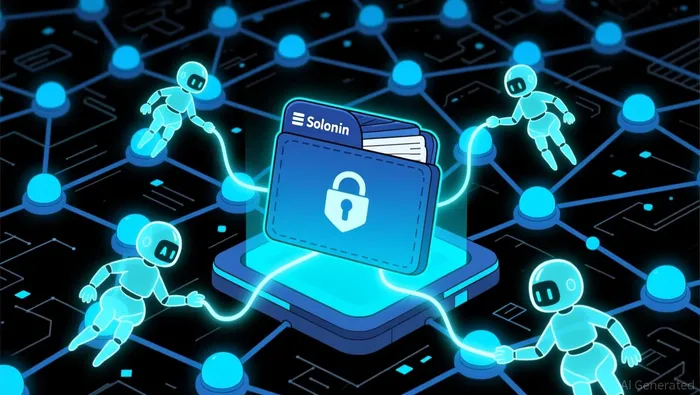
MoonPay has open-sourced its wallet layer in March 2026 to create a non-custodial standard for AI agents, enabling autonomous systems to manage funds securely without centralized custodians. This infrastructure shift aims to reduce fragmentation in the agent economy by establishing a unified protocol for value transfer. The move allows diverse AI applications to interoperate seamlessly while maintaining security through decentralized mechanisms.
Tianrong Internet has simultaneously launched DEPINfer, a Solana-native marketplace designed to share decentralized GPU compute resources. Powered by the $DEPIN utility token, the platform connects GPU providers with consumers requiring high-performance computing for AI applications. The full launch targets over 10,000 users and 100,000 monthly GPU compute hours within four weeks of its beta phase.
Market analysis highlights Solana's distinct positioning against EthereumETH--, offering superior transaction speeds and lower fees while maintaining a smaller market cap. Ethereum retains dominance in decentralized finance with approximately 60% of total value locked, yet faces challenges regarding congestion and slower processing times. SolanaSOL-- processes roughly 3,500 transactions per second at an average fee of $0.013, significantly outperforming Ethereum's 15-30 TPS and higher costs.
How Does The New Solana Wallet Standard Support AI Agents?
MoonPay Agents, launched in February 2026, serves as a non-custodial software layer designed to facilitate autonomous financial interactions. The company has now open-sourced the underlying wallet standard to encourage broader industry adoption across the ecosystem. This structure establishes a unified protocol for how AI agents can handle value transfer without relying on centralized custodians.
The open-source nature of the standard aims to reduce fragmentation in the agent economy, allowing diverse AI applications to interoperate seamlessly. Security is maintained through non-custodial mechanisms that prevent reliance on single points of failure. This infrastructure shift represents a structural change in how decentralized finance protocols support the emerging AI agent market.
What Role Does DEPINfer Play In The Solana Compute Economy?
Tianrong Internet Products and Services Inc. announced the front-end launch of DEPINfer, a decentralized physical infrastructure network marketplace focused on GPU compute resources. The platform is powered by the native $DEPIN utility token on Solana, which facilitates peer-to-peer rentals of high-performance computing.
Key features include wallet connectivity, escrow smart contracts, and transaction history tracking to facilitate secure peer-to-peer rentals. Following a beta phase, the full launch targets over 10,000 users and 100,000 monthly GPU compute hours within four weeks. The initiative aims to bridge traditional markets with decentralized infrastructure, creating a utility-driven sharing economy for high-performance computing.
The $DEPIN token is available on RaydiumRAY--, allowing investors to participate in the ecosystem's growth potential. This move addresses the growing demand for decentralized GPU compute resources to support AI infrastructure.
How Do Solana And Ethereum Compare For Institutional Investment?
Ethereum maintains dominance in the decentralized finance sector with approximately 60% of total value locked and 60% of all tokenized assets. Major institutions like BlackRock and Fidelity utilize Ethereum for tokenized funds, leveraging its reliability and first-mover advantage in smart contracts.
However, Ethereum faces challenges regarding congestion and slower transaction speeds, which Layer 2 solutions attempt to mitigate but risk fragmenting the community. Solana positions itself as a high-performance alternative, processing roughly 3,500 transactions per second at an average fee of $0.013.
This speed makes Solana attractive for high-volume applications and traditional payment processors, with recent use cases including Western Union's stablecoin and JPMorgan's tokenized commercial paper. While Solana has historically suffered from network outages, upgrades since February 2024 have improved resilience.
Solana's market cap of $50 billion offers more room for growth compared to Ethereum's $250 billion, but it carries higher risk due to its younger age and past technical instability. Both projects are poised to benefit from the projected growth of the tokenized assets market, expected to reach $4 trillion by 2035.
Solana's ecosystem has expanded to include significant revenue-generating applications and institutional partnerships, such as Western Union and JPMorgan. While Solana's market share has grown from less than 1% to 7% in TVL since early 2023, it remains a higher-risk investment due to historical network outages.
The comparison highlights a clear divergence where Ethereum offers stability and institutional trust, while Solana offers scalability and performance. The choice for investors depends on their risk tolerance and exposure to the future tokenization market.

Combina la sabiduría del comercio tradicional con las perspectivas de vanguardia en el campo de las criptomonedas.
Latest Articles
Stay ahead of the market.
Get curated U.S. market news, insights and key dates delivered to your inbox.


AInvest
PRO
AInvest
PRO



Comments
No comments yet