
SOLANA Prices Projected to Reach $10,000 Based on Structural Demand and Supply
 Aime Summary
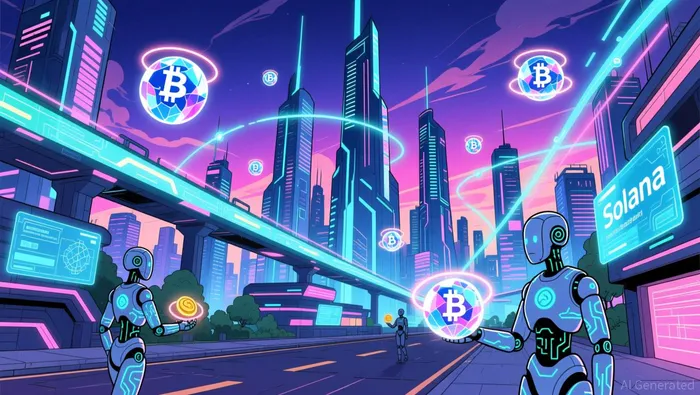
DeFi Development Corp has introduced a new valuation framework for SolanaSOL--, treating it as a digital cityCITY-- and setting an ambitious $10,000 price target for Feb 23, 2026. The model highlights Solana's structurally scarce supply and demand from real-world asset (RWA) collateral, stablecoin reserves, agentic AI, and network activity as key drivers. This approach represents a novel way of valuing Solana by emphasizing its economic fundamentals and ecosystem growth.
The broader market outlook for Solana remains mixed. Legal challenges, particularly a class-action lawsuit involving Pump.fun, threaten to erode investor confidence and could push the price as low as $20 in the short term. On the flip side, Solana's strong fundamentals—such as its high throughput, low fees, and a total value locked (TVL) of $7.2 billion—suggest long-term growth potential. Analysts have highlighted a base-case scenario where the price dips but then recovers to $120.
For investors, buying Solana has become more accessible through a variety of platforms. Centralized exchanges like CoinbaseCOIN--, Kraken, Gemini, and Binance are the most common options. These platforms allow users to purchase Solana using bank transfers, wire transfers, or debit cards. The cost varies depending on the trading method, with standard "simple buy" options carrying higher fees (1.5% to 2%) and advanced trading interfaces offering lower costs (0.4% to 0.6%).
How to Buy Solana: Platforms and Methods?
Investors can choose from several methods to buy Solana according to investment guides. Centralized exchanges are the most straightforward option for beginners, as they simplify the buying process and handle security for the user. For more advanced traders, platforms like Gemini Pro offer lower fees for larger volumes. ETFs are also available for those who prefer regulated securities. Additionally, investors can use all-in-one platforms or direct custody options to manage their Solana holdings.
Identity verification is required for any platform connected to the U.S. banking system as required by platform regulations. This typically involves providing a legal name, date of birth, Social Security number, and uploading identification. Most platforms use AI to verify this information in real time, streamlining the onboarding process for new users.
What Are the Risks and Security Considerations for Staking and Holding Solana?
Security is a major concern for Solana investors, particularly when it comes to staking on the Solana network. The r/solana subreddit has highlighted the importance of using cold wallets like Ledger or Tangem to store and stake Solana, especially for large holdings. Cold wallets offer enhanced security by keeping private keys offline. For smaller balances, keeping Solana on a major exchange like Coinbase or Kraken is generally considered safe.
Tax enforcement for digital assets has also tightened significantly according to tax regulations. Starting with the 2025 tax year (filed in 2026), crypto platforms must issue Form 1099-DA for digital asset sales. Every sale, trade, or conversion involving Solana can create a taxable event, with capital gains applicable when selling for a profit. Staking income is also taxable and treated as income the moment it is received. Investors should use tools like CoinTracker or Koinly to automate tax calculations and ensure compliance.
What Are the Broader Ecosystem and Market Trends Influencing Solana?
The Solana ecosystem is home to a variety of innovative projects, including AI agents and cross-chain tools as reported in industry analysis. The top 7 AI agent projects on Solana are leveraging the network's high-speed, low-cost architecture to perform tasks such as managing DAOs, engaging in social interactions, and executing on-chain actions. These projects include elizaOS, Goatseus Maximus (GOAT), and Zerebro (ZEREBRO), among others. These developments are contributing to Solana's growth and reinforcing its position as a leading platform for autonomous agents.
Additionally, 0xZRX-- has launched its Cross-Chain API Beta to streamline token swaps and bridge liquidity across multiple blockchains, including Solana. This API enables developers to execute token swaps on 15+ blockchains through a single integration, aggregating liquidity and reducing the complexity of multi-chain environments. This innovation is expected to support emerging standards for agent-based commerce and expand Solana's utility in the broader blockchain ecosystem.

Blending traditional trading wisdom with cutting-edge cryptocurrency insights.
Latest Articles
Stay ahead of the market.
Get curated U.S. market news, insights and key dates delivered to your inbox.


AInvest
PRO
AInvest
PRO



Comments
No comments yet