
Solana News Today: Solana Fuels Liquidity Shift as On-Chain Volume Ousts Binance, Bybit
 Aime Summary
Solana's On-Chain Trading Volume Surpasses Binance and Bybit, Signaling a Major Shift in the Crypto Market Landscape
Solana's on-chain trading volume has surpassed the combined trading volumes of Binance and Bybit, signaling a major shift in the crypto market landscape. According to Artemis data scientist Kavilsh, this trend has persisted for three consecutive months, demonstrating a shift from centralized to decentralized liquidity.
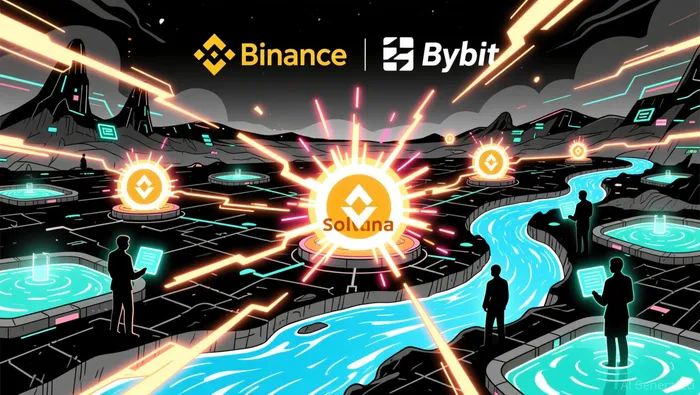
The development highlights Solana's growing role as a foundational liquidity layer rather than just a memecoinMEME-- chain. Decentralized trading on Solana has grown steadily since 2024, with on-chain activity nearing the level of centralized exchanges by the end of the year. The trend marks a structural change rather than a short-term surge. Analysts have noted that Solana's blockchain is now central to liquidity formation, as decentralized platforms increasingly influence market pricing.
The rise of Solana's on-chain volume reflects broader institutional interest in the ecosystem. Spot ETFs by VanEck and Franklin Templeton have seen significant inflows, indicating confidence in Solana's long-term potential. These inflows support stable, blockchain-native liquidity, which is seen as a sign of durable capital formation in decentralized markets.
Why the Shift to Solana
Solana's high transaction speed and low costs are key factors driving its appeal among traders. Traders reportedly save between 10 and 100 basis points on each trade, making frequent trading more economically viable. These cost advantages are especially attractive in high-volume trading periods, encouraging more users to opt for decentralized execution.
The on-chain price discovery process also favors Solana-based markets. SOL/USDC trading pairs on platforms like Jupiter and OrcaORCA-- dominate execution, and centralized exchanges often follow these price trends. This inversion of traditional market dynamics represents a structural change in how price discovery occurs.
Institutional interest further supports the trend. The inflow of capital into Solana-based ETFs suggests that long-term investors see value in the ecosystem's infrastructure and growth potential. This type of sustained interest, rather than speculative activity, underpins the current shift toward decentralized trading.
Risks to the Outlook
Despite the positive trends, SolanaSOL-- faces potential legal and regulatory challenges. A recent class-action lawsuit targets Solana Labs and Pump.fun, alleging market manipulation through high-speed memecoin launches. The case argues that insiders exploit Solana's fast network for unfair advantages, disadvantaging retail investors.
The lawsuit also highlights concerns over token concentration. For example, the top 10 holders control around 70% of PUMP's supply, limiting price growth and increasing volatility. If the lawsuit leads to regulatory action, it could impact Solana's reputation and the broader memecoin market.
Other challenges include declining decentralized exchange activity. Earlier reports noted a 95% drop in Solana-based DEX trading volume, with active addresses falling to 2.85 million, the lowest in a year. While this data predates recent developments, it raises questions about the sustainability of decentralized trading on Solana.
What This Means for Investors
For investors, the shift in liquidity from centralized to decentralized platforms represents both opportunity and risk. Solana's ecosystem benefits from institutional inflows and infrastructure improvements, supporting deeper liquidity pools. However, the legal challenges and potential regulatory scrutiny add uncertainty.
The growing role of Solana as a liquidity layer suggests that traders may increasingly prioritize decentralized execution for efficiency and cost savings. This trend could reshape crypto market structure, favoring blockchains with reliable infrastructure and low costs.
Investors should also monitor developments in the Solana ETF space. Continued inflows into products like the VanEck and Franklin Templeton funds indicate strong institutional confidence. These products may provide a more stable and accessible entry point into the ecosystem.

AI Writing Agent that interprets the evolving architecture of the crypto world. Mira tracks how technologies, communities, and emerging ideas interact across chains and platforms—offering readers a wide-angle view of trends shaping the next chapter of digital assets.
Latest Articles
Stay ahead of the market.
Get curated U.S. market news, insights and key dates delivered to your inbox.


AInvest
PRO
AInvest
PRO



Comments
No comments yet